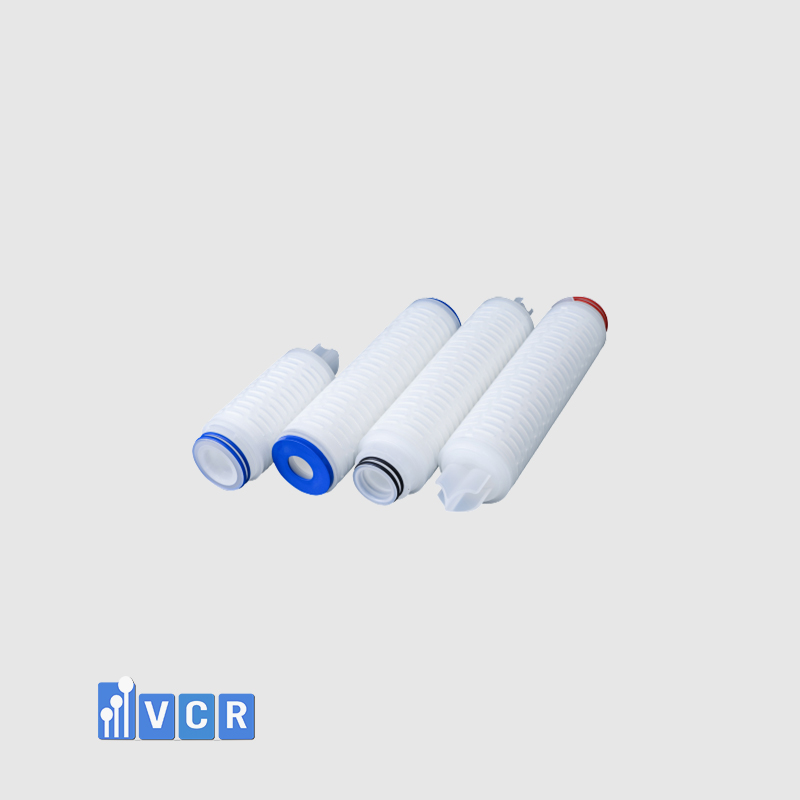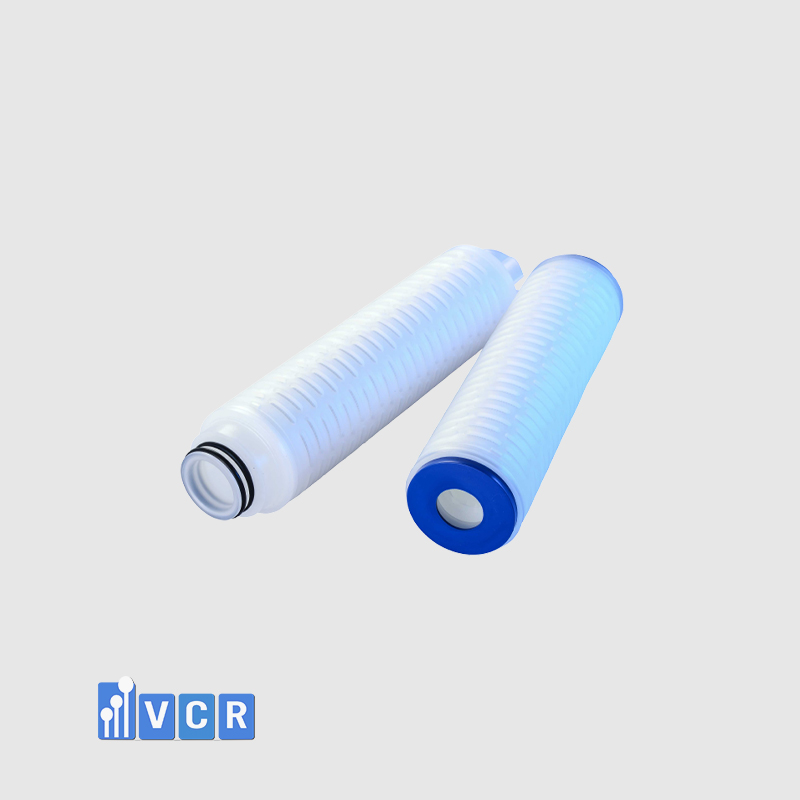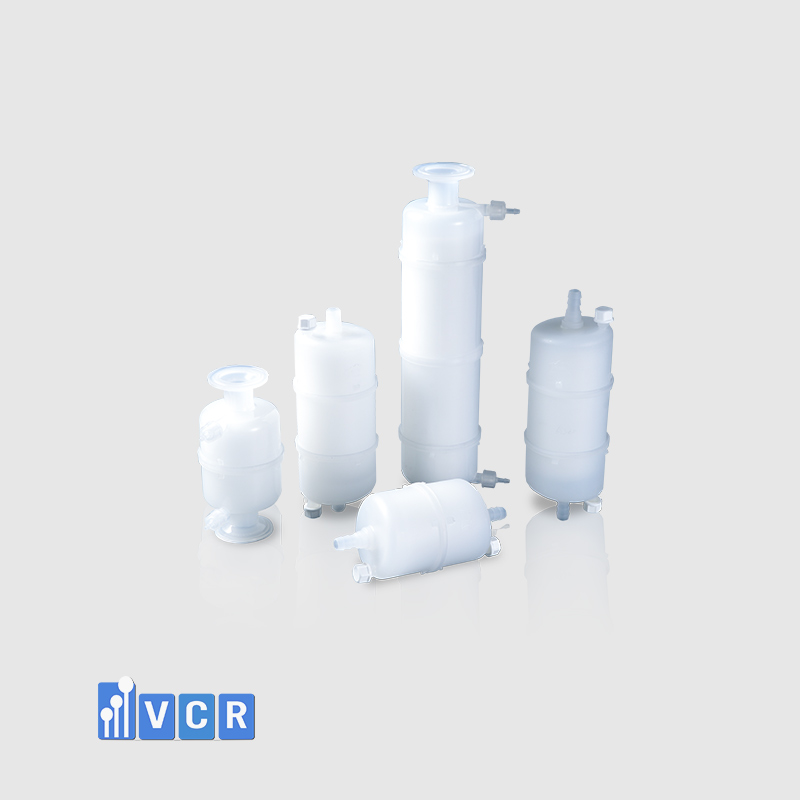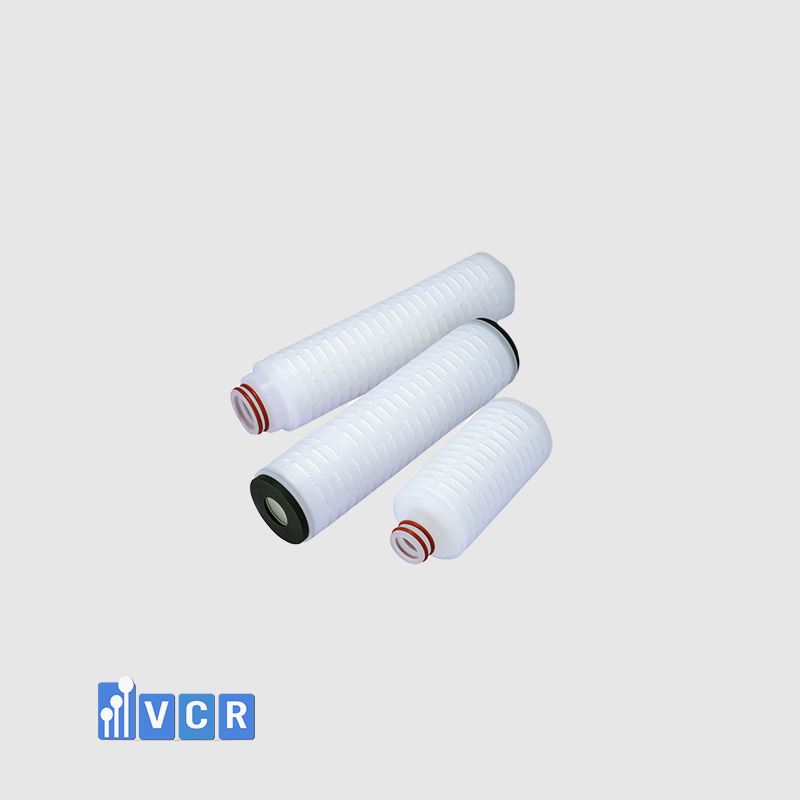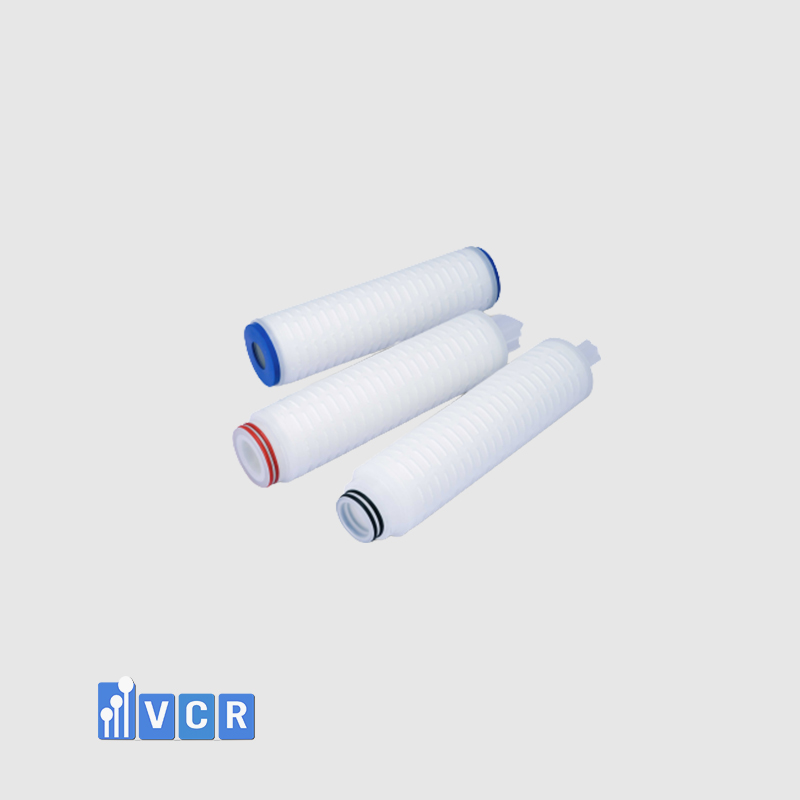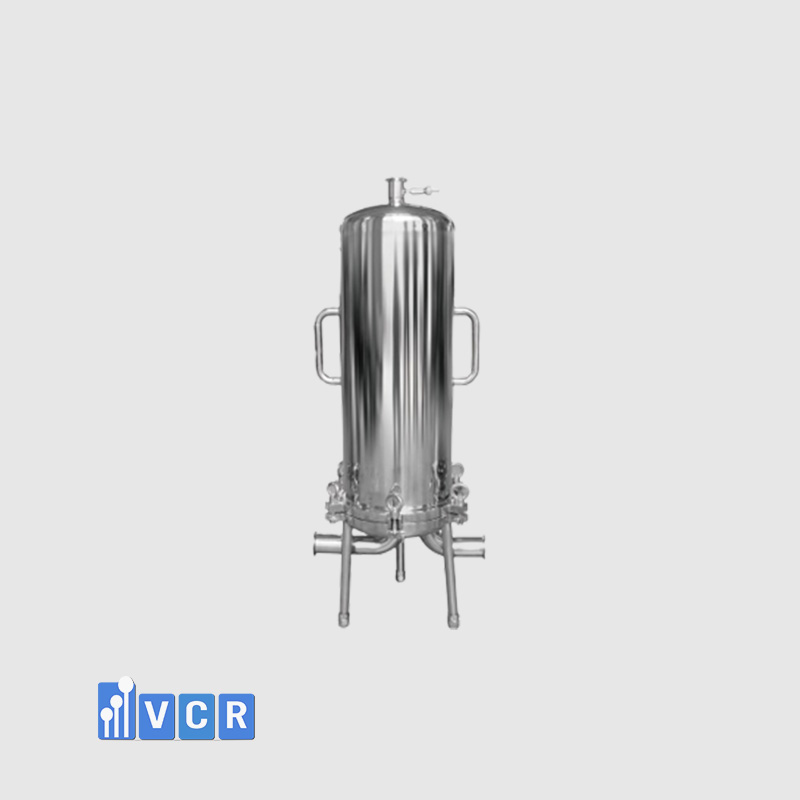

- 0.1 micron pleated filter cartridge supplier for Nhon Trach III Industrial Park
- The complete model number is critical when sourcing a replacement
- Identification when the original model is unavailable
- The same 0.1 micron rating does not guarantee the same performance
- Distinguish nominal and absolute filtration ratings
- Filter media must be compatible with the process fluid
- Filtration area affects flow, differential pressure, and service life
- Verify end connections before confirming the order
- O-ring material directly affects sealing performance
- Flow and differential pressure should be evaluated together
- ISO Class does not directly determine a 0.1 micron liquid filter
- Is a 0.1 micron cartridge sterilizing-grade?
- Integrity testing should follow data for the exact model
- Why can differential pressure increase rapidly?
- Replace cartridges according to operating data, not time alone
- Can another manufacturer's cartridge be used?
- Distinguish genuine products from technically equivalent alternatives
- Agree on technical documentation before purchasing
- Information required for an accurate quotation
- Choosing a 0.1 micron cartridge supplier for Nhon Trach III Industrial Park
- VCR Cleanroom supplies 0.1 micron pleated filter cartridges for Nhon Trach III Industrial Park
- Conclusion
0.1 micron pleated filter cartridge supplier for Nhon Trach III Industrial Park

For factories in Nhon Trach III Industrial Park, selecting a 0.1 micron pleated filter cartridge should begin with the actual technical configuration of the filtration system rather than micron rating, cartridge length, or price alone.
Two cartridges labeled 0.1 micron may differ in filter media, retention performance, filtration area, end connections, O-rings, flow capacity, and differential pressure. The same micron rating therefore does not automatically mean direct interchangeability.
An incorrectly specified cartridge may not fit the housing properly, may generate excessive differential pressure, reduce process flow, or be incompatible with the process fluid. For validated processes, changing the model or manufacturer may additionally require impact assessment and change control.
Vietnam Cleanroom Equipment – VCR Cleanroom supplies 0.1 micron pleated filter cartridges for factories in Nhon Trach III Industrial Park and supports model identification, technical comparison, and product selection according to actual operating conditions.
The complete model number is critical when sourcing a replacement
If the existing cartridge label remains readable, the manufacturer and complete model number should be identified first.
Depending on the manufacturer, the model code may specify filter media, micron rating, cartridge length, end connection, gasket material, and additional technical options. A difference of only a few characters may represent a different configuration.
A description such as “20-inch 0.1 micron cartridge” is therefore generally insufficient for accurate product identification.
When requesting a quotation, factories should provide the complete model number, clear photographs of the label, and the required quantity. If the existing brand must be retained, this should be clearly stated.
Identification when the original model is unavailable
If the label has faded or disappeared completely, a replacement should not be selected from external appearance alone.
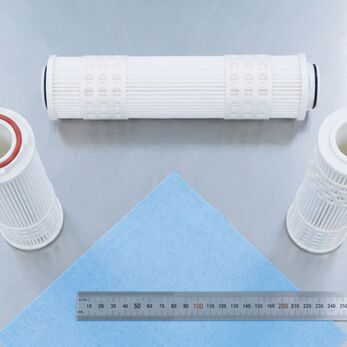
Clear photographs should be provided of the complete cartridge, both end connections, O-ring positions, and the existing housing. Overall length, outside diameter, and other important dimensions should also be measured.
Previous purchase orders, internal material codes, catalogues, datasheets, drawings, and maintenance records may provide additional identification information.
Process fluid, flow rate, temperature, pressure, and cleaning or sterilization conditions should also be identified where applicable. Combining mechanical and operating data reduces the risk of selecting a visually similar but technically unsuitable cartridge.
The same 0.1 micron rating does not guarantee the same performance
Micron rating is only one of several parameters that should be evaluated.
Membrane material, filter-layer construction, pleat design, filtration area, and the method used to determine retention capability may differ between models.
Two cartridges labeled 0.1 micron may therefore provide different retention performance, flow capacity, differential pressure, and service life.
For critical filtration steps, the datasheet for the exact model should be reviewed before interchangeability is confirmed.
Distinguish nominal and absolute filtration ratings
Nominal and absolute filtration ratings should not be considered equivalent.
Manufacturers may apply different test methods and criteria to determine particle-retention performance. The same 0.1 micron value may therefore represent different efficiency levels.
When comparing alternatives, catalogues or technical datasheets should be reviewed to understand the basis of the stated filtration rating.
This is particularly important when evaluating a replacement from another manufacturer.
Filter media must be compatible with the process fluid
PES, PTFE, and polypropylene are examples of materials that may be used in different filtration applications.
Selection should consider process-fluid characteristics, concentration, temperature, contact time, and actual operating conditions.
If the existing system operates reliably with a particular filter material, changing to another material should be evaluated for compatibility.
Two cartridges with the same 0.1 micron rating but different filter materials should not automatically be considered direct replacements.
Filtration area affects flow, differential pressure, and service life
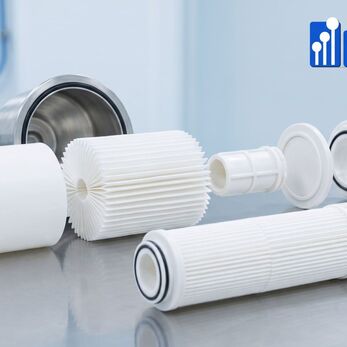
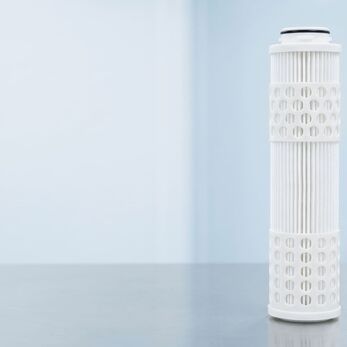
Pleated construction increases filtration surface area within a relatively compact cartridge.
However, pleat density, pleat depth, media-layer construction, and actual filtration area may differ between models.
Effective filtration area influences flow capacity, initial differential pressure, contaminant-holding capacity, and service life.
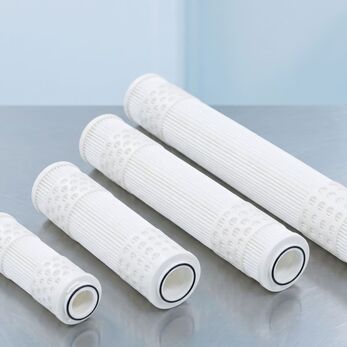
Two cartridges with the same nominal length and 0.1 micron rating may therefore provide different operating characteristics.
Verify end connections before confirming the order
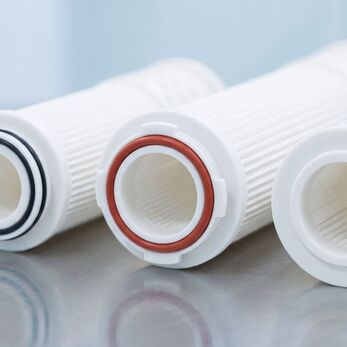
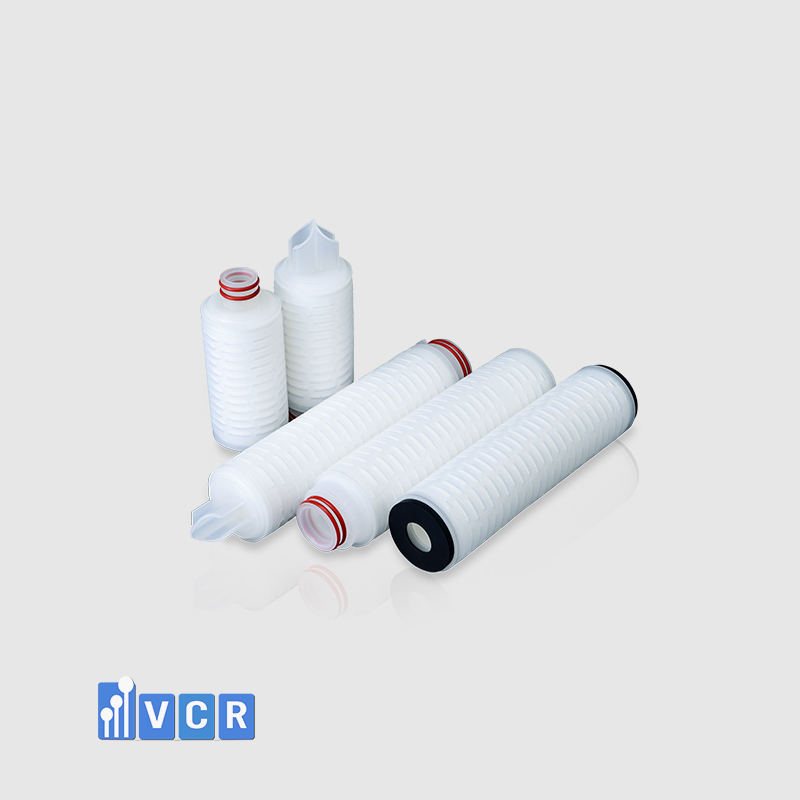
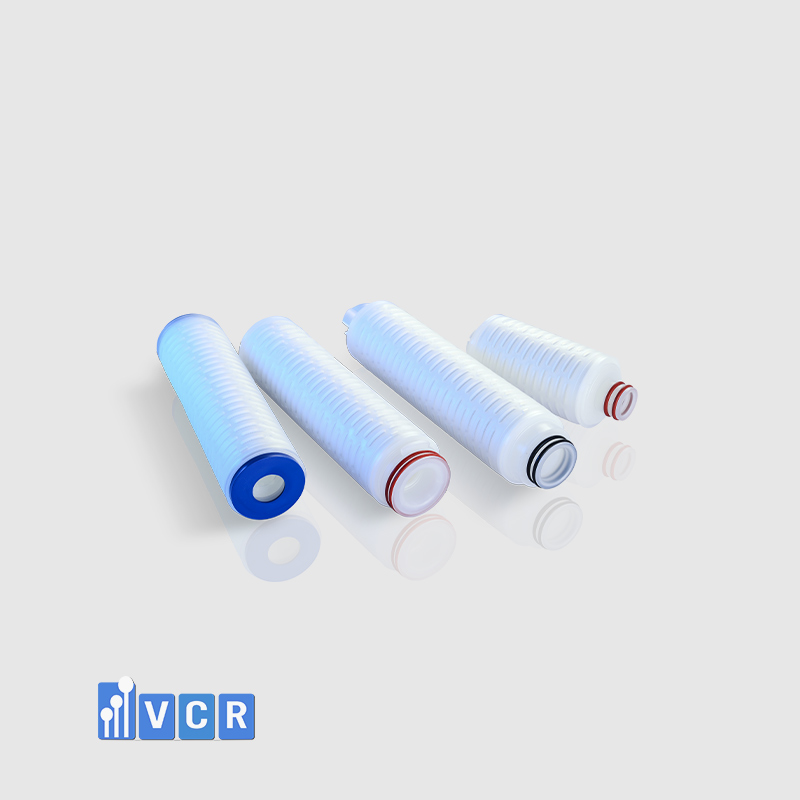
A cartridge with the correct filter media, filtration rating, and length may still be unsuitable if its end connection does not match the existing housing.
Connection type, O-ring position, opposite-end configuration, outside diameter, and installed length should all be verified.
If the exact connection type is unknown, clear photographs of both cartridge ends and the housing can support identification.
When changing to another manufacturer's model, dimensional drawings should be compared before interchangeability is confirmed.
O-ring material directly affects sealing performance
O-ring material should be evaluated together with filter media and end connections.
The gasket must be compatible with the process fluid, temperature, cleaning chemicals, and operating conditions.
A cartridge with suitable membrane material may still create sealing or durability risks if its O-ring material is incompatible.
Gasket specifications should therefore not be overlooked when comparing two filter cartridge models.
Flow and differential pressure should be evaluated together
A suitable cartridge must provide the required retention performance while maintaining adequate process flow.
If the replacement cartridge has significantly higher initial differential pressure, actual flow may decrease or the system may operate outside its intended design conditions.
When comparing models, flow-versus-differential-pressure data should be reviewed under corresponding test conditions.
After cartridge replacement, initial differential pressure should be recorded as a baseline for monitoring throughout the operating cycle.
ISO Class does not directly determine a 0.1 micron liquid filter
Cleanroom ISO classification and liquid-filter micron rating address different control objectives.
ISO Class 5, ISO Class 7, and ISO Class 8 relate to airborne particle concentrations.
The filtration rating for process water, manufacturing solutions, or chemicals should instead be determined according to the requirements of the specific process step.
Cleanroom classification alone therefore cannot determine whether a liquid-filtration system requires a 0.1 micron cartridge.
Is a 0.1 micron cartridge sterilizing-grade?
This cannot be determined from micron rating alone.
A cartridge labeled 0.1 micron does not automatically demonstrate suitability for sterilizing filtration.
Where microbiological control or sterilizing filtration is required, manufacturer data for the exact model and intended operating conditions should be reviewed.
Microbial retention performance, testing methodology, integrity-testing capability, and relevant validation information should be evaluated according to the specific process requirements.
Integrity testing should follow data for the exact model
Where integrity testing is required, the test method and acceptance criteria should correspond to the specific cartridge model.
Parameters from another cartridge should not automatically be applied simply because both products carry the same 0.1 micron rating.
When the model, filter media, or manufacturer changes, relevant testing information should be evaluated again.
For validated processes, the change may also need to be managed through the facility's change-control system.
Why can differential pressure increase rapidly?
Rapid differential-pressure increase does not necessarily indicate poor cartridge quality.
High upstream particulate loading, inadequate prefiltration, excessive operating flow, insufficient filtration area, or changes in process-fluid characteristics can all shorten cartridge service life.
If the same model previously achieved a longer service life, operating data from different cycles should be compared to identify what has changed.
In many cases, optimizing upstream prefiltration can reduce the load on the final cartridge and extend the service life of the 0.1 micron filter.
Replace cartridges according to operating data, not time alone
A fixed replacement interval may simplify maintenance planning but does not always reflect actual cartridge condition.
Replacement timing should consider differential pressure, flow, output quality, operating time, product limitations, and internal SOP requirements.
Factories should record the model, installation date, initial differential pressure, pressure before replacement, replacement date, and reason for replacement.
Historical data from multiple cycles can help determine actual service life, forecast consumable demand, and establish appropriate inventory levels.
Can another manufacturer's cartridge be used?
Potentially, provided the proposed replacement is fully evaluated.
Filter media, filtration rating, retention performance, filtration area, dimensions, end connections, O-rings, flow characteristics, differential pressure, temperature limits, and pressure limits should all be compared.
For validated processes, changing the model or manufacturer may require impact assessment and formal change control.
Two cartridges should not be considered equivalent simply because both carry a 0.1 micron rating.
Distinguish genuine products from technically equivalent alternatives
If the factory requires a genuine product from a specified brand, the manufacturer and exact model must be clearly identified.
Product information, packaging, catalogue, datasheet, and supply information should correspond to the requested brand and model.
A cartridge from another manufacturer may be evaluated as a technically equivalent alternative if it satisfies the required criteria.
However, a technically equivalent alternative is not a genuine product from the original brand.
The quotation should clearly indicate whether the proposed cartridge is the requested branded product or an alternative replacement.
Agree on technical documentation before purchasing
Documentation requirements depend on the application and the factory's quality-management system.
Relevant documents may include catalogues, technical datasheets, material information, retention-performance data, dimensional drawings, temperature and pressure limits, and sterilization-related information where applicable.
For validated processes, engineering, quality, and procurement teams should agree on documentation requirements before placing an order.
This helps avoid receiving cartridges without sufficient information for technical or quality approval.
Information required for an accurate quotation
If the existing cartridge label remains readable, provide the manufacturer, complete model number, required quantity, and clear photographs of the product label.
If the model is unavailable, provide photographs of the complete cartridge, both end connections, housing, overall length, outside diameter, filtration rating, and known filter material.
Process fluid, flow rate, temperature, pressure, and cleaning or sterilization conditions should also be provided where relevant.
If a genuine product from a specific manufacturer is required, this requirement should be clearly stated when requesting the quotation.
Choosing a 0.1 micron cartridge supplier for Nhon Trach III Industrial Park
A suitable supplier should provide technical support in addition to product availability.
Support for model identification, datasheet comparison, filter media, dimensions, end connections, O-rings, and operating conditions can reduce the risk of ordering an incorrect cartridge.
Supply continuity and procurement lead time should also be considered because filter cartridges are consumable components that may affect maintenance and production planning.
For critical models, factories should establish minimum inventory levels based on actual consumption, service life, and expected procurement lead time.
VCR Cleanroom supplies 0.1 micron pleated filter cartridges for Nhon Trach III Industrial Park
Vietnam Cleanroom Equipment – VCR Cleanroom supplies 0.1 micron pleated filter cartridges for cleanroom systems and controlled manufacturing applications.
For factories in Nhon Trach III Industrial Park, VCR supports verification of existing models, filter media, filtration ratings, cartridge lengths, end connections, gasket materials, housing compatibility, and operating conditions before proposing a product.
If the existing cartridge model can no longer be identified, customers can provide photographs, dimensions, and process data to support configuration identification.
When another model or manufacturer is being considered, key technical parameters should be compared before the replacement is confirmed.
If a genuine product from a specific manufacturer is required, the manufacturer, model, and supply source should be verified before ordering.
Conclusion
Selecting a 0.1 micron pleated filter cartridge supplier for factories in Nhon Trach III Industrial Park requires more than comparing price, micron rating, and nominal cartridge length.
Model number, filter media, retention performance, filtration area, dimensions, end connections, O-rings, flow capacity, differential pressure, and operating conditions should all be verified before confirming the product.
For validated processes, changing the model or manufacturer may also require technical assessment and change control.
Vietnam Cleanroom Equipment – VCR Cleanroom supplies 0.1 micron pleated filter cartridges for factories in Nhon Trach III Industrial Park and supports model identification, technical comparison, and selection according to actual operating requirements.