- What Is a Pleated Filter Cartridge?
- Why Should Factories Confirm the Correct Cartridge Configuration?
- What Specifications Should Factories in VSIP Can Tho Confirm?
- Why Are Length and Micron Rating Not Enough?
- Should You Choose 1, 5, 10, or 20 Microns?
- Nominal vs. Absolute Filtration Ratings
- When Should Prefiltration Be Used?
- How to Select PP, PES, PTFE, or Nylon
- How Does Filtration Area Affect Flow?
- Pleated Filter Cartridges for Factory Water Systems
- Pleated Filter Cartridges for Food and Beverage Plants
- Pleated Filter Cartridges for Pharmaceutical and Medical Device Plants
- Pleated Filter Cartridges for Electronics Manufacturing
- Pleated Filter Cartridges for Chemicals and Process Liquids
- Are 10, 20, 30, and 40-Inch Cartridges Interchangeable?
- Why Do End Connections Determine Compatibility?
- Why Should Gaskets and O-Rings Be Checked?
- Can Another Brand Be Used as a Replacement?
- When Should Filter Cartridges Be Replaced?
- Why Record the Initial Differential Pressure of a New Cartridge?
- Why Can a Cartridge Clog Faster Than Normal?
- Can Photographs Be Used to Find a Replacement Cartridge?
- Why Should Factories Standardize Their Cartridge Inventory?
- How Should Cartridge Inventory Be Managed?
- Why Can Two 5-Micron Cartridges Have Different Prices?
- Common Mistakes When Purchasing Pleated Filter Cartridges
- What Technical Documents Should Be Requested?
- What Information Is Required for an Accurate Quotation?
- How to Choose a Pleated Filter Cartridge Supplier for VSIP Can Tho
- Vietnam Cleanroom Equipment Supplies Pleated Filter Cartridges for VSIP Can Tho
- Conclusion
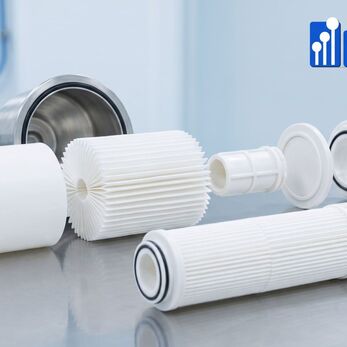
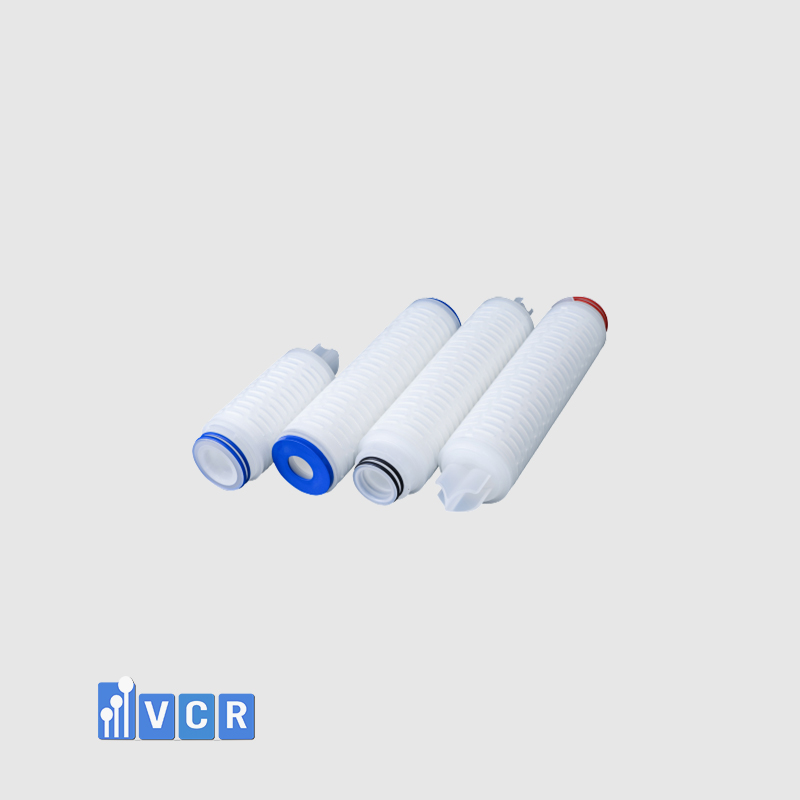
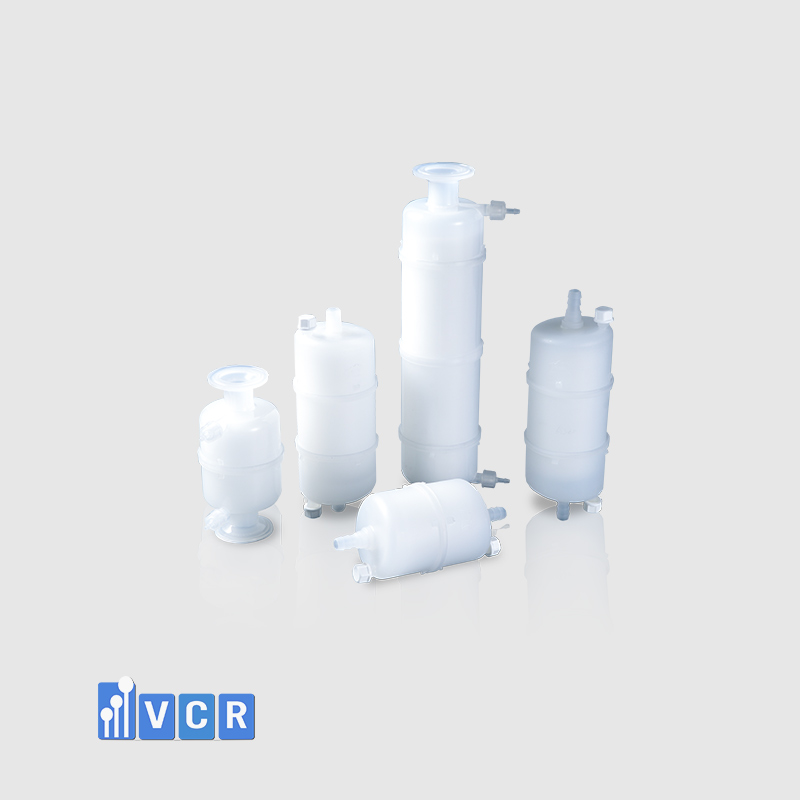
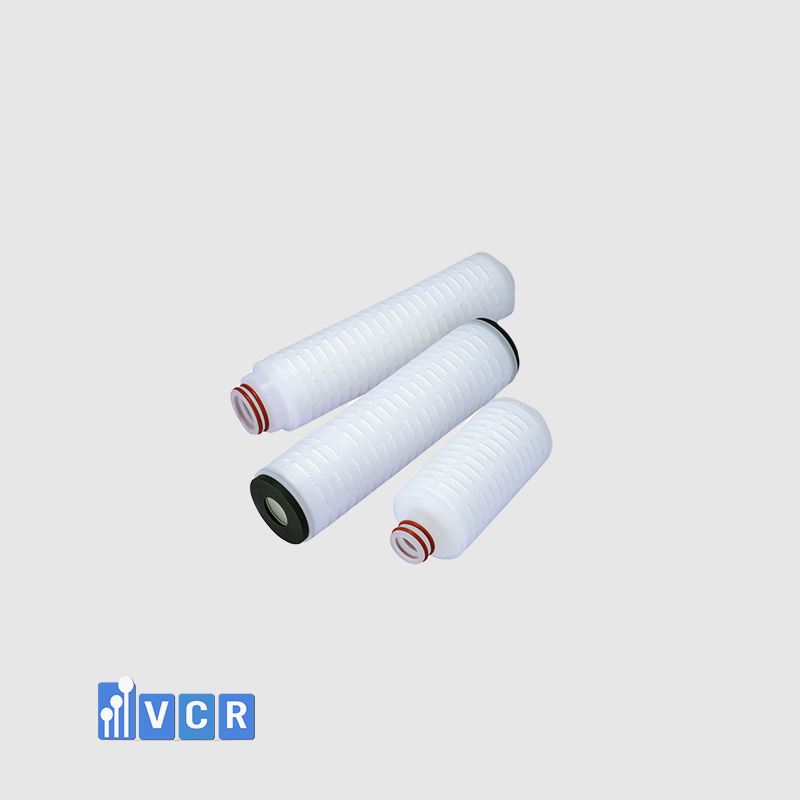
What Is a Pleated Filter Cartridge?
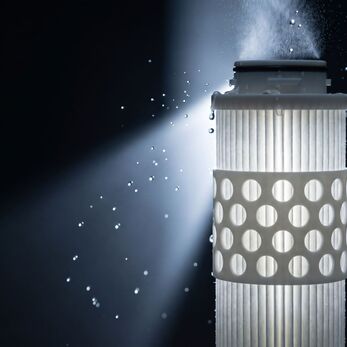
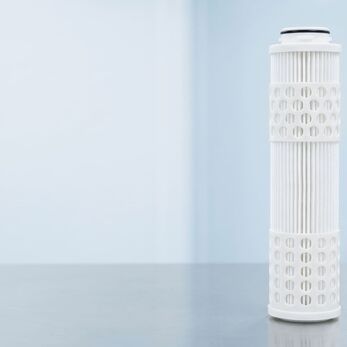
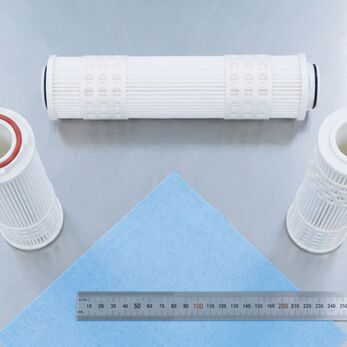
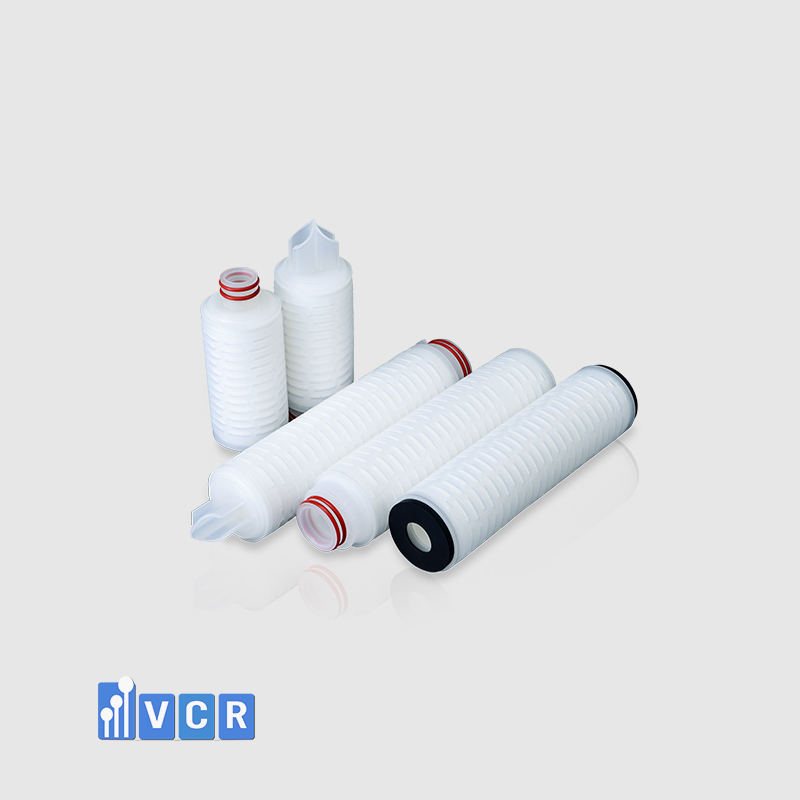
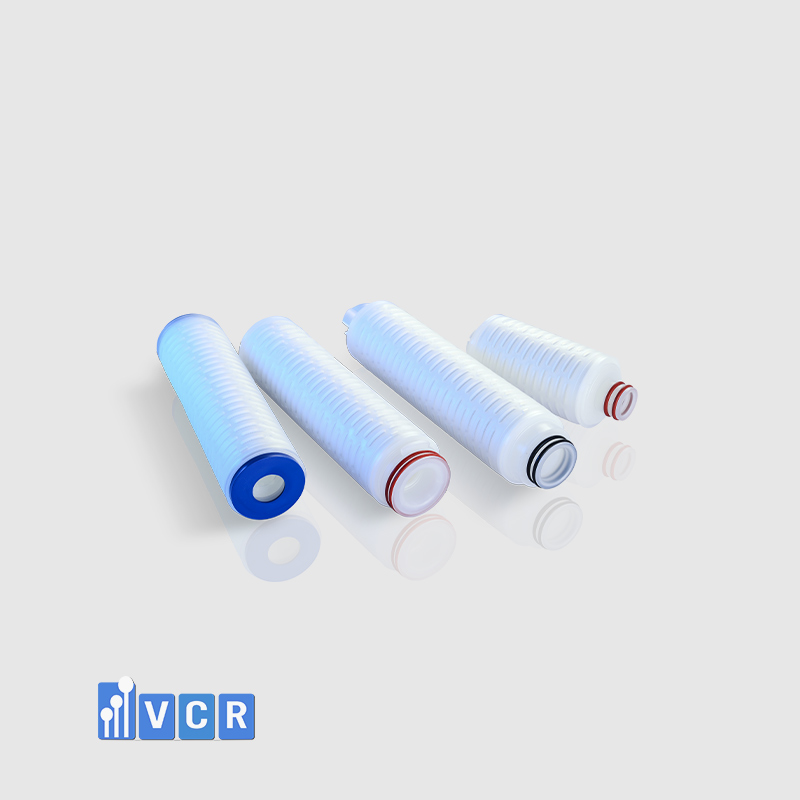
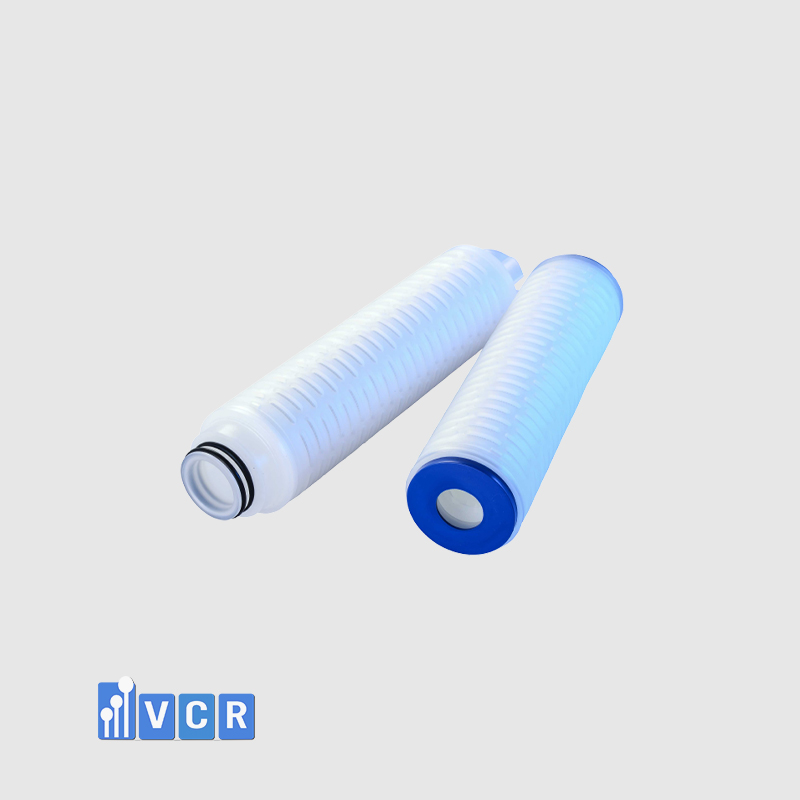
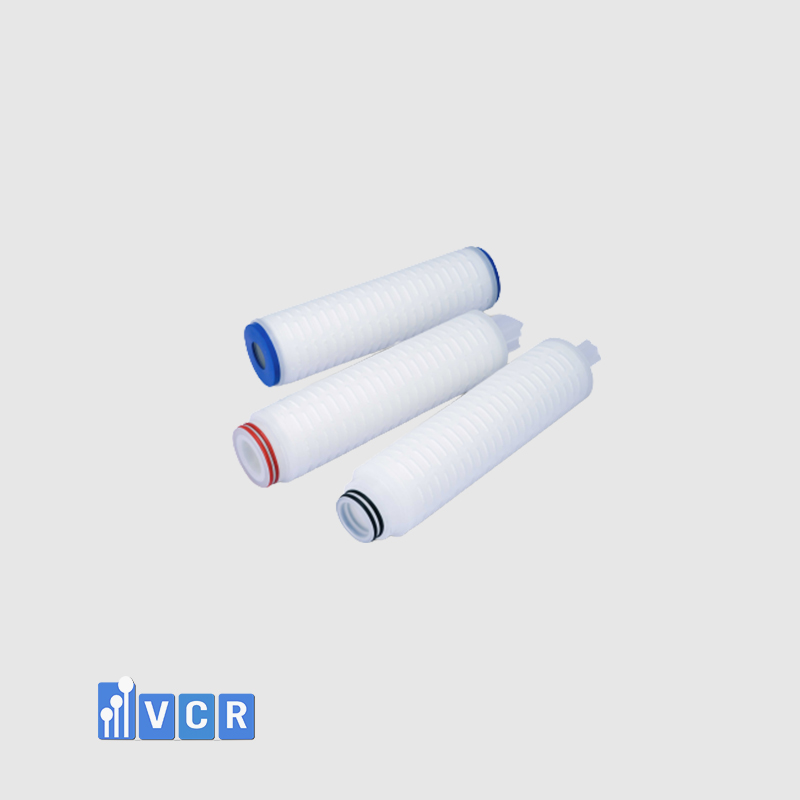
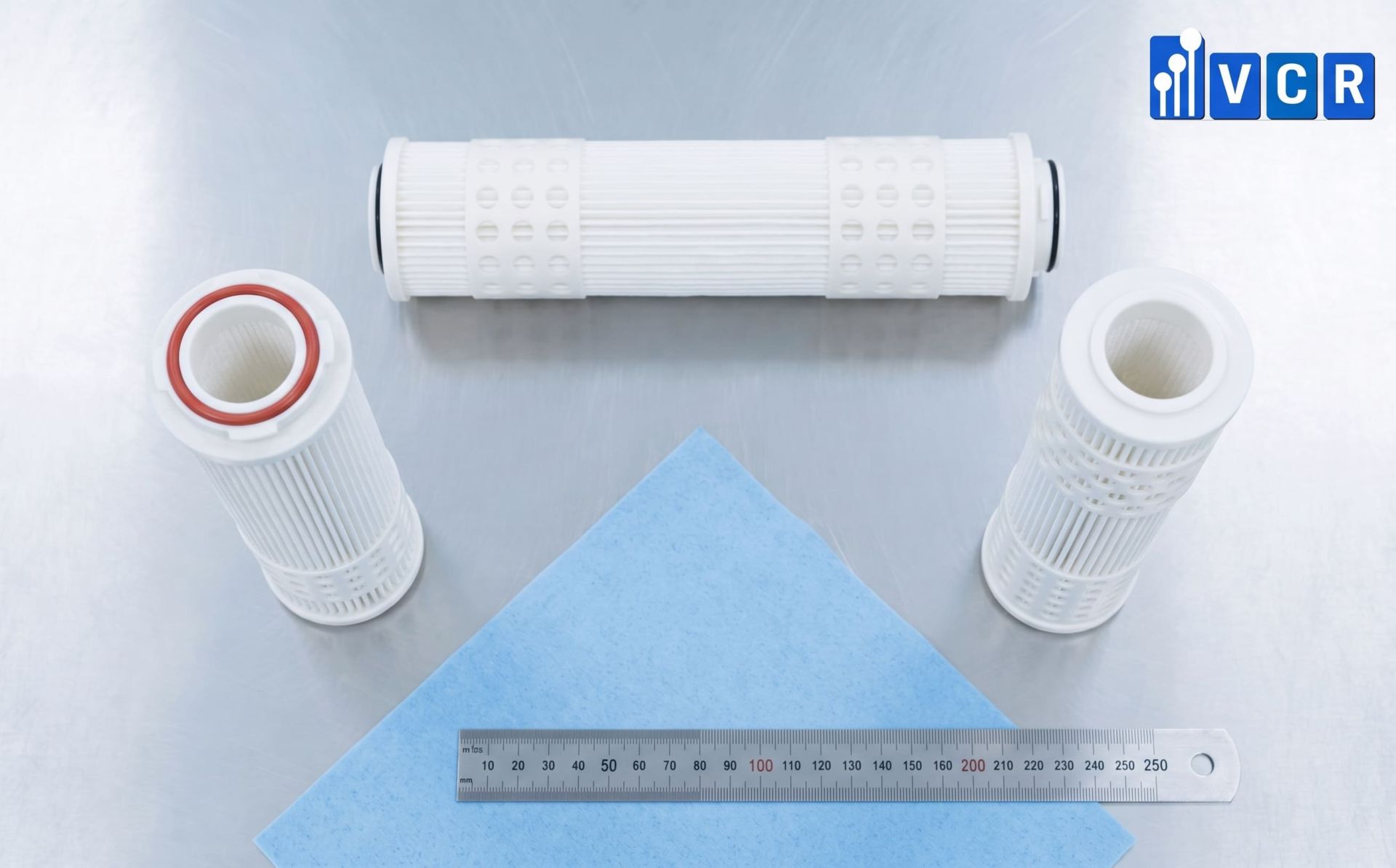
A pleated filter cartridge is a filtration element manufactured with filter media folded into multiple pleats.
This construction increases the effective filtration area within a relatively compact cartridge.
Depending on filter media, construction, and operating conditions, the cartridge can be used to control particles in water, chemicals, and process liquids.
Filter media may include polypropylene, PES, PTFE, nylon, glass fiber, and other specialized materials.
Why Should Factories Confirm the Correct Cartridge Configuration?
Filter cartridges are consumable components, but their performance can directly affect downstream processes.
If filtration is too coarse, the required particle-control objective may not be achieved.
If filtration is unnecessarily fine for the incoming contaminant load, differential pressure may increase rapidly and service life may decrease.
Incorrect filter media can affect compatibility with the process fluid. Incorrect dimensions, end connections, or sealing materials may prevent proper installation in the filter housing.
Cartridges should therefore be specified using a complete set of technical parameters rather than a generic product description.
What Specifications Should Factories in VSIP Can Tho Confirm?
The first consideration is the process fluid and the objective of the filtration stage.
The required filtration rating and suitable filter media should then be identified.
Factories should confirm cartridge length, outside diameter, and actual dimensions.
The end connection, sealing arrangement, and sealing material should also be checked.
Operating information such as flow rate, temperature, pressure, and differential pressure can improve selection accuracy.
For replacement applications, the existing model, product label, catalogue, or datasheet should be provided whenever available.
Why Are Length and Micron Rating Not Enough?
A request such as “20-inch, 5-micron cartridge” does not fully describe the product.
Two cartridges with the same nominal length and micron rating may differ in filter media, outside diameter, filtration area, and media construction.
End connections and sealing materials may also differ.
Particle-retention performance and operating limits may not be equivalent.
Factories should therefore compare the complete technical configuration before confirming that a cartridge can replace an existing product.
Should You Choose 1, 5, 10, or 20 Microns?
There is no single micron rating suitable for every filtration system.
A 1 µm cartridge targets smaller particles than 5 µm, 10 µm, or 20 µm cartridges. However, a smaller micron rating is not automatically a better choice.
If incoming contaminant loading is high, an unnecessarily fine cartridge may develop differential pressure rapidly.
Conversely, a cartridge that is too coarse may not achieve the required particle-control objective.
Filtration rating should be selected according to incoming fluid quality, required output quality, and the function of each filtration stage.
Nominal vs. Absolute Filtration Ratings
Factories should distinguish between nominal and absolute filtration ratings.
Two cartridges both labeled 5 µm may not provide equivalent particle-retention performance.
Actual performance depends on filter media, media construction, efficiency definition, and manufacturer test methods.
For tightly controlled applications, performance data should be reviewed together with the stated micron rating.
When Should Prefiltration Be Used?
If incoming fluid contains a high contaminant load while downstream processing requires fine filtration, prefiltration can reduce the burden on the final cartridge.
An upstream stage removes larger particles.
Subsequent stages then control smaller particles according to process requirements.
This arrangement distributes contaminant loading and may extend the operating cycle of fine cartridges.
If fine cartridges repeatedly clog prematurely, factories should evaluate incoming fluid quality and upstream filtration rather than simply increasing replacement frequency.
How to Select PP, PES, PTFE, or Nylon
Polypropylene is widely used in liquid filtration because of its broad application range.
PES may be considered for selected water-based applications and processes requiring particular membrane characteristics.
PTFE is often considered where higher chemical compatibility or specialized operating conditions are required.
Nylon can also be suitable for specific process fluids.
There is no single best material for every system. Selection should be based on fluid compatibility, temperature, filtration requirements, and actual operating conditions.
How Does Filtration Area Affect Flow?
Pleated construction allows a relatively large filter-media area to be installed within a compact cartridge.
However, actual filtration area can vary between cartridge models.
Under comparable conditions, filtration area is one factor affecting flow capability, contaminant capacity, and differential pressure.
Two cartridges with the same nominal length and micron rating may therefore perform differently.
Cartridge construction and filtration area should be considered when evaluating replacement products.
Pleated Filter Cartridges for Factory Water Systems
Cartridge filtration can be installed at multiple stages of factory water-treatment systems.
Some positions use cartridges to reduce contaminants before downstream equipment, while other stages may require finer particle control.
Incoming water quality affects cartridge service life.
If contaminant loading changes, replacement intervals may also change.
Factories should monitor flow, differential pressure, and replacement history to understand filtration-system performance.
Pleated Filter Cartridges for Food and Beverage Plants
Food and beverage facilities may use cartridge filtration for process water, liquid ingredients, beverages, and other processing stages.
In addition to filtration rating, materials in contact with the process fluid should be considered.
Filtration area should also be suitable for the required flow.
If the cartridge configuration is insufficient for operating conditions, differential pressure may increase and service life may decrease.
For product-related applications, technical documentation and traceability requirements may also need to be evaluated.
Pleated Filter Cartridges for Pharmaceutical and Medical Device Plants
Pharmaceutical and medical device facilities may use cartridge filtration for water systems, prefiltration, raw materials, and process liquids.
Different filtration points can have significantly different technical requirements.
A cartridge selected for prefiltration should not automatically be considered suitable for a more tightly controlled process stage.
For important applications, filter media, filtration performance, operating limits, technical documentation, and applicable cleaning or sterilization requirements should be evaluated.
Pleated Filter Cartridges for Electronics Manufacturing
Some electronics manufacturing processes require particle control in water or process liquids before downstream use.
Cartridge selection should consider filtration rating, filter media, cleanliness requirements, and compatibility with the process fluid.
For higher-control applications, micron rating alone is insufficient.
Particle-retention performance, construction materials, end connections, sealing materials, and operating conditions should also be evaluated.
Pleated Filter Cartridges for Chemicals and Process Liquids
Material compatibility is particularly important for chemicals and specialized process liquids.
A cartridge should not be selected only because its dimensions and micron rating match the existing product.
Filter media, support materials, cartridge construction, and sealing materials should all be evaluated against the actual process fluid.
For specialized chemicals, factories should provide the fluid type, concentration, temperature, and operating conditions before selecting a cartridge configuration.
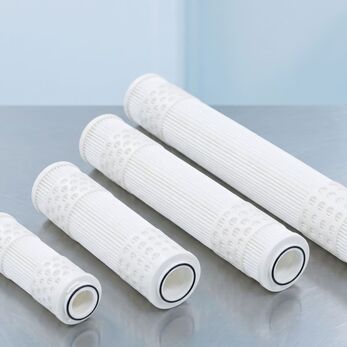
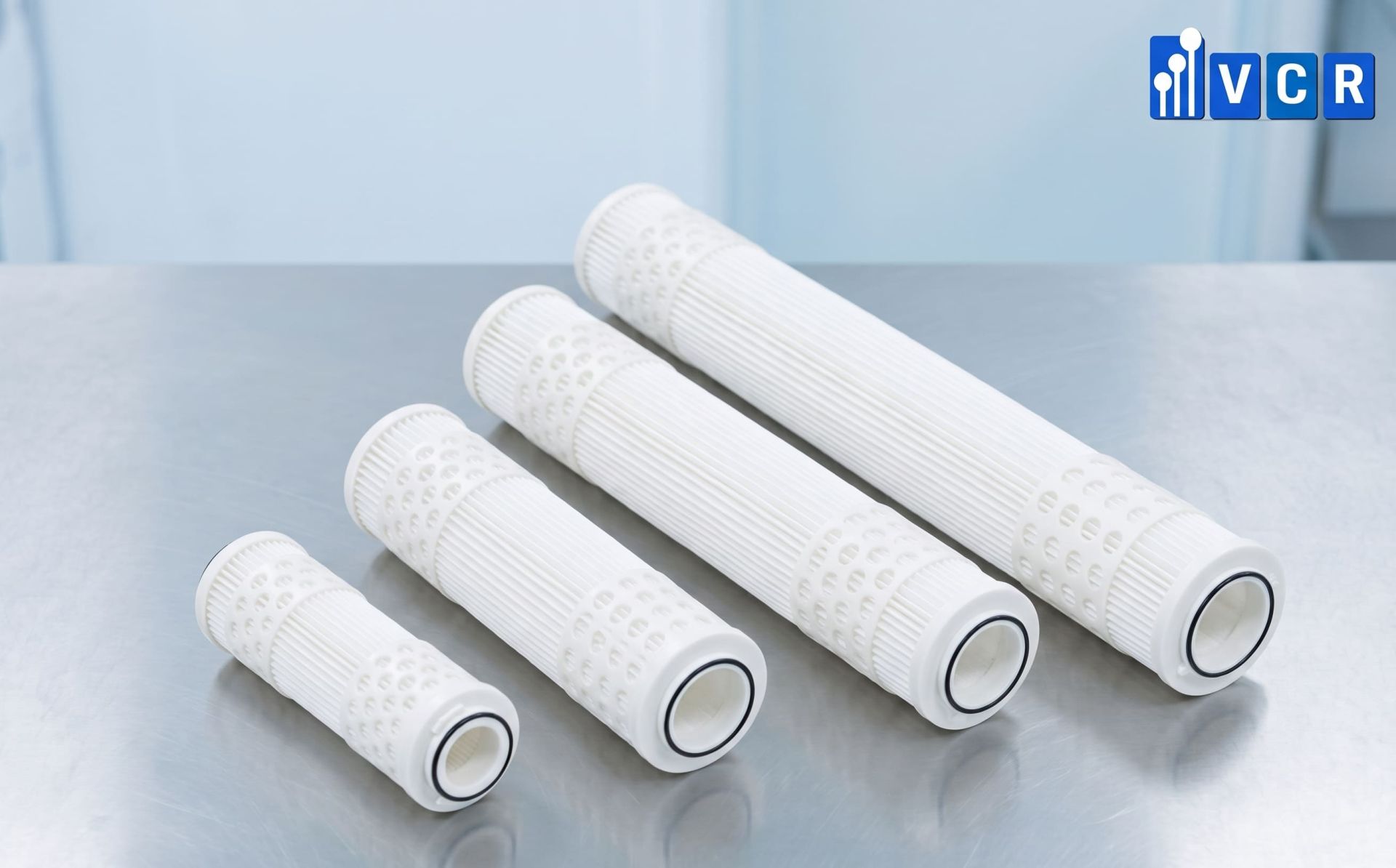
Are 10, 20, 30, and 40-Inch Cartridges Interchangeable?
Not automatically.
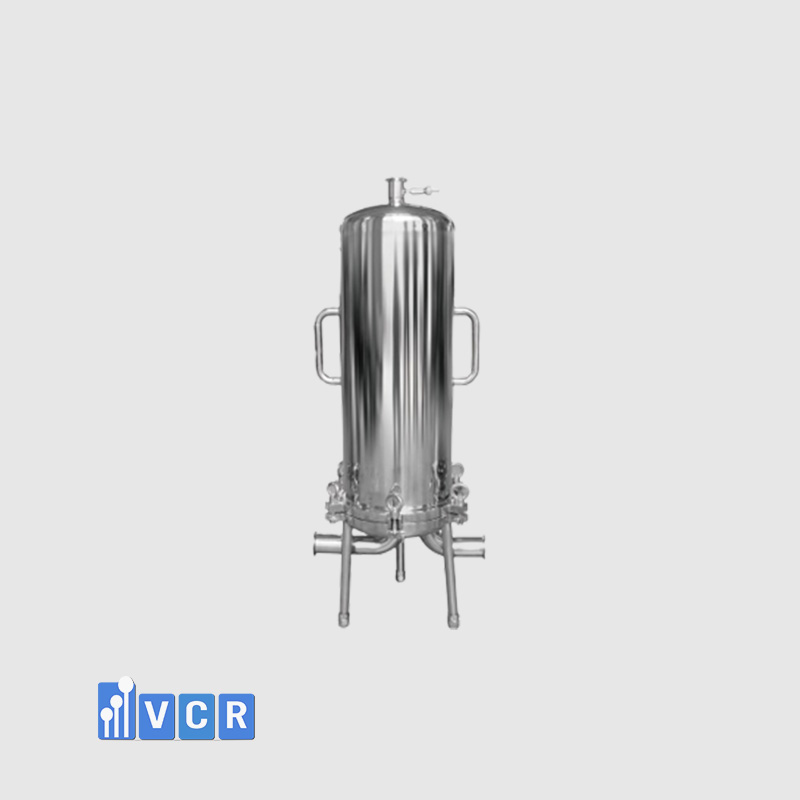
Filter housings are normally designed for specific cartridge lengths and quantities.
In addition to nominal length, actual overall length, outside diameter, end connection, and sealing arrangement should be checked.
For replacement requirements, confirming the existing model or physically measuring the installed cartridge is recommended.
Why Do End Connections Determine Compatibility?
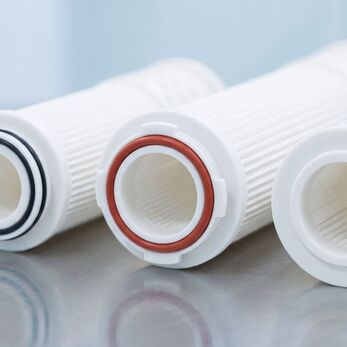
End connections determine how the cartridge is installed and sealed inside the filter housing.
Two cartridges with the same length, outside diameter, and micron rating may not be directly interchangeable if their end connections differ.
If the connection type is unknown, factories can provide clear photographs of both cartridge ends.
Photographs combined with dimensional information can help identify the correct configuration.
Why Should Gaskets and O-Rings Be Checked?
Gaskets and O-rings provide sealing between the cartridge and filtration system.
Seal material should be compatible with the process fluid, temperature, and operating conditions.
When evaluating an alternative cartridge, sealing material should be checked together with filter media and end connections.
Different sealing materials should not automatically be considered interchangeable.
Can Another Brand Be Used as a Replacement?
An alternative brand may be considered if the replacement product has been technically evaluated.
Matching length or micron rating alone does not establish equivalence.
Filter media, particle-retention performance, actual dimensions, end connections, sealing materials, temperature limits, and pressure limits should be reviewed.
For important applications, datasheets and relevant technical documentation should also be checked.
The objective is to identify a technically compatible replacement, not simply a cartridge that looks similar to the existing product.
When Should Filter Cartridges Be Replaced?
Replacement should not be based only on a fixed number of operating days.
Cartridge service life depends on contaminant loading, incoming fluid quality, flow rate, filtration area, and operating conditions.
Differential pressure across the filter is one useful operating indicator.
As contaminants accumulate, resistance through the cartridge generally increases.
Monitoring differential-pressure trends together with process requirements can help factories establish an appropriate replacement plan.
Replacement limits should follow product specifications, manufacturer recommendations, and system requirements.
Why Record the Initial Differential Pressure of a New Cartridge?
When a new cartridge is installed, its initial differential pressure under a stable flow condition can provide a useful baseline.
As contaminants accumulate during operation, resistance through the cartridge generally increases.
A recorded baseline allows operators to track changes over time.
Combined with service duration and flow information, the data can also help compare different replacement cycles.
The final replacement limit should still follow product specifications and system requirements.
Why Can a Cartridge Clog Faster Than Normal?
Rapid clogging does not automatically indicate poor cartridge quality.
Possible causes include increased incoming contaminant loading, excessive operating flow, an unnecessarily fine filtration rating, or inadequate upstream filtration.
Filtration area should also be considered.
If several cartridges show similarly short service life, factories should evaluate the complete operating condition rather than simply changing cartridge brands.
Identifying the actual cause can reduce consumable costs and improve filtration-system stability.
Can Photographs Be Used to Find a Replacement Cartridge?
Photographs can support initial cartridge identification.
Clear images of the complete cartridge, product label, and both end connections are particularly useful.
However, photographs generally cannot confirm internal filter media, micron rating, or particle-retention performance.
Cartridge dimensions, existing model information, process fluid, and operating conditions should therefore be provided whenever possible.
Why Should Factories Standardize Their Cartridge Inventory?
A factory may use multiple cartridge configurations across different systems.
Managing these products only with descriptions such as “5-micron cartridge” or “20-inch cartridge” creates a risk of purchasing errors.
Each spare-part code can be linked to the manufacturer, model, filter media, micron rating, length, diameter, end connection, and sealing material.
Installation location, quantity per replacement, and replacement history can also be recorded.
Standardized data allows engineering, maintenance, warehouse, and purchasing teams to work from the same technical information.
How Should Cartridge Inventory Be Managed?
Filter cartridges are consumable components, so inventory levels should reflect criticality and replacement frequency.
Frequently used models may require an appropriate quantity of spare stock.
For cartridges with longer lead times, purchasing should be planned earlier.
Historical consumption, replacement intervals, and supply lead time can be used to determine appropriate inventory levels.
The objective is to avoid excessive stock while reducing the risk of a required replacement cartridge being unavailable.
Why Can Two 5-Micron Cartridges Have Different Prices?
Micron rating represents only one part of the complete cartridge specification.
Two 5 µm cartridges may differ in filter media, filtration area, media construction, particle-retention efficiency, support layers, end connections, sealing materials, and operating limits.
Product origin and the availability of technical documentation may also differ.
Purchasing teams should therefore compare products against the same technical requirements before comparing unit prices.
Common Mistakes When Purchasing Pleated Filter Cartridges
One common mistake is providing only cartridge length and micron rating.
Another is sending product photographs without dimensional information.
Selecting a product primarily on price without reviewing its datasheet is another risk.
End connections, sealing materials, and chemical compatibility may also be overlooked.
Factories should not assume that all cartridges with the same micron rating provide identical particle-retention performance.
What Technical Documents Should Be Requested?
Depending on the application and project requirements, factories may request a product catalogue and datasheet.
The datasheet should identify filter media, filtration rating, dimensions, available configurations, and operating limits.
If origin information or additional project documentation is required, availability should be confirmed before ordering.
For regularly replaced cartridges, maintaining technical documentation for each model can simplify future replacement cycles.
What Information Is Required for an Accurate Quotation?
Whenever available, provide the complete existing cartridge model and manufacturer.
If the model is unreadable, a photograph of the product label can help.
Where no label is available, provide photographs of the complete cartridge, both ends, cartridge length, outside diameter, and existing filter housing.
The process fluid, micron rating, required quantity, and available operating parameters should also be provided.
Complete technical information improves the accuracy of cartridge identification and replacement selection.
How to Choose a Pleated Filter Cartridge Supplier for VSIP Can Tho
Because filter cartridges are consumable components, continuity of supply for future replacement cycles is important.
A supplier should be able to support existing-model identification, configuration comparison, and equivalent replacement selection where required.
Relevant catalogues, datasheets, and product-origin information should also be available when needed for material approval.
Technical support before ordering can help purchasing and maintenance teams reduce the risk of selecting an incompatible cartridge.
Vietnam Cleanroom Equipment Supplies Pleated Filter Cartridges for VSIP Can Tho
Vietnam Cleanroom Equipment – VCR Cleanroom supplies filtration products and cleanroom equipment for pharmaceutical, food, electronics, medical device, and other controlled manufacturing applications.
VCR Cleanroom supports cartridge selection according to process fluid, filter media, micron rating, dimensions, end connections, and actual operating conditions.
Factories and contractors serving VSIP Can Tho Industrial Park can provide the existing cartridge model, datasheet, product label, or photographs for configuration review before ordering replacement products.
Conclusion
When selecting a pleated filter cartridge supplier for factories in VSIP Can Tho Industrial Park, purchasing decisions should not be based solely on price, nominal length, or micron rating.
Filter media, filtration performance, actual dimensions, end connections, sealing materials, and operating conditions should be evaluated together.
Vietnam Cleanroom Equipment – VCR Cleanroom supplies pleated filter cartridges and filtration solutions while supporting factories and contractors in identifying technically suitable configurations for their actual operating requirements.