- Can You Clean a Pleated Water Filter Cartridge?
- Which Pleated Filter Cartridges Are Washable?
- When Should a Pleated Water Filter Cartridge Be Cleaned?
- Tools and Materials Needed
- How to Clean a Pleated Water Filter Cartridge
- Step 1: Shut Off the Water Supply
- Step 2: Relieve the Pressure
- Step 3: Remove the Filter Housing
- Step 4: Remove the Pleated Cartridge
- Step 5: Inspect the Cartridge
- Step 6: Rinse Off Loose Sediment
- Step 7: Clean Between the Pleats
- Step 8: Soak the Cartridge When Necessary
- Step 9: Rinse Thoroughly
- Step 10: Allow the Cartridge to Drain
- Step 11: Clean the Filter Housing
- Step 12: Reinstall the Cartridge
- Step 13: Restore Water Flow Slowly
- Step 14: Check for Leaks and Performance
- How to Clean Heavy Sediment from a Pleated Cartridge
- Can You Use a Pressure Washer?
- Can You Use Bleach to Clean a Pleated Water Filter?
- How Many Times Can a Pleated Cartridge Be Reused?
- When Should the Cartridge Be Replaced Instead of Cleaned?
- How to Extend the Life of a Pleated Water Filter Cartridge
- Frequently Asked Questions
- Conclusion
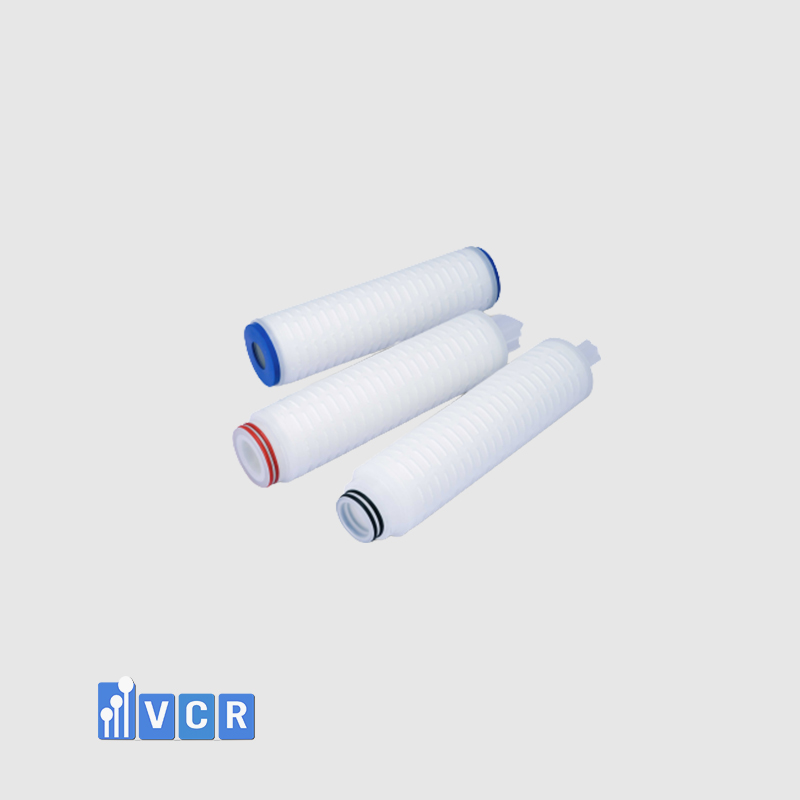
A pleated water filter cartridge can often be cleaned and reused, but only when the cartridge is specifically designed as a washable or reusable filter. Correct cleaning helps remove accumulated sediment, restore water flow, reduce pressure loss, and extend the cartridge’s service life.
However, not every pleated filter cartridge should be washed. Some cartridges use disposable cellulose, polypropylene, glass fiber, membrane, or chemically treated media that may be damaged by water pressure, detergent, brushing, or chemical cleaning.
Before cleaning a pleated water filter cartridge, always check the manufacturer’s instructions, filter material, micron rating, maximum operating pressure, and recommended cleaning method.
The safest general procedure is to shut off the water supply, relieve system pressure, remove the cartridge, rinse it from the clean side toward the dirty side, gently clean between the pleats, allow it to dry or reinstall it according to the manufacturer’s instructions, and inspect it for damage before returning it to service.
Can You Clean a Pleated Water Filter Cartridge?
Yes, many pleated sediment filter cartridges can be cleaned, especially those manufactured from washable polyester or other durable synthetic media.
These cartridges are commonly used to remove suspended particles such as:
-
Sand
-
Rust
-
Silt
-
Pipe scale
-
Fine sediment
-
Organic debris
-
Other visible particulate matter
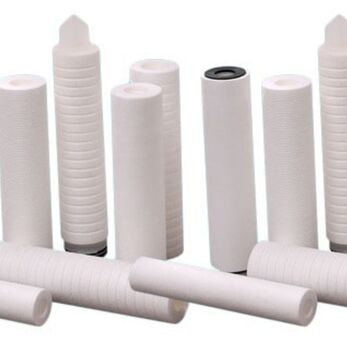
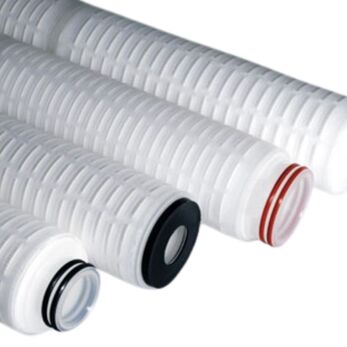
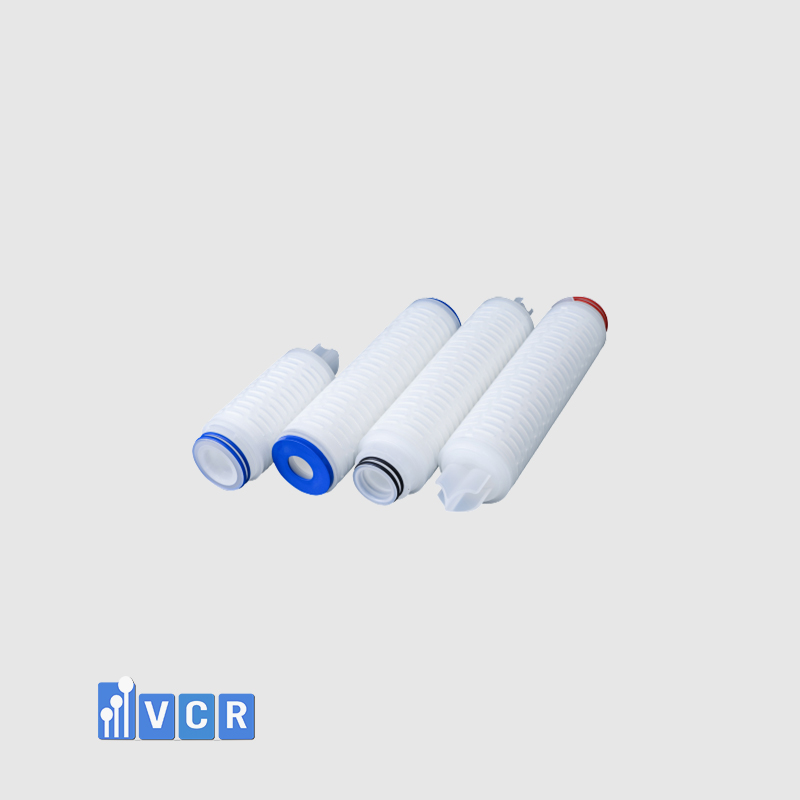
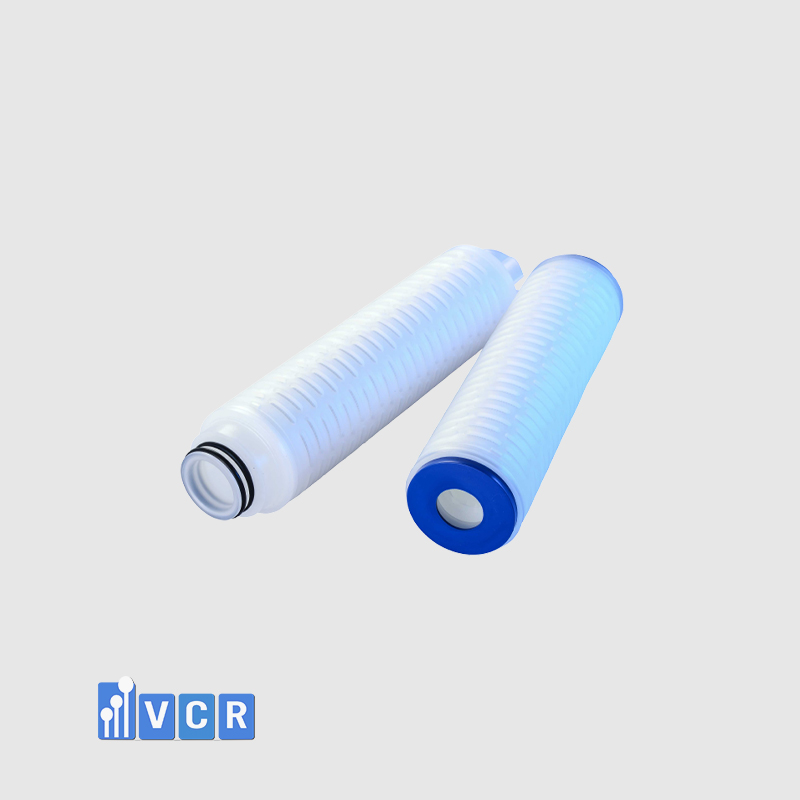
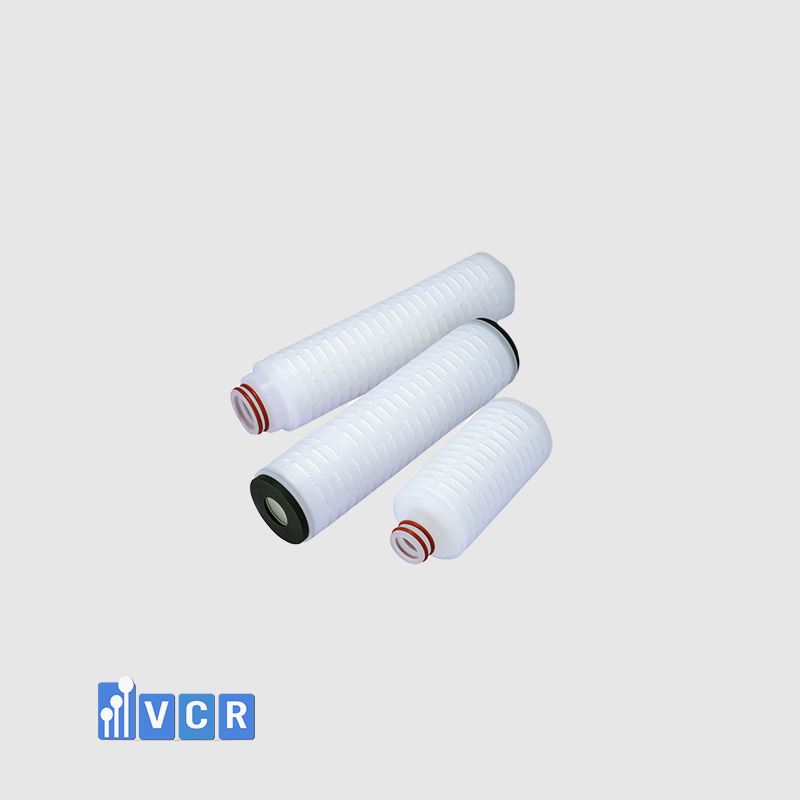
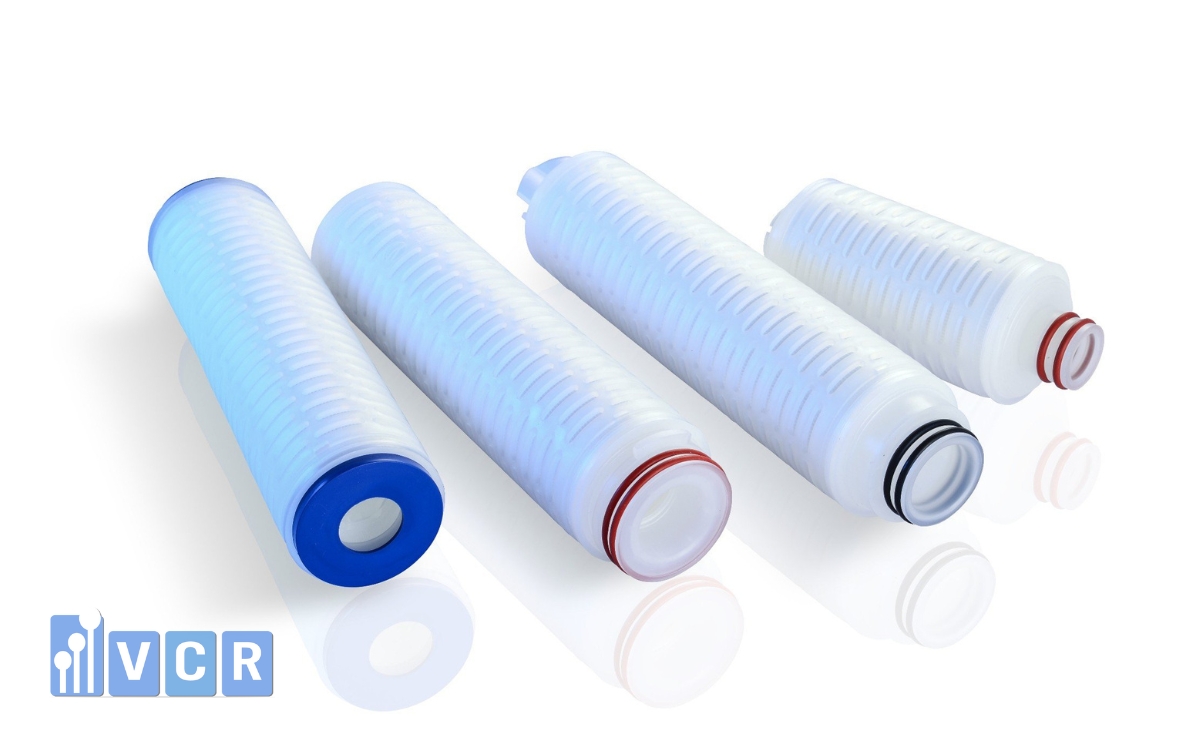
Their pleated construction provides a larger filtration surface than a flat sheet of filter media. This allows the cartridge to capture more contaminants while maintaining an acceptable flow rate.
Cleaning is normally possible when the cartridge is described as:
-
Washable
-
Reusable
-
Cleanable
-
Rinseable
-
Surface-loading
-
Pleated polyester
A disposable cartridge should not be cleaned unless the manufacturer clearly permits it. Washing an unsuitable cartridge may damage its filtration structure even when the cartridge still appears visually acceptable.
Which Pleated Filter Cartridges Are Washable?
Washability depends mainly on the filtration media and cartridge construction.
Pleated Polyester Filter Cartridges
Pleated polyester cartridges are among the most commonly washable water filter cartridges. Polyester media is relatively strong, moisture-resistant, and capable of withstanding gentle rinsing.
These cartridges are often used as sediment prefilters in residential, commercial, agricultural, food-processing, and industrial water systems.
A washable polyester cartridge may be cleaned several times if the pleats, end caps, core, gasket, and sealing components remain in good condition.
Pleated Polypropylene Filter Cartridges
Some pleated polypropylene cartridges are washable, but this depends on their construction. Polypropylene has good chemical resistance and is widely used in water-treatment systems.
However, not every polypropylene cartridge is intended for reuse. Melt-blown polypropylene depth filters, for example, are normally disposable and should not be confused with pleated polypropylene surface filters.
Always confirm the exact product type before washing.
Pleated Cellulose Filter Cartridges
Pleated cellulose cartridges are generally less suitable for repeated washing. Cellulose media may absorb water, soften, deform, support microbial growth, or lose structural integrity.
Some cellulose-blend cartridges may tolerate limited rinsing, but they should only be cleaned when the manufacturer expressly identifies them as reusable.
Pleated Membrane Filter Cartridges
Pleated membrane cartridges are used for finer filtration and may contain materials such as polyethersulfone, nylon, PTFE, or polypropylene membrane.
These filters may require controlled chemical cleaning, sanitization, integrity testing, or validation procedures. They should not be cleaned using a general household method.
Membrane cartridges used in pharmaceutical, biotechnology, food, beverage, electronics, or high-purity water systems must be cleaned according to an approved technical procedure.
When Should a Pleated Water Filter Cartridge Be Cleaned?
A pleated filter cartridge should be inspected or cleaned when there is a noticeable reduction in water flow, an increase in differential pressure, or visible accumulation of sediment on the pleated surface.
Common signs that cleaning may be required include:
-
Reduced water pressure downstream of the filter
-
Lower water flow from faucets or equipment
-
Increased pressure difference across the filter housing
-
Visible brown, yellow, red, or gray sediment
-
Frequent pump cycling
-
Reduced performance of downstream filtration equipment
-
A scheduled preventive-maintenance interval has been reached
In industrial systems, differential pressure is usually the most reliable indicator of filter loading.
The cartridge should be cleaned before the pressure drop exceeds the manufacturer’s recommended limit. Excessive differential pressure may deform the pleats, damage the support core, cause filter collapse, or create contaminant bypass.
Tools and Materials Needed
The cleaning procedure normally requires clean water, a clean work area, protective gloves, a soft-bristle brush, and a suitable container for soaking the cartridge.
A mild detergent may be used only when approved by the cartridge manufacturer. The detergent should be compatible with the filter media, gasket, end caps, adhesive, and intended water application.
Avoid using high-pressure washers, wire brushes, abrasive pads, sharp tools, concentrated acids, strong alkaline cleaners, solvents, or unapproved disinfectants.
For drinking-water systems, every cleaning product that contacts the cartridge must be suitable for potable-water applications and completely rinsed away before the system is returned to service.
How to Clean a Pleated Water Filter Cartridge
Step 1: Shut Off the Water Supply
Turn off the water supply before opening the filter housing.
For residential systems, close the main inlet valve or the isolation valves located before and after the filter housing. For industrial systems, isolate the filter according to the approved operating and safety procedure.
Do not attempt to open a pressurized filter housing.
Step 2: Relieve the Pressure
Press the pressure-release button on the filter housing, when provided. Alternatively, open a downstream valve carefully to release trapped pressure.
Confirm that the pressure gauge reads zero before loosening the housing.
Failure to depressurize the system may cause the housing sump, clamp, or retaining ring to release unexpectedly.
Step 3: Remove the Filter Housing
Place a container or absorbent material below the housing to collect spilled water.
Use the correct filter-housing wrench when necessary. Turn the housing sump carefully and support it during removal.
Avoid applying excessive force because this may damage the housing threads, mounting bracket, pipework, or sealing surfaces.
Step 4: Remove the Pleated Cartridge
Lift the cartridge out of the housing without pulling or twisting it excessively.
Observe the installation direction, gasket position, adapter arrangement, and cartridge orientation. Taking a photograph before removal may help ensure correct reinstallation.
Wear suitable gloves when the filter contains unknown, biologically contaminated, chemically contaminated, or irritating material.
Step 5: Inspect the Cartridge
Examine the pleated filter cartridge before cleaning.
Check for:
-
Torn or punctured media
-
Flattened or separated pleats
-
Cracked end caps
-
Damaged support core
-
Loose adhesive
-
Hardened or damaged gaskets
-
Permanent discoloration
-
Slime or biofilm
-
Strong odor
-
Oil contamination
-
Chemical damage
-
Signs of cartridge collapse
A damaged cartridge should be replaced rather than cleaned.
Cleaning cannot restore filtration efficiency when the media, pleats, seals, or structural components have been compromised.
Step 6: Rinse Off Loose Sediment
Use clean water at low or moderate pressure to rinse loose sediment from the cartridge.
Direct the water so that contaminants are pushed away from the filter media rather than deeper into the pleats. For many surface-loading cartridges, this means rinsing from the cleaner side toward the dirtier side whenever the construction permits.
Rotate the cartridge slowly while rinsing. Pay particular attention to the spaces between adjacent pleats, where sediment commonly accumulates.
Do not hold a concentrated high-pressure water jet directly against the media. Excessive pressure may tear the filter material, separate the pleats, damage the adhesive, or enlarge the effective pore structure.
Step 7: Clean Between the Pleats
Use a soft-bristle brush to loosen sediment that remains between the pleats.
Brush gently in the direction of the pleats. Do not scrub across the pleat edges because this can deform or damage the filtration media.
A narrow, soft cleaning brush may be useful for deep pleats, but it should not have sharp edges or hard bristles.
The objective is to remove surface sediment without disturbing the media structure.
Step 8: Soak the Cartridge When Necessary
If rinsing alone does not remove the contamination, the cartridge may be soaked in a manufacturer-approved cleaning solution.
Prepare the solution according to the chemical supplier’s and filter manufacturer’s instructions. Use a clean container large enough to submerge the cartridge completely.
A mild detergent solution may help remove certain organic deposits, but it may not be appropriate for every filter material.
For mineral scale, iron deposits, biological contamination, oils, or process chemicals, specialized cleaning agents may be required. These chemicals should not be selected without confirming material compatibility.
Never mix cleaning chemicals. Mixing chlorine-based products with acids or ammonia-containing cleaners can release dangerous gases.
Step 9: Rinse Thoroughly
After soaking, rinse the cartridge thoroughly with clean water.
Continue rinsing until all loosened sediment, detergent, odor, foam, and cleaning residue have been removed.
Residual cleaning chemicals may contaminate the water supply, affect taste and odor, damage downstream membranes, or interfere with industrial processes.
For potable-water applications, final rinsing should use water of appropriate hygienic quality.
Step 10: Allow the Cartridge to Drain
Allow excess water to drain from the cartridge.
Some washable sediment cartridges can be reinstalled while wet because they operate continuously in water. Others may require drying before storage or inspection.
Follow the manufacturer’s instructions regarding drying. When drying is required, place the cartridge in a clean, ventilated environment away from dust, chemicals, insects, sunlight, and excessive heat.
Do not use an oven, open flame, hot-air gun, or other high-temperature method unless specifically approved.
Step 11: Clean the Filter Housing
Cleaning the cartridge without cleaning the housing may cause immediate recontamination.
Drain and rinse the filter housing. Remove sediment from the sump, head, sealing groove, and internal surfaces.
Inspect the housing for cracks, clouding, corrosion, thread damage, deformation, or chemical attack.
Clean the sealing groove and inspect the O-ring. Replace the O-ring when it is cracked, flattened, stretched, hardened, or damaged.
Use only a lubricant approved for the housing and water application. Petroleum-based grease can damage certain elastomer seals.
Step 12: Reinstall the Cartridge
Place the cartridge into the housing in the correct orientation.
Confirm that it is centered and properly seated on the internal adapter or locating boss. Incorrect positioning may allow water to bypass the filtration media.
Reinstall the housing sump and tighten it according to the manufacturer’s instructions. Avoid overtightening, which may damage the threads, housing, bracket, or O-ring.
Step 13: Restore Water Flow Slowly
Open the inlet valve slowly to refill the housing.
Use the pressure-release button to remove trapped air. Close the release valve after a steady stream of water appears.
Opening the valve too quickly may create a pressure surge, disturb the cartridge, or damage the housing.
Step 14: Check for Leaks and Performance
Inspect the housing, connections, pressure-release valve, and sealing surfaces for leakage.
Check the downstream water flow and compare the pressure drop with the value recorded before cleaning.
A successful cleaning procedure should normally reduce pressure loss and improve flow. If performance does not improve, the cartridge may be permanently blocked and should be replaced.
How to Clean Heavy Sediment from a Pleated Cartridge
Heavy sediment should be removed gradually rather than with aggressive water pressure.
Begin by rinsing the outer surface. Rotate the cartridge and rinse each section evenly. Use a soft brush to break up compacted deposits between the pleats.
When sediment has hardened, soaking may help loosen it. However, the cleaning solution must be compatible with the filtration media and contaminant type.
Do not strike the cartridge against a hard surface. Impact can crack the end caps, damage the support core, or separate the pleated media from its sealing adhesive.
Can You Use a Pressure Washer?
A pressure washer is generally not recommended for cleaning a pleated water filter cartridge.
High-pressure water can:
-
Tear the filter media
-
Open the filtration pores
-
Separate bonded seams
-
Flatten the pleats
-
Damage the end caps
-
Force contamination deeper into the media
-
Reduce filtration efficiency
A cartridge may appear clean after pressure washing but may no longer provide its original micron retention.
Use a gentle water stream unless the manufacturer specifies a validated pressure-cleaning procedure.
Can You Use Bleach to Clean a Pleated Water Filter?
Bleach should not be used unless the filter manufacturer specifically approves sodium hypochlorite cleaning or sanitization.
Chlorine may damage certain media, adhesives, gaskets, end caps, and membrane materials. It may also leave chemical residues if the cartridge is not rinsed thoroughly.
When biological contamination or disinfection is a concern, use only an approved sanitizer at the specified concentration, contact time, temperature, and pH.
Industrial and hygienic water systems should have a documented cleaning and sanitization procedure rather than relying on an improvised household solution.
How Many Times Can a Pleated Cartridge Be Reused?
There is no universal number of cleaning cycles for a pleated water filter cartridge.
Service life depends on:
-
Filter media
-
Micron rating
-
Water quality
-
Sediment concentration
-
Particle size
-
Type of contamination
-
Operating pressure
-
Flow rate
-
Cleaning method
-
Chemical exposure
-
Mechanical handling
-
Storage conditions
Some washable cartridges can be cleaned several times, while others lose performance after only a few cycles.
The cartridge should be replaced when cleaning no longer restores acceptable flow or pressure drop, or when any structural damage is detected.
When Should the Cartridge Be Replaced Instead of Cleaned?
Replace the pleated filter cartridge when it is disposable, damaged, biologically contaminated beyond safe recovery, permanently blocked, chemically attacked, or unable to meet the required filtration performance.
Replacement is also recommended when:
-
The pleats remain heavily stained after cleaning
-
Water flow does not improve
-
Differential pressure remains high
-
The cartridge has an unpleasant odor
-
Slime returns quickly
-
The filter media has become brittle
-
The end caps are cracked
-
The gasket no longer seals
-
The cartridge has exceeded its validated service life
-
Product quality or public health could be affected
In critical applications, the cost of a new filter cartridge is usually much lower than the cost of water contamination, equipment damage, production interruption, or product rejection.
How to Extend the Life of a Pleated Water Filter Cartridge
Cartridge life can be extended by preventing excessive sediment from reaching the filter.
A larger upstream strainer, settling tank, hydrocyclone, coarse filter, or staged filtration system may reduce the particle load.
The filtration system should be sized for the actual water flow. Operating a cartridge above its recommended flow rate increases pressure drop and may drive particles deeper into the pleated media.
Regular differential-pressure monitoring allows the cartridge to be cleaned before the sediment becomes excessively compacted.
The housing should also be cleaned during every maintenance cycle to prevent old sediment from immediately contaminating the cleaned cartridge.
Frequently Asked Questions
can all pleated water filter cartridges be cleaned?
No. Only cartridges identified as washable, reusable, or cleanable should be cleaned. Disposable cellulose, melt-blown, membrane, and specialty cartridges may require replacement or a manufacturer-approved cleaning procedure.
what is the best way to clean a pleated sediment filter?
The best general method is gentle rinsing with clean water, followed by soft brushing between the pleats. Soaking should only be used with a cleaning solution approved for the filter material and water application.
should I clean the cartridge from the inside or outside?
The correct direction depends on the cartridge’s flow path and construction. Whenever possible, rinse in the reverse direction of normal filtration so that captured sediment is pushed out rather than driven deeper into the media.
can I scrub a pleated filter cartridge?
Light brushing with a soft-bristle brush may be acceptable for durable washable cartridges. Aggressive scrubbing, wire brushes, abrasive pads, and sharp tools should not be used.
can I put a pleated filter cartridge in a dishwasher?
No. Dishwasher heat, detergent, pressure, and contamination may damage the media and make the cartridge unsuitable for drinking-water use.
does cleaning restore the original micron rating?
Not necessarily. Cleaning may restore flow and remove surface sediment, but it does not guarantee that the cartridge retains its original filtration efficiency. Damaged or enlarged pores cannot be repaired by cleaning.
how do I know when the filter is clean?
The cartridge should have no significant sediment between the pleats, no cleaning residue, no abnormal odor, and no visible damage. After reinstallation, water flow should improve and differential pressure should decrease.
how often should a pleated water filter cartridge be cleaned?
Cleaning frequency depends on water quality, flow rate, sediment load, operating hours, and filter size. The cartridge should be cleaned when water flow falls or differential pressure reaches the manufacturer’s recommended cleaning limit.
can a cleaned filter cartridge be used for drinking water?
Yes, but only when the cartridge is designed for potable water, the cleaning method is approved, all chemical residue is removed, and hygienic handling is maintained.
why is my filter still blocked after cleaning?
Fine particles may have become embedded deep within the filter media. Mineral scale, iron deposits, oils, or biological material may also remain. When pressure drop stays high after proper cleaning, the cartridge should be replaced.
Conclusion
Cleaning a pleated water filter cartridge can restore water flow and extend filter life, but the procedure is suitable only for cartridges designed to be washable or reusable.
The correct process includes isolating the system, relieving pressure, removing and inspecting the cartridge, gently rinsing the pleats, using an approved cleaning solution only when necessary, rinsing thoroughly, cleaning the housing, and checking system performance after reinstallation.
High-pressure washing, aggressive brushing, unapproved chemicals, and repeated cleaning of damaged media can reduce filtration efficiency and create water-quality risks.
When the cartridge cannot be cleaned effectively, remains at a high pressure drop, shows structural damage, or is used in a critical application, replacement is the safest and most reliable solution.