- What Is a Pleated Polypropylene Filter Cartridge?
- What Does Polypropylene Mean?
- How Is a Pleated Polypropylene Cartridge Constructed?
- How Does a Pleated Polypropylene Filter Cartridge Work?
- Surface Filtration and Depth Filtration
- Why Is the Filter Media Pleated?
- Nominal vs Absolute Micron Rating
- Available Micron Ratings
- Pleated Polypropylene vs Melt-Blown Polypropylene Cartridge
- Pleated Polypropylene vs Pleated Polyester Cartridge
- Flow Rate and Differential Pressure
- Dirt-Holding Capacity
- Typical Applications
- Use as a Prefilter
- Advantages of Pleated Polypropylene Filter Cartridges
- Limitations
- Can a Pleated Polypropylene Cartridge Be Cleaned?
- How to Select a Pleated Polypropylene Filter Cartridge
- Installation and Operation
- Frequently Asked Questions
- Conclusion
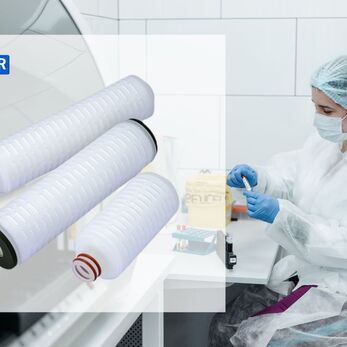
What Is a Pleated Polypropylene Filter Cartridge?
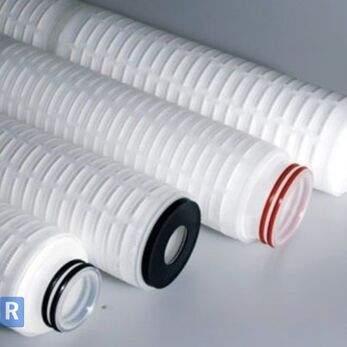
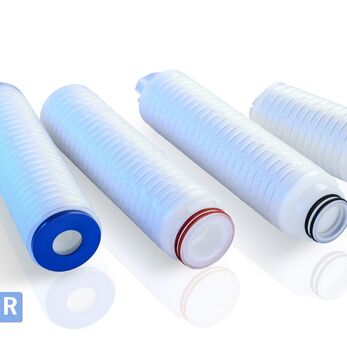
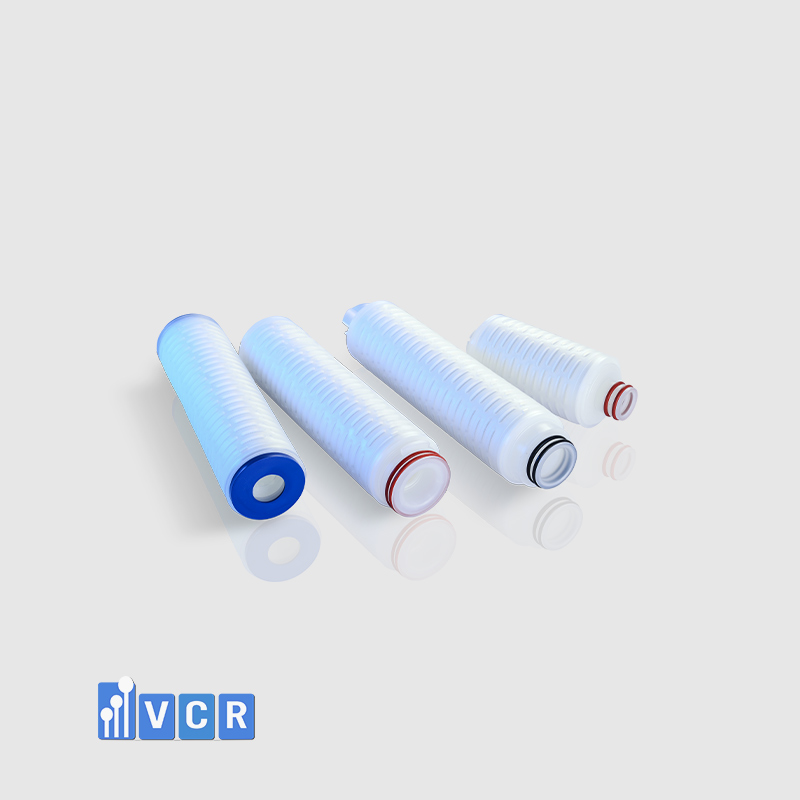
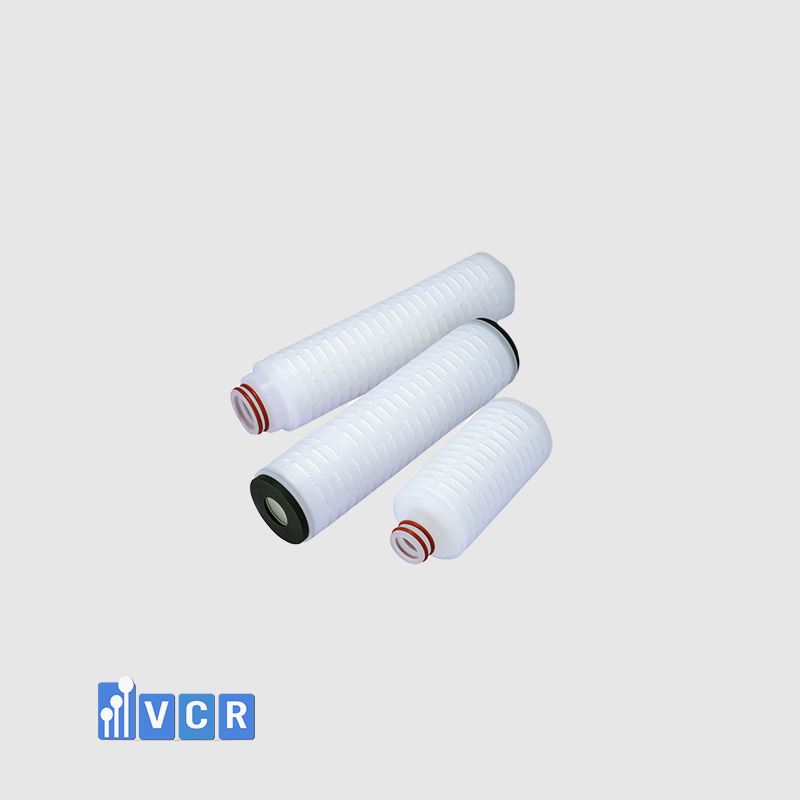
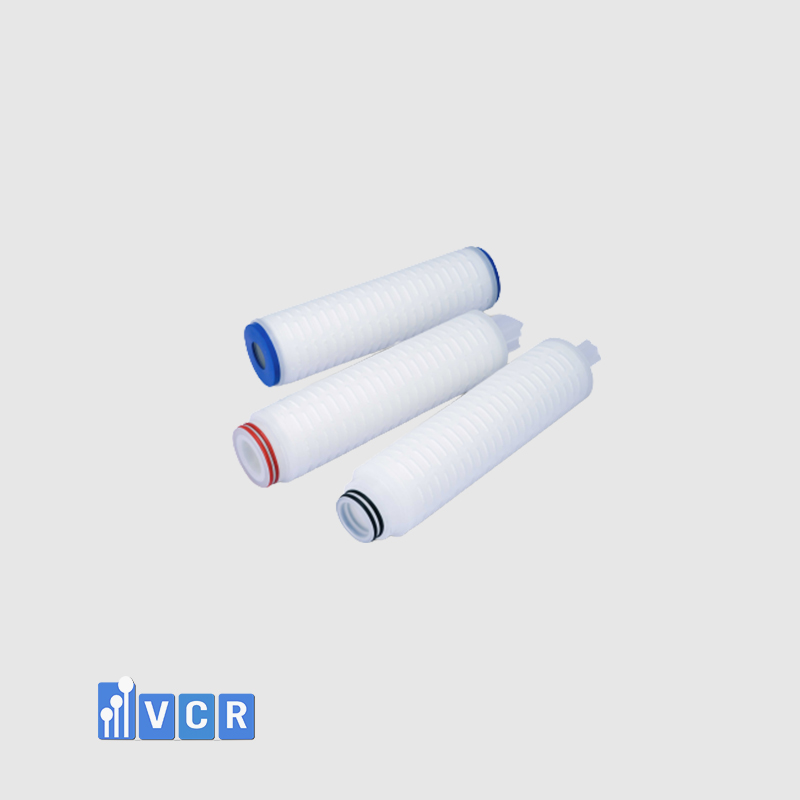
A pleated polypropylene filter cartridge is a cylindrical filtration element that uses folded polypropylene media to remove suspended particles from water and other process liquids.
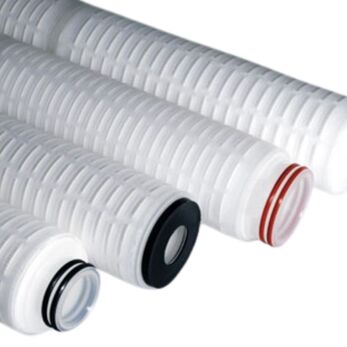
The filtration material is arranged into multiple pleats around a central support core. This construction increases the effective filtration area without significantly increasing the cartridge’s external dimensions. A larger media area can support higher flow rates, lower media velocity, greater contaminant capacity, and longer service life than a flat filter element of the same overall size.
Pleated polypropylene cartridges are widely used for clarification, prefiltration, fine particle removal, and protection of downstream equipment. Depending on the product design, they may be available with nominal or absolute retention ratings.
Commercial pleated polypropylene cartridges are used in process water, beverages, liquid food, cosmetics, fine chemicals, electronics manufacturing, and other industrial liquid-filtration applications. Eaton, Parker, Pall, and 3M all offer pleated polypropylene product families for applications ranging from general clarification to controlled fine filtration.
What Does Polypropylene Mean?
Polypropylene, commonly abbreviated as PP, is a thermoplastic polymer widely used in liquid-filtration products.
In an all-polypropylene cartridge, the filtration media, support layers, core, cage, and end caps may all be manufactured from polypropylene. The components are commonly bonded by thermal methods rather than by using adhesives, although the exact construction depends on the manufacturer.
Polypropylene is selected because it provides broad chemical compatibility for many aqueous solutions, acids, alkalis, and process chemicals. It also offers good mechanical strength, relatively low extractables, and suitability for many food, beverage, industrial, and high-purity applications.
Chemical compatibility must still be verified under actual operating conditions. Concentration, temperature, exposure time, mechanical load, and cleaning chemicals can all affect cartridge performance.
For example, Eaton specifies an all-polypropylene pleated cartridge with a stated operating range of pH 1 to 14 for one particular product family. This value is product-specific and should not be applied automatically to every polypropylene cartridge.
How Is a Pleated Polypropylene Cartridge Constructed?
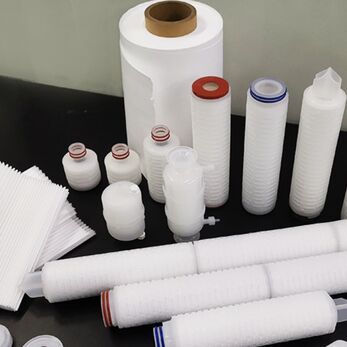
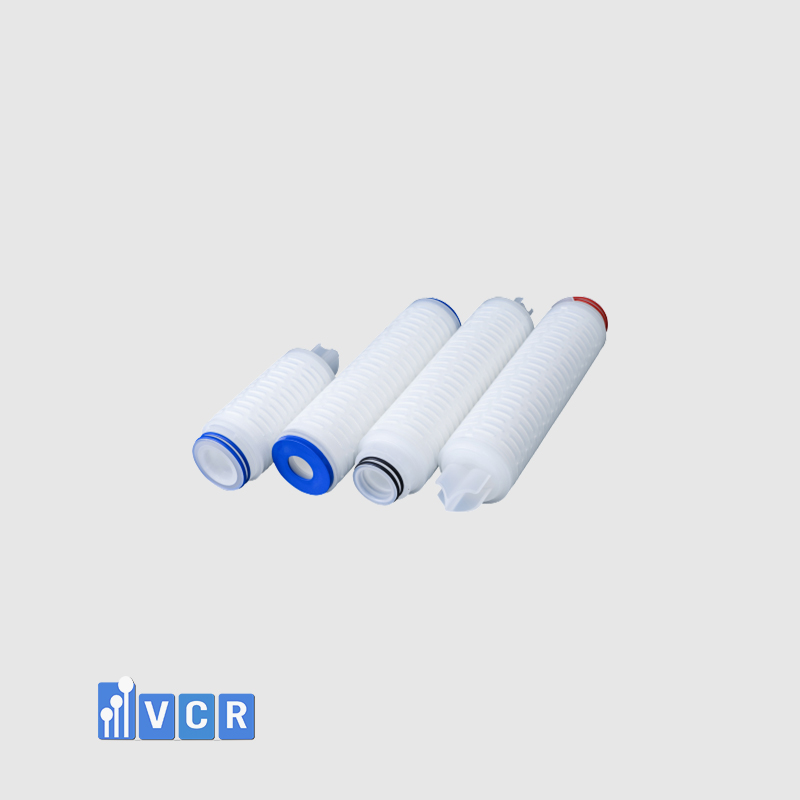
A typical pleated polypropylene cartridge contains a pleated media pack, upstream and downstream support layers, a central core, an outer cage, end caps, and a sealing interface.
The pleated media captures the contaminants. Support layers help maintain uniform pleat spacing and prevent the media from deforming under pressure. The central core protects the element against inward collapse, while the outer cage provides additional mechanical stability.
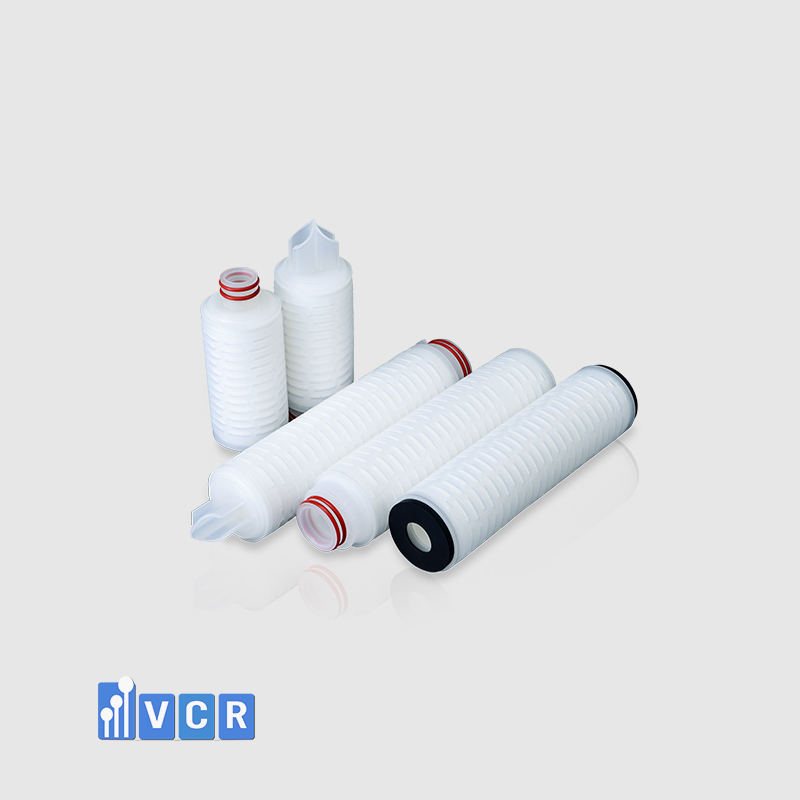
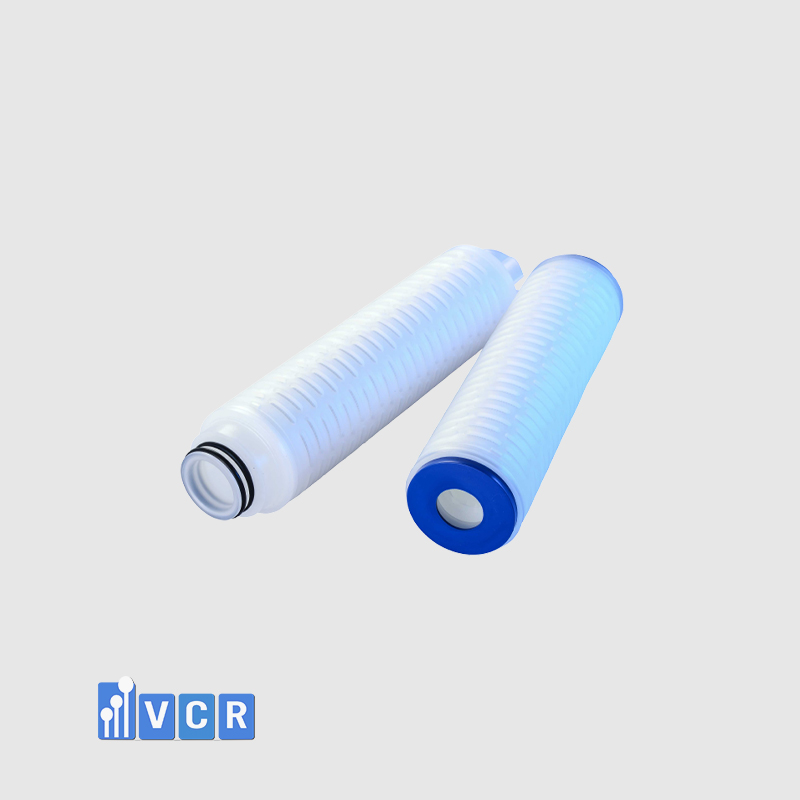
The end caps seal the ends of the pleated media pack and connect the cartridge to the filter housing. Sealing may be provided by a gasket, flat seal, O-ring, double O-ring, or another adapter arrangement.
Common cartridge configurations include double-open-end and single-open-end designs. Single-open-end cartridges may use adapter styles such as 222 or 226 O-rings, often combined with a spear or fin at the closed end.
The correct adapter is essential because liquid bypassing the cartridge through an inadequate seal will not be filtered.
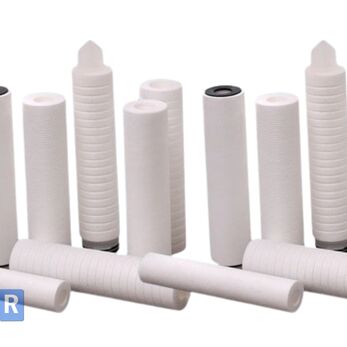
Manufacturers offer multiple lengths and connection styles. Eaton’s BECO PROTECT PP Pure range, for example, includes 10-, 20-, 30-, and 40-inch configurations with several adapter options. Pall also supplies pleated polypropylene cartridges in sanitary-style single-open-end arrangements with different O-ring and end-cap configurations.
How Does a Pleated Polypropylene Filter Cartridge Work?
Contaminated liquid enters the filter housing and flows through the polypropylene media. Suspended particles are retained on the media surface, within the media structure, or through a combination of surface and depth filtration.
The filtered liquid then passes through the support core and exits the housing.
The direction of flow depends on the cartridge and housing design. Many standard cartridges operate with outside-to-inside flow, but some high-flow designs use inside-to-outside flow.
The pleated geometry distributes the liquid over a larger media surface. This reduces the flow passing through each unit area of media and can help limit the initial pressure drop.
As contaminants accumulate, resistance increases. The cartridge must eventually be replaced, cleaned, or regenerated according to the manufacturer’s instructions and the filtration process requirements.
Surface Filtration and Depth Filtration
Not all pleated polypropylene cartridges use the same particle-retention mechanism.
A surface-type cartridge retains most particles near the upstream face of the media. This design can provide clearly defined particle retention and may be suitable for fluids containing relatively uniform, rigid particles.
A pleated depth cartridge uses a thicker, porous polypropylene structure. Particles can be retained at different levels within the media rather than only on its surface. This may provide greater contaminant capacity when the liquid contains particles of different sizes.
Some modern products use graded-density media. The upstream region captures larger particles, while progressively finer layers retain smaller particles. Pall describes pleated polypropylene cartridges with graded-density structures developed to increase contaminant-holding capacity and protect downstream final filters.
The appropriate mechanism depends on particle-size distribution, solids concentration, contaminant characteristics, required filtrate quality, and the function of the filtration stage.
Why Is the Filter Media Pleated?
Pleating increases the quantity of filter media that can be installed inside a cylindrical cartridge.
The larger effective area can provide several operational advantages. It may support a higher flow rate, reduce the clean pressure drop, increase contaminant capacity, and extend the interval between cartridge changes.
However, the number of pleats alone does not determine performance. Pleat depth, spacing, support structure, media thickness, cartridge diameter, and flow distribution are equally important.
Pleats positioned too closely together may prevent the liquid from reaching the complete media surface. Contaminants may bridge across narrow pleat openings and cause premature blockage.
A well-designed cartridge must balance maximum media area with adequate open channels for liquid flow.
Official product data from 3M, Eaton, Pall, and Parker consistently identify increased effective media area as a central feature of pleated polypropylene construction.
Nominal vs Absolute Micron Rating
A pleated polypropylene filter cartridge is commonly specified by its micron rating. However, the micron value alone does not fully define filtration performance.
A nominally rated cartridge removes an identified proportion of particles at the stated size under specified test conditions. The removal percentage used to define “nominal” may differ among manufacturers.
An absolute-rated cartridge provides a more clearly defined removal efficiency at a specified particle size. Performance may be described using a beta ratio, percentage retention, or standardized particle-challenge test.
For beta-ratio calculations:
Efficiency = (β − 1) ÷ β × 100%
A beta ratio of 100 corresponds to 99% efficiency. A beta ratio of 1,000 corresponds to 99.9% efficiency, while a beta ratio of 5,000 corresponds to 99.98% efficiency.
One Eaton pleated polypropylene product family specifies a beta ratio of at least 5,000, equivalent to 99.98% retention for defined particles. Parker offers polypropylene cartridges in both nominally rated and absolute-rated configurations, illustrating why users must examine the documented efficiency rather than relying only on the word “polypropylene.”
Available Micron Ratings
Pleated polypropylene cartridges are available across a broad range of retention ratings.
Coarser cartridges may be used for sediment removal and general prefiltration. Finer cartridges may be used for liquid clarification, downstream membrane protection, process stabilization, or critical particle control.
The available ratings vary significantly between product families. Eaton’s BECO PROTECT PP Pure series, for example, is offered in ratings from 0.6 to 10 microns, while 3M identifies polypropylene-media product ranges covering substantially broader retention bands for other construction types.
The correct rating should be selected according to the smallest harmful contaminant, required removal efficiency, downstream equipment, acceptable pressure drop, and desired service life.
Selecting an unnecessarily fine cartridge may increase pressure loss and shorten operating life without producing a meaningful process benefit.
Pleated Polypropylene vs Melt-Blown Polypropylene Cartridge
A pleated polypropylene cartridge should not be confused with a melt-blown polypropylene depth cartridge.
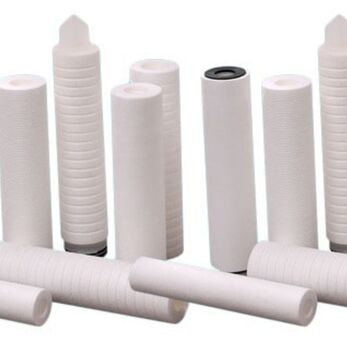
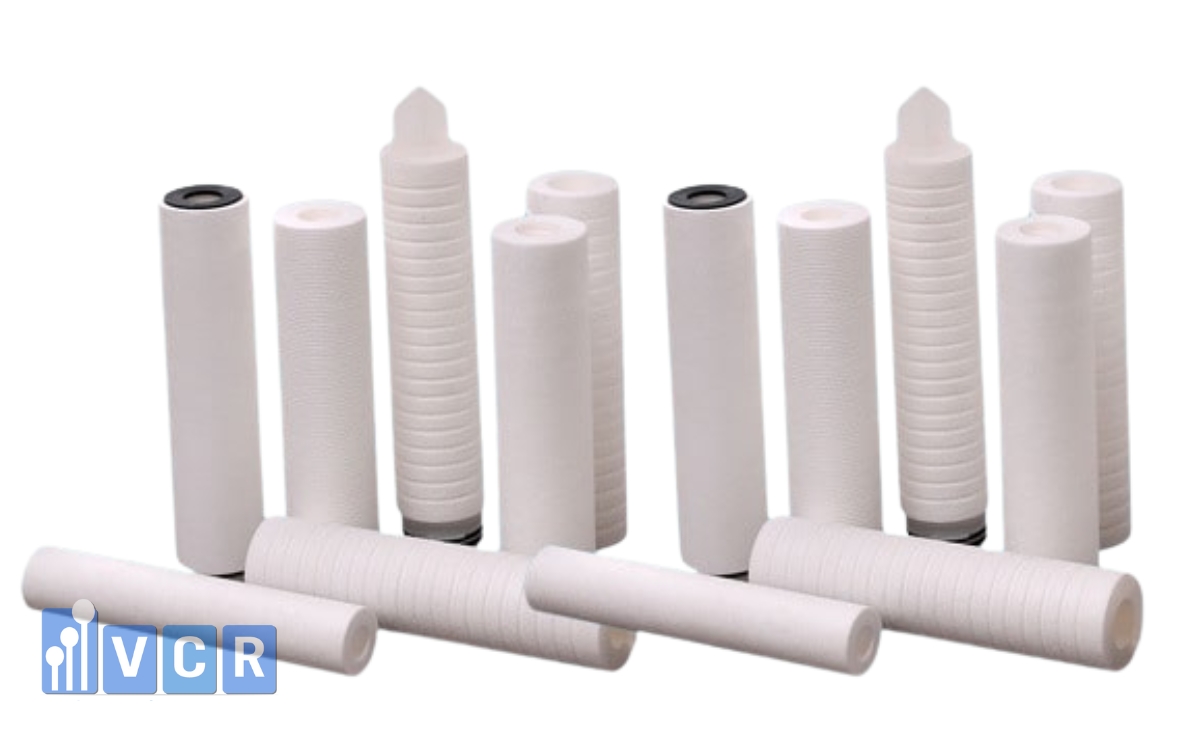
A melt-blown cartridge is normally manufactured by depositing polypropylene fibers into a thick tubular structure. It relies primarily on depth filtration and often has a graded pore structure from the outside toward the center.
A pleated cartridge uses folded media supported around a core. Its larger exposed media area can provide lower media velocity and more controlled particle retention.
Melt-blown cartridges are frequently economical and effective for high solids loading or general prefiltration. Pleated cartridges may be preferable when the system requires a larger effective area, lower clean pressure drop, more consistent particle retention, or an absolute-rated specification.
Parker describes one pleated polypropylene product family as bridging the gap between economical melt-blown depth cartridges and absolute-rated pleated filtration.
Neither construction is universally superior. The selection depends on fluid conditions and the filtration objective.
Pleated Polypropylene vs Pleated Polyester Cartridge
Polypropylene and polyester are both used for pleated liquid-filter cartridges, but they have different material properties.
Polypropylene is often chosen for broad compatibility with many water-based chemicals, acids, and alkalis. It is also commonly used where low extractables or all-polypropylene construction is desirable.
Polyester can provide good mechanical strength and dimensional stability. Certain polyester cartridges may also tolerate operating conditions that are unsuitable for some polypropylene configurations.
The correct material should be selected using a chemical-compatibility evaluation based on the actual liquid, temperature, concentration, and cleaning method.
Material selection should never be based only on micron rating or purchase price.
Flow Rate and Differential Pressure
Differential pressure is the pressure difference measured between the upstream and downstream sides of the cartridge.
When the cartridge is clean, the differential pressure is influenced by flow rate, liquid viscosity, media pore structure, filter area, housing design, and cartridge length.
As particles accumulate, the available flow passages become restricted and differential pressure increases.
The relationship between flow and pressure drop is strongly affected by liquid viscosity. A cartridge filtering oil, syrup, resin, or cold process fluid may produce a much higher pressure drop than the same cartridge filtering water.
Manufacturers often publish flow curves based on clean water or a liquid with a defined viscosity. These curves must be corrected when the actual process liquid has different physical properties.
The filtration system should include pressure gauges or a differential-pressure instrument. Monitoring pressure drop helps operators identify cartridge loading, plan maintenance, and avoid cartridge collapse or process-flow interruption.
Dirt-Holding Capacity
Dirt-holding capacity describes the amount of contaminant a filter can retain before it reaches a defined terminal pressure drop.
Pleated construction can provide high contaminant capacity because it creates a large filtration surface. Depth-type or graded-density polypropylene media can further increase capacity by distributing particles throughout the media structure.
However, actual service life depends on more than total filter area.
Fine, deformable, gelatinous, or sticky contaminants can block the media rapidly. Hard, irregular particles may form a more permeable contaminant layer. High solids concentration may fill the pleat channels before the complete depth of the media has been used.
A pilot test or laboratory filtration study may therefore be necessary for difficult process liquids.
Typical Applications
Pleated polypropylene filter cartridges are commonly used in process-water filtration, beverage production, liquid-food processing, cosmetics manufacturing, chemical processing, electronics, metal finishing, and general industrial clarification.
In water-treatment systems, they can remove sediment and protect activated-carbon units, ion-exchange systems, ultrafiltration modules, and reverse-osmosis membranes.
In food and beverage production, suitable cartridges may be used for process water, ingredients, beverages, syrups, and liquid-food streams. The cartridge must have the appropriate food-contact documentation and hygienic design for the intended application.
In chemical processing, polypropylene cartridges may filter acids, alkalis, coatings, inks, solvents, cleaning solutions, and process intermediates when compatibility has been confirmed.
In electronics manufacturing, absolute-rated polypropylene cartridges may be applied to process chemicals and water systems requiring controlled particle removal. Parker specifically identifies absolute-rated polypropylene configurations for electronics applications.
Pall and Eaton also identify applications including food and beverage processing, cosmetics, fine chemicals, and process water.
Use as a Prefilter
One of the most common functions of a pleated polypropylene cartridge is prefiltration.
A prefilter removes particles that would otherwise load a more expensive downstream filter or membrane. Correct prefiltration can extend the life of final filters, reduce system downtime, and improve process stability.
A polypropylene cartridge may be installed upstream of an activated-carbon element, fine membrane filter, sterile filter, ultrafiltration system, or reverse-osmosis membrane.
The prefilter rating must be fine enough to protect the downstream stage but not so fine that it blocks prematurely.
Pall specifically describes graded-density pleated polypropylene cartridges as prefilters intended to protect downstream final filters and membranes.
Advantages of Pleated Polypropylene Filter Cartridges
The principal advantage is the combination of a large effective filtration area and a compact cartridge format.
Other potential benefits include broad chemical compatibility, availability in multiple micron ratings, relatively low clean pressure drop, good contaminant capacity, thermal-bonded construction, and compatibility with many standard industrial or sanitary housings.
All-polypropylene construction can also reduce concerns about incompatible metals, adhesives, or mixed construction materials in certain processes.
Some product families can withstand hot-water sanitization, steam sterilization, or controlled backwashing. These capabilities are product-specific and must not be assumed for every cartridge. Parker identifies certain polypropylene cartridges that can be cleaned and sterilized in place, while Pall and Eaton specify regeneration or steam-cycle capabilities for selected models.
Limitations
Polypropylene cartridges are not suitable for every liquid or operating condition.
High temperature can reduce the mechanical strength of polypropylene. Maximum allowable temperature may also decrease as differential pressure increases.
Strong oxidizing chemicals, certain hydrocarbons, or specific solvents may affect polypropylene or the cartridge’s seals and support components.
Very high solids loading can fill the pleats rapidly. In such conditions, a bag filter, self-cleaning filter, strainer, centrifugal separator, or melt-blown depth cartridge may be more economical.
Fine cartridges can also generate excessive pressure drop when used with viscous liquids or undersized housings.
A cartridge selected only by micron rating may fail to provide the expected performance if its efficiency, materials, dimensions, sealing interface, and operating limits are not evaluated.
Can a Pleated Polypropylene Cartridge Be Cleaned?
Some pleated polypropylene filter cartridges can be cleaned, backwashed, sanitized, or regenerated. Others are intended for single use.
Cleanability depends on media structure, pleat support, contaminant type, adapter construction, process requirements, and manufacturer validation.
Gentle water backwashing may remove loosely retained surface particles from certain cartridges. Chemical cleaning may be possible when the selected solution is compatible with the complete cartridge.
High-pressure washing, aggressive brushing, or unapproved chemicals may deform the pleats, damage the media, change the effective retention rating, or compromise the end-cap seals.
Eaton specifies backwashability for selected pleated polypropylene cartridges, while Parker identifies some products as suitable for in-situ cleaning and sterilization. These are individual product capabilities rather than universal characteristics of polypropylene filtration media.
How to Select a Pleated Polypropylene Filter Cartridge
Selection should begin by defining the process objective. The cartridge may be required for coarse sediment removal, clarification, membrane protection, product stabilization, or controlled final filtration.
The engineer should determine the liquid composition, particle-size distribution, solids concentration, viscosity, temperature, flow rate, operating pressure, and required filtrate quality.
The micron rating must be evaluated together with the documented retention efficiency. A nominal 5-micron cartridge and an absolute 5-micron cartridge should not be treated as equivalent.
The effective filtration area and clean pressure-drop curve should then be reviewed at the required flow rate. The selected housing must provide enough cartridges to maintain a reasonable flow per element.
All wetted materials must be compatible with the process liquid and cleaning agents. This includes the media, core, cage, end caps, O-rings, gaskets, and housing materials.
The cartridge length, diameter, adapter, seal material, and flow direction must match the housing.
For hygienic or regulated applications, users should also request supporting documentation such as material certificates, food-contact declarations, extractables information, lot traceability, manufacturing-quality data, and sterilization guidance.
Installation and Operation
Before installation, isolate and depressurize the filter housing.
Inspect the new cartridge for damaged pleats, cracked end caps, deformed adapters, or contaminated sealing surfaces.
Install the cartridge in the correct orientation and verify that the sealing element is fully seated. Lubricate O-rings only with an approved material compatible with the process.
Close the housing and introduce liquid slowly. Vent trapped air before bringing the system to full operating pressure.
Record the clean differential pressure at the normal flow rate. This value provides a baseline for monitoring filter loading.
During operation, investigate unusual changes in pressure drop, flow, or filtrate quality. A gradual increase in differential pressure is normally associated with contaminant loading. A sudden decrease may indicate bypass, seal failure, media damage, or incorrect instrument readings.
Frequently Asked Questions
what is a pleated polypropylene filter cartridge used for?
It is used to remove suspended particles from water, beverages, liquid foods, chemicals, cosmetics, process fluids, and other industrial liquids. It is also commonly installed as a prefilter to protect downstream membranes and final filters.
is a pleated polypropylene cartridge washable?
Some models are washable, backwashable, or suitable for controlled regeneration. Others are disposable. Cleaning should only be performed according to the manufacturer’s approved procedure.
is polypropylene suitable for drinking-water filtration?
Polypropylene is widely used in water-filtration products, but the complete cartridge must be certified or documented as suitable for the intended potable-water application. Material type alone does not establish regulatory compliance.
what micron rating should I choose?
The correct rating depends on the particle size to be removed, required efficiency, downstream equipment, liquid quality, pressure-drop limit, and desired service life. The retention efficiency should always be reviewed together with the stated micron value.
what is the difference between nominal and absolute rating?
A nominal rating indicates partial removal at the stated particle size under defined conditions. An absolute rating is associated with a more precisely defined removal efficiency or beta ratio. Manufacturer definitions and test methods must be reviewed.
is a pleated polypropylene filter better than a melt-blown filter?
Not in every application. A pleated cartridge may offer greater exposed area, lower clean pressure drop, and more controlled retention. A melt-blown cartridge may be more economical for depth filtration and high contaminant loading.
can a polypropylene cartridge remove bacteria?
Only a cartridge with a suitable pore structure, validated microbial-retention performance, and appropriate integrity controls should be used for bacteria removal. A standard sediment cartridge should not be assumed to provide sterile filtration.
how often should the cartridge be replaced?
Replacement should be based on terminal differential pressure, reduced flow, deterioration in filtrate quality, physical damage, validated process limits, or the manufacturer’s recommended service interval.
can polypropylene cartridges handle chemicals?
Polypropylene is compatible with many chemicals, but suitability depends on chemical concentration, temperature, exposure time, pressure, and the materials used for seals and other cartridge components.
why does the pressure drop increase quickly?
Rapid pressure-drop growth may result from excessive solids concentration, an overly fine micron rating, high liquid viscosity, insufficient filter area, sticky contaminants, low operating temperature, or incorrect cartridge sizing.
Conclusion
A pleated polypropylene filter cartridge is a versatile liquid-filtration element that combines polypropylene’s broad application range with the increased surface area created by pleated construction.
It can provide efficient particle removal, low clean resistance, good contaminant capacity, and reliable protection for downstream equipment when correctly selected.
However, the term describes a broad category rather than a single performance level. Cartridges differ in media structure, filtration efficiency, micron rating, length, adapter design, temperature limit, pressure resistance, and cleanability.
The best cartridge is therefore not necessarily the one with the finest micron rating or the greatest number of pleats. It is the cartridge that provides the required retention efficiency at an acceptable pressure drop while remaining chemically, mechanically, and hygienically compatible with the complete filtration process.