- What Is a Pleated Membrane Filter Cartridge?
- How Does a Pleated Membrane Filter Cartridge Work?
- Why Is the Membrane Pleated?
- Main Components of a Pleated Membrane Cartridge
- Common Membrane Materials
- PES Membrane Filter Cartridge
- PTFE Membrane Filter Cartridge
- PVDF Membrane Filter Cartridge
- Nylon Membrane Filter Cartridge
- Polypropylene Membrane Cartridge
- Hydrophilic vs Hydrophobic Membranes
- Pore Rating and Retention Performance
- Nominal vs Absolute Retention
- Difference Between a Membrane Cartridge and a Pleated Depth Cartridge
- Differential Pressure and Flow Rate
- What Is Filter Integrity Testing?
- Sterilizing Filtration
- Typical Applications
- Cartridge Lengths and Connection Types
- Can Pleated Membrane Cartridges Be Cleaned?
- How to Select a Pleated Membrane Filter Cartridge
- Common Selection Mistakes
- Pleated Membrane Filter Cartridges from VCR
- Frequently Asked Questions
- Conclusion
What Is a Pleated Membrane Filter Cartridge?
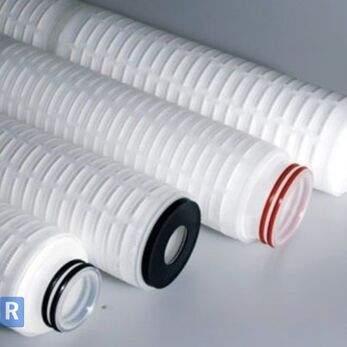
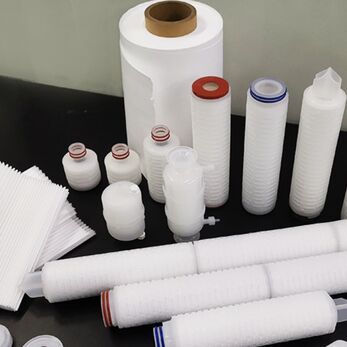
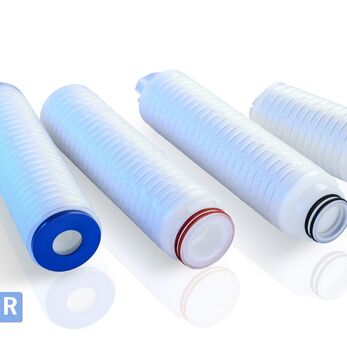
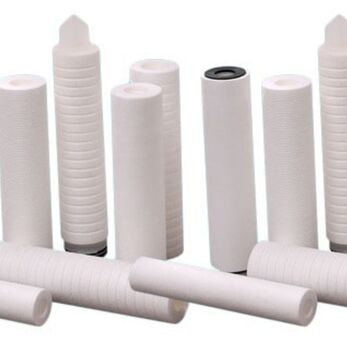
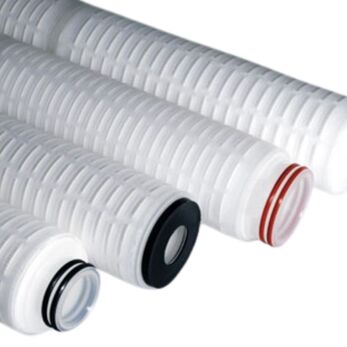
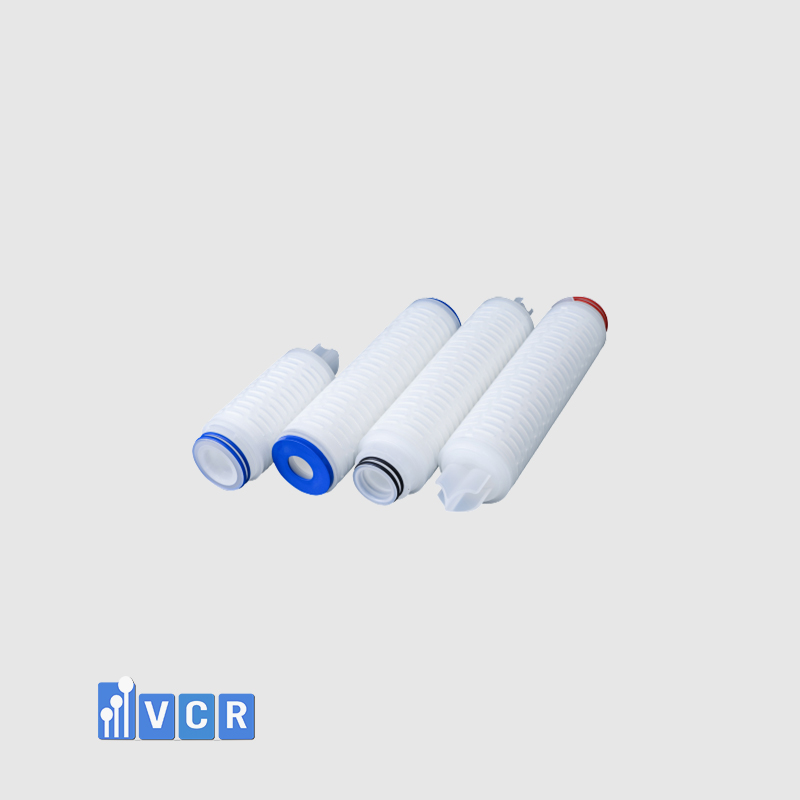
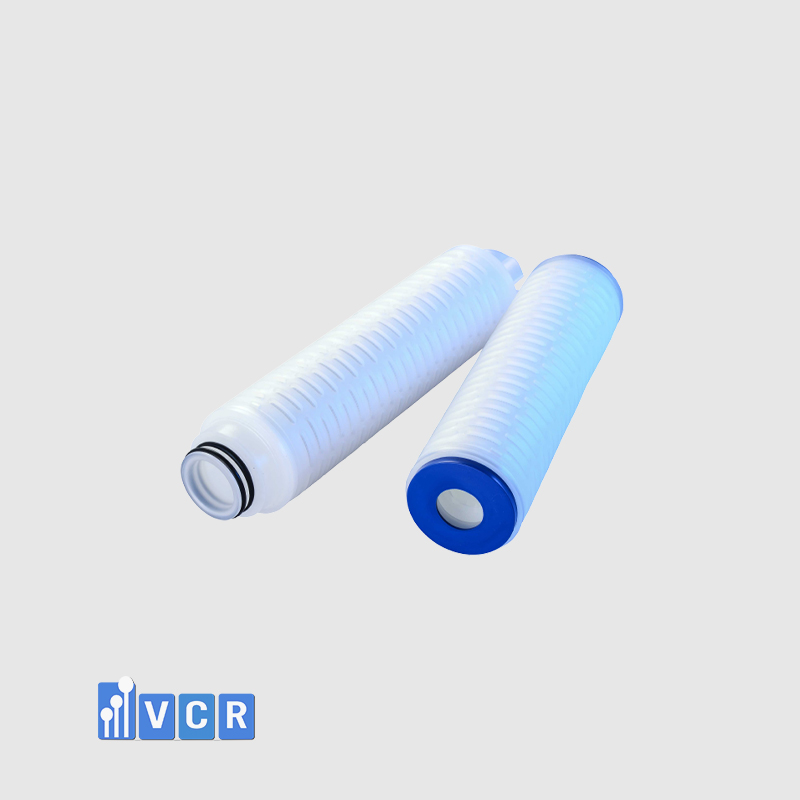
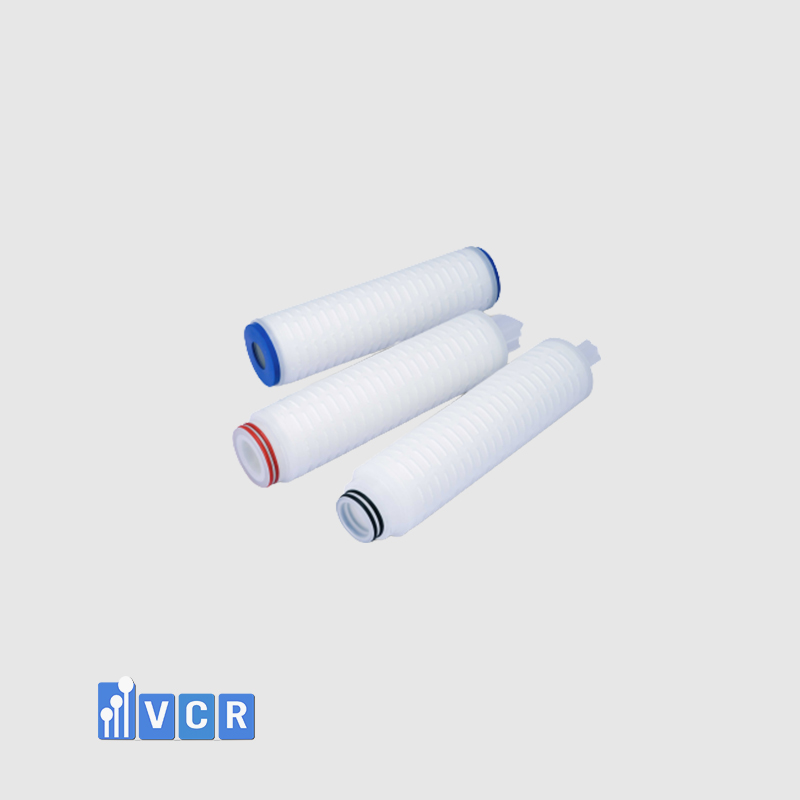
A pleated membrane filter cartridge is a cylindrical filtration element made by folding a thin microporous membrane into multiple pleats around a support core.
The pleated construction increases the effective filtration area within a compact cartridge. This expanded surface can support higher flow rates, lower media velocity, greater throughput and a slower rise in differential pressure compared with a flat membrane of similar external dimensions.
A typical cartridge contains the membrane, upstream and downstream support layers, drainage netting, an inner core, an outer cage, end caps and a sealing adapter. These components maintain pleat geometry, distribute the fluid and protect the membrane from mechanical damage. Pleated cartridges can be manufactured from PES, PTFE, PVDF, nylon, polypropylene and other polymeric materials.
Pleated membrane filter cartridges are used for fine particle removal, microbial reduction, sterilizing filtration, gas filtration, vent filtration and final clarification. Their applications include pharmaceutical production, biotechnology, food and beverage manufacturing, electronics, chemicals, cosmetics, laboratory systems and high-purity water treatment.
The term describes a broad product category rather than one fixed filtration performance. The membrane material, pore rating, retention validation, construction, effective area and sealing configuration must all be evaluated before a cartridge is selected.
How Does a Pleated Membrane Filter Cartridge Work?
The process fluid enters the filter housing and flows through the pleated membrane. Particles larger than the effective membrane pores are retained on or near the upstream membrane surface.
Unlike a thick depth filter, a membrane cartridge normally relies primarily on surface filtration. Its pore structure provides more defined particle retention than conventional nominally rated sediment media.
The filtered fluid then passes through a downstream support layer and into the central core before leaving the housing.
In many standard liquid cartridges, the flow direction is from outside to inside. However, some high-flow or specialized products use an inside-to-outside configuration. The approved flow direction must be confirmed from the manufacturer’s technical documentation.
As particles accumulate on the membrane, the resistance to flow increases. The cartridge is replaced, cleaned or regenerated when it reaches its approved terminal differential pressure, validated batch limit or maximum service cycle.
Why Is the Membrane Pleated?
Pleating allows a large membrane sheet to fit inside a relatively small cylindrical element.
A cartridge with a greater effective membrane area can process more fluid at the same media velocity. Lower media velocity may reduce the clean differential pressure and improve the amount of liquid processed before the membrane becomes blocked.
However, a cartridge with more pleats is not automatically better.
Pleats that are too closely spaced can restrict access to the membrane surface. Contaminants may bridge across the narrow spaces between pleats, causing premature blockage and preventing the full membrane area from being used.
The cartridge manufacturer must balance pleat quantity, pleat depth, spacing, drainage layers and structural support. Pall describes pleated cartridges as multilayer assemblies in which support and drainage layers help preserve element integrity and increase usable filtration area.
Main Components of a Pleated Membrane Cartridge
The membrane is the primary filtration layer. It determines the wettability, pore rating, chemical compatibility, retention characteristics and many aspects of the cartridge’s application.
Support layers are positioned around the membrane to prevent deformation and help distribute fluid evenly across the pleated pack.
The inner core supports the cartridge against inward collapse when differential pressure rises. The outer cage protects the pleats during transportation, installation, operation and removal.
End caps seal the ends of the membrane pack. Many high-quality cartridges use thermal bonding rather than adhesive bonding to reduce the risk of extractables and seal failure.
The cartridge-to-housing interface may use a flat gasket, double-open-end arrangement, 222 O-rings, 226 O-rings, a fin end or a spear end.
A suitable sealing arrangement is essential. Even a high-efficiency membrane cannot provide reliable filtration if liquid bypasses the element through an incorrect adapter or damaged O-ring.
Common Membrane Materials
PES Membrane Filter Cartridge
PES stands for polyethersulfone. PES membranes are naturally hydrophilic and are widely used for water-based fluids.
They generally offer high flow, relatively low differential pressure and suitability for fine liquid filtration. Applications can include purified water, beverages, biological fluids, buffers, pharmaceutical solutions and selected food-processing streams.
Parker offers hydrophilic PES pleated cartridges for water service, while Sartorius supplies single- and multilayer PES cartridges for particle control and biological applications.
PES is often considered where low protein binding, consistent wetting and controlled microbial retention are important. Nevertheless, the exact properties depend on the membrane formulation and complete cartridge construction.
PTFE Membrane Filter Cartridge
PTFE stands for polytetrafluoroethylene.
Standard PTFE membranes are naturally hydrophobic. They are commonly used for sterile air, gas, vent and compressed-gas filtration because they resist spontaneous wetting by water under normal operating conditions.
PTFE also provides broad compatibility with many aggressive chemicals and organic solvents. Parker offers hydrophobic PTFE cartridges for gas and solvent purification, as well as all-fluoropolymer cartridges for aggressive chemical applications.
Hydrophilic PTFE versions are also available for liquid filtration. A buyer must therefore confirm whether the membrane is hydrophobic or hydrophilic instead of selecting the cartridge only by the term “PTFE.”
PVDF Membrane Filter Cartridge
PVDF stands for polyvinylidene fluoride.
PVDF membranes can provide good flow, broad chemical compatibility, low extractables and relatively low protein binding. Merck’s hydrophilic Durapore PVDF cartridges are offered in pore ratings including 0.1, 0.22 and 0.45 microns for applications such as bioburden reduction and sterilizing filtration.
PVDF may be selected for pharmaceutical fluids, biological solutions, purified water, beverages and other processes where product compatibility and cleanliness are important.
As with every membrane type, cartridge performance must be verified using the product-specific validation data.
Nylon Membrane Filter Cartridge
Nylon membranes are naturally hydrophilic and provide good mechanical strength.
They are used for selected water-based liquids, solvents, chemicals, laboratory fluids and electronics applications. Nylon membranes can also offer low extractables and effective particle retention when correctly manufactured.
However, nylon is not compatible with every acid, alkali or aggressive chemical. The process concentration, temperature and exposure time must be reviewed carefully.
Nylon may also bind certain proteins or active components more strongly than alternative membranes, making process-specific compatibility testing important.
Polypropylene Membrane Cartridge
Polypropylene cartridges are widely used for clarification, prefiltration and particle removal.
Some products use a true microporous membrane, while others use pleated polypropylene depth media. These constructions should not be treated as technically identical.
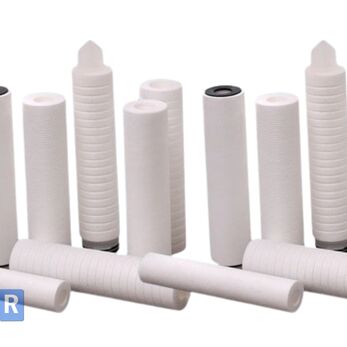
Pall describes pleated polypropylene depth cartridges as high-area elements with controlled pore structures for solids removal and protection of downstream membranes. Such cartridges may offer good dirt-holding capacity, but not every pleated polypropylene filter is integrity testable or suitable for sterilizing filtration.
The buyer should establish whether the product is a membrane filter, a pleated depth filter or a nominal prefilter.
Hydrophilic vs Hydrophobic Membranes
A hydrophilic membrane wets readily with water or another compatible aqueous fluid.
PES, nylon and many PVDF membranes are supplied as hydrophilic materials. They are commonly selected for liquid filtration because water can pass through their pores without requiring an organic wetting agent.
A hydrophobic membrane resists water penetration at normal pressure. PTFE is the most common example.
Hydrophobic membranes are particularly useful for air, gas and vent filtration because they can permit gas flow while resisting liquid water entry.
The distinction affects both operation and integrity testing. Hydrophilic cartridges are usually integrity tested after wetting the membrane, whereas hydrophobic cartridges may use a water intrusion test or may require wetting with a suitable low-surface-tension liquid before diffusion testing.
Pore Rating and Retention Performance
Pleated membrane cartridges are commonly described using pore ratings such as 0.1, 0.2, 0.22, 0.45 or 0.65 microns.
However, pore rating alone does not prove a specific removal performance.
A cartridge intended only for clarification may have the same stated pore rating as a filter designed for validated microbial retention, yet the two products may differ in pore distribution, manufacturing control, validation and integrity-test limits.
A 0.22-micron membrane should not automatically be described as sterilizing grade. Sterilizing-grade performance requires documented microbial challenge validation under defined conditions.
Merck and Sartorius offer validated 0.22-micron membrane cartridge products for sterile or biological filtration, but their performance is associated with the complete qualified product rather than the nominal pore value alone.
For critical applications, buyers should request bacterial-retention data, integrity-test specifications, extractables information, sterilization limits and relevant regulatory documentation.
Nominal vs Absolute Retention
Most membrane filter cartridges are selected for more controlled retention than nominal sediment filters.
An absolute rating generally indicates that the cartridge achieves a specified efficiency at the stated particle size under a defined test method.
A nominal rating indicates partial retention, but the exact efficiency may differ among manufacturers.
A cartridge described as a pleated membrane filter should therefore be evaluated by its documented retention curve or validation data rather than its marketing description.
This is especially important in pharmaceutical, biotechnology, electronics and high-purity chemical applications where a small level of particle or microbial passage may affect product quality.
Difference Between a Membrane Cartridge and a Pleated Depth Cartridge
A pleated membrane cartridge uses a thin membrane with a relatively defined pore structure. Most contaminants are retained close to the membrane surface.
A pleated depth cartridge uses a thicker porous medium. Particles can penetrate and become trapped at different depths within the material.
Depth cartridges generally tolerate higher contaminant loading and are often used as prefilters. Membrane cartridges provide finer and more defined retention but may block rapidly if the incoming liquid contains excessive solids.
Pall distinguishes pleated membrane filters from pleated-depth filters made from thicker media with tapered pore structures.
In many processes, the most economical arrangement uses a depth prefilter upstream of the membrane cartridge.
Differential Pressure and Flow Rate
Differential pressure is the pressure difference between the upstream and downstream sides of the cartridge.
When the membrane is clean, the pressure drop depends on the effective area, pore size, membrane thickness, fluid viscosity, flow rate, cartridge geometry and housing design.
As retained contaminants cover the membrane, differential pressure increases.
A sudden increase may indicate heavy particle loading, a highly viscous fluid, insufficient filtration area or an excessively fine pore rating.
A sudden decrease can indicate membrane damage, bypass leakage, seal failure or an instrument problem.
The filter system should include upstream and downstream pressure gauges or a differential-pressure transmitter. Monitoring pressure allows the operator to determine when the cartridge is reaching its validated operating limit.
The flow curve provided by the manufacturer is normally based on water or another defined test liquid. Corrections may be required for viscous products, cold liquids, oils, syrups or concentrated solutions.
What Is Filter Integrity Testing?
Integrity testing is a non-destructive method used to verify that a membrane filter and its sealing system remain intact.
For hydrophilic filters, common methods include the bubble-point test and diffusion or forward-flow test. The bubble-point test identifies the pressure at which the wetting liquid is displaced from the largest membrane pores. The diffusion test measures gas flow through the wetted membrane at a specified pressure below the bubble point.
Hydrophobic filters may be tested using the water intrusion test. This method measures water transport through the membrane under defined pressure without fully wetting the hydrophobic structure.
Integrity-test parameters must be taken from the cartridge manufacturer. They depend on membrane type, pore rating, cartridge length, filter area, wetting fluid and operating temperature.
Passing an integrity test does not convert an unvalidated cartridge into a sterilizing-grade filter. The test confirms the physical integrity of a product whose retention performance has already been correlated and validated.
Sterilizing Filtration
Pleated membrane cartridges are widely used for sterilizing filtration of suitable liquids and gases.
In pharmaceutical and biotechnology applications, the filter may be tested before use, after sterilization and after processing according to the validated procedure.
A sterilizing-grade cartridge must retain the specified challenge organism under defined test conditions and must remain integral throughout processing.
Membrane compatibility with the product is essential. Proteins, surfactants, solvents, high viscosity and product residues can influence wetting and integrity-test results.
Merck notes that sterilizing-grade filter integrity is confirmed using appropriate diffusion or bubble-point testing correlated with the filter’s validated retention performance.
Typical Applications
Pleated membrane filter cartridges are used in pharmaceutical production for purified water, water for injection systems, buffers, biological fluids, active ingredients, product intermediates and final sterile filtration.
In food and beverage manufacturing, they may be used for water, beer, wine, soft drinks, liquid ingredients and microbial stabilization. Sartorius supplies integrity-testable pleated PES cartridges specifically for food and beverage applications.
In electronics and semiconductor manufacturing, membrane cartridges are used for ultrapure water and process chemicals where fine particle control and low extractables are required.
Chemical plants use PTFE, PVDF, polypropylene and other compatible membranes for acids, alkalis, solvents and aggressive process fluids.
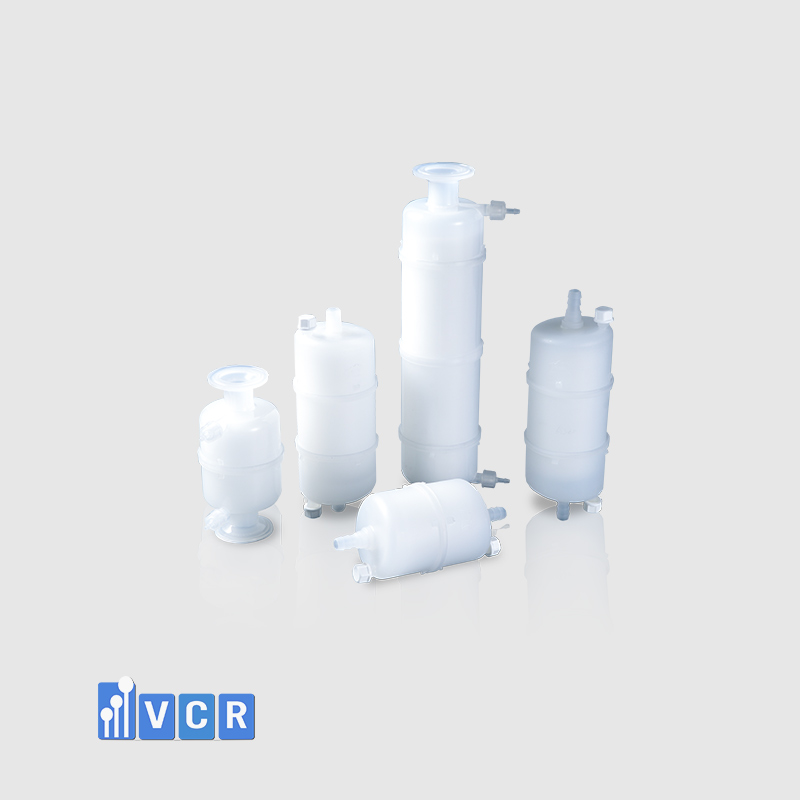
Capsule and cartridge formats are also used in laboratories, pilot systems, cosmetics manufacturing, fermentation and high-purity gas filtration.
Cartridge Lengths and Connection Types
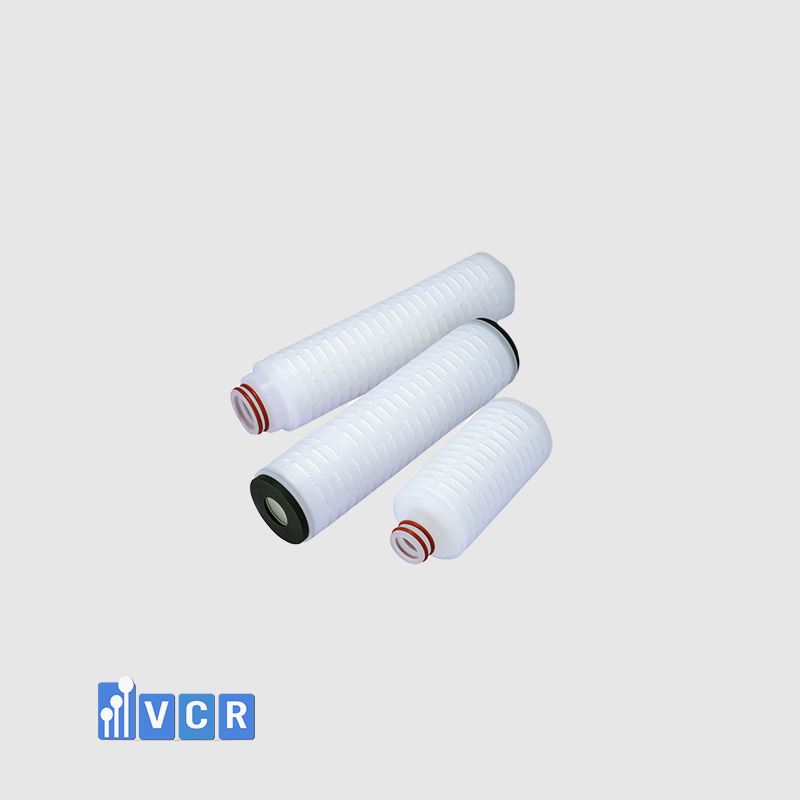
Pleated membrane cartridges are commonly available in nominal lengths of 5, 10, 20, 30 and 40 inches, although the available sizes depend on the manufacturer.
A longer cartridge provides more membrane area and normally supports a higher flow rate.
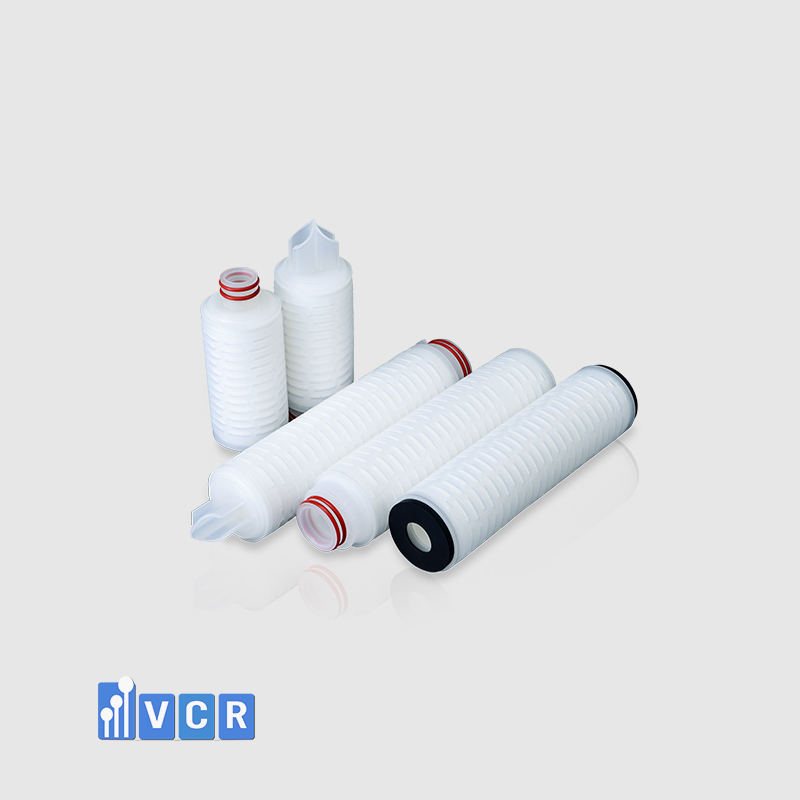
Common end configurations include double-open-end cartridges with flat gaskets and single-open-end cartridges using 222 or 226 O-rings.
The closed end may be flat, finned or spear-shaped.
Single-open-end configurations generally offer more controlled sealing for sanitary and critical applications. Double-open-end designs are common in general industrial filtration but depend heavily on correct compression of the end gaskets.
The cartridge dimensions and adapter code must be checked against the housing drawing before purchase.
Can Pleated Membrane Cartridges Be Cleaned?
Some membrane cartridges can be rinsed, chemically cleaned, hot-water sanitized, autoclaved or steam sterilized.
However, cleanability is product-specific.
Repeated cleaning may change membrane wettability, increase extractables, damage pleats or reduce mechanical strength. Deposits may also remain trapped within support layers even when the visible membrane appears clean.
A cartridge used for critical sterile filtration should only be reused within an approved and validated lifecycle.
The manufacturer should define the compatible cleaning agents, maximum temperatures, sterilization cycles, differential-pressure limits and integrity-test requirements.
General high-pressure washing or aggressive brushing should never be used on a membrane cartridge.
How to Select a Pleated Membrane Filter Cartridge
Selection should begin with the filtration objective.
The engineer must determine whether the cartridge is required for clarification, bioburden reduction, sterilizing filtration, membrane protection, gas filtration or final particle control.
The process liquid must then be evaluated for chemical composition, temperature, viscosity, particle concentration, microbial load, protein content and compatibility with the membrane.
The required pore rating should be selected according to validated retention performance rather than by choosing the smallest available number.
The cartridge must provide sufficient effective area for the required flow and batch volume. Undersizing can lead to rapid pressure rise and premature replacement.
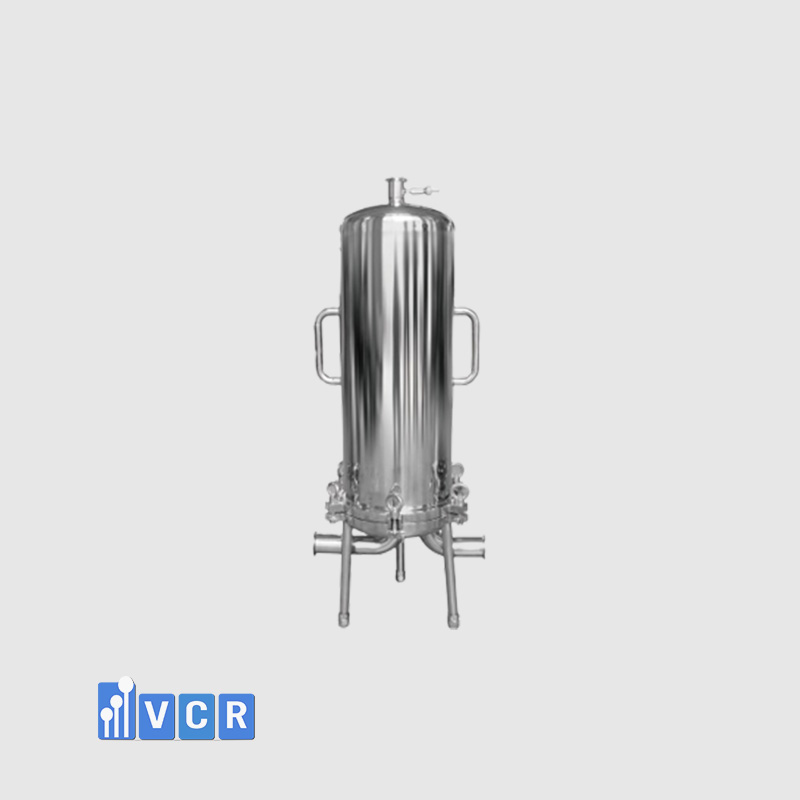
Housing compatibility must also be confirmed, including cartridge length, adapter, O-ring material and flow direction.
For regulated applications, the supplier should provide the appropriate technical and quality documentation. This may include material information, traceability, bacterial-retention validation, integrity-test limits, extractables data, sterilization guidance and regulatory declarations.
Common Selection Mistakes
One common mistake is treating all 0.22-micron cartridges as equivalent. Some are designed for validated sterilizing filtration, while others are intended only for general fine filtration.
Another mistake is selecting the membrane only by chemical resistance. Product binding, extractables, wettability and integrity-test method can be equally important.
An incorrectly sized membrane may block rapidly even when its material and pore rating are technically suitable.
Buyers may also overlook the O-ring material. The membrane may resist the process chemical while the seal swells, hardens or loses integrity.
Finally, installing a high-grade final membrane without adequate prefiltration can significantly shorten cartridge life and increase operating cost.
Pleated Membrane Filter Cartridges from VCR
Vietnam Cleanroom Equipment supplies a broad range of pleated filter cartridges for industrial and hygienic filtration applications.
The available portfolio includes PES, PP, PTFE, PVDF, nylon, Nylon 66 and other specialized filter elements, together with liquid filter housings and related filtration products.
For example, VCR offers hydrophilic PVDF cartridges, PES pleated cartridges and both hydrophobic and hydrophilic PTFE configurations for different liquid, chemical, gas and sterile-filtration requirements.
The correct product should be selected according to membrane compatibility, pore rating, filtration objective, flow rate, housing connection and required documentation.
Frequently Asked Questions
what is a pleated membrane filter cartridge?
It is a cylindrical filter element made by folding microporous membrane material into multiple pleats around a support core. The pleated structure increases the effective filtration area.
what materials are used in membrane cartridges?
Common materials include PES, PTFE, PVDF, nylon and polypropylene. Each material has different wettability, chemical resistance, binding characteristics and process applications.
is a pleated membrane cartridge the same as a sediment filter?
No. A membrane cartridge normally provides more defined and finer particle retention. A conventional sediment cartridge may use nominal depth media and is typically installed as a prefilter.
is every 0.22-micron cartridge sterilizing grade?
No. A 0.22-micron rating alone does not prove sterilizing-grade performance. The complete cartridge must have validated microbial-retention data and defined integrity-test limits.
which membrane is best for water filtration?
PES and hydrophilic PVDF are commonly used for water-based liquids. PP may be suitable for general particle removal and prefiltration. The best material depends on retention requirements, water quality and process conditions.
which membrane is best for air and gas filtration?
Hydrophobic PTFE is widely used for sterile air, gas and vent filtration because it resists wetting by water and provides broad chemical compatibility.
can membrane cartridges be integrity tested?
Many critical membrane cartridges can be tested using bubble-point, diffusion, forward-flow or water-intrusion methods. The correct method and acceptance limit must come from the manufacturer.
can a pleated membrane cartridge be cleaned and reused?
Some products can be cleaned, sanitized or sterilized for a defined number of cycles. Others are intended for single use. Reuse must follow the manufacturer’s procedure and validated process limits.
why does a membrane cartridge block quickly?
Rapid blockage may result from excessive solids, insufficient prefiltration, a pore rating that is too fine, high viscosity, low filtration area or deformable contaminants.
what is the difference between PES and PTFE cartridges?
PES is naturally hydrophilic and commonly used for aqueous liquids. PTFE is normally hydrophobic and commonly used for air, gas, vents, solvents and aggressive chemicals, although hydrophilic PTFE products are also available.
what is the difference between a capsule filter and a membrane cartridge?
A capsule filter permanently encloses the membrane inside a disposable housing. A membrane cartridge must be installed inside a separate reusable filter housing.
how should cartridge replacement be determined?
Replacement may be based on differential pressure, processed batch volume, flow reduction, integrity-test results, validated service cycles or process-quality requirements.
Conclusion
A pleated membrane filter cartridge provides a large effective filtration area within a compact cylindrical element. It can deliver controlled particle retention, high flow, low initial resistance and reliable microbial filtration when correctly designed and selected.
The main membrane options include PES for aqueous fluids, hydrophobic PTFE for gases and aggressive chemicals, hydrophilic PTFE for selected liquids, PVDF for clean biological and pharmaceutical processes, nylon for compatible solvents and liquids, and polypropylene for clarification or prefiltration.
Successful selection requires more than choosing a membrane material or micron rating. The engineer must evaluate retention validation, wettability, chemical compatibility, effective area, differential pressure, product binding, housing connection, sterilization method and integrity-testing requirements.
For critical applications, the best cartridge is the one whose complete performance has been documented and validated for the actual process—not simply the cartridge with the smallest stated pore size.