- What Is a Stainless Steel Wire Mesh Pleated Filter Cartridge?
- How Does a Stainless Steel Pleated Filter Cartridge Work?
- Main Components of the Cartridge
- Why Is the Wire Mesh Pleated?
- Common Stainless Steel Materials
- Stainless Steel 304 and 304L
- Stainless Steel 316 and 316L
- Other Metal Alloys
- Types of Stainless Steel Wire Mesh
- Plain Square Weave Mesh
- Twill Weave Mesh
- Dutch Weave Mesh
- Multilayer Wire Mesh
- Wire Mesh vs Sintered Metal Media
- Understanding Micron Ratings
- Typical Micron Ranges
- Flow Rate and Differential Pressure
- Temperature Resistance
- Pressure Resistance
- Main Advantages
- Limitations
- Typical Applications
- Water and Wastewater Treatment
- Food and Beverage Processing
- Pharmaceutical and Biotechnology Systems
- Chemical Processing
- Oil, Fuel, and Hydraulic Systems
- Polymer and High-Viscosity Filtration
- Air, Gas, and Steam Filtration
- How to Clean a Stainless Steel Wire Mesh Cartridge
- Can the Cartridge Be Backwashed?
- How Many Times Can It Be Reused?
- Stainless Steel Mesh vs Polypropylene Pleated Cartridge
- Stainless Steel Mesh vs Filter Bag
- How to Select the Correct Cartridge
- Common Selection Mistakes
- Stainless Steel Pleated Filter Cartridges from VCR
- Frequently Asked Questions
- Conclusion
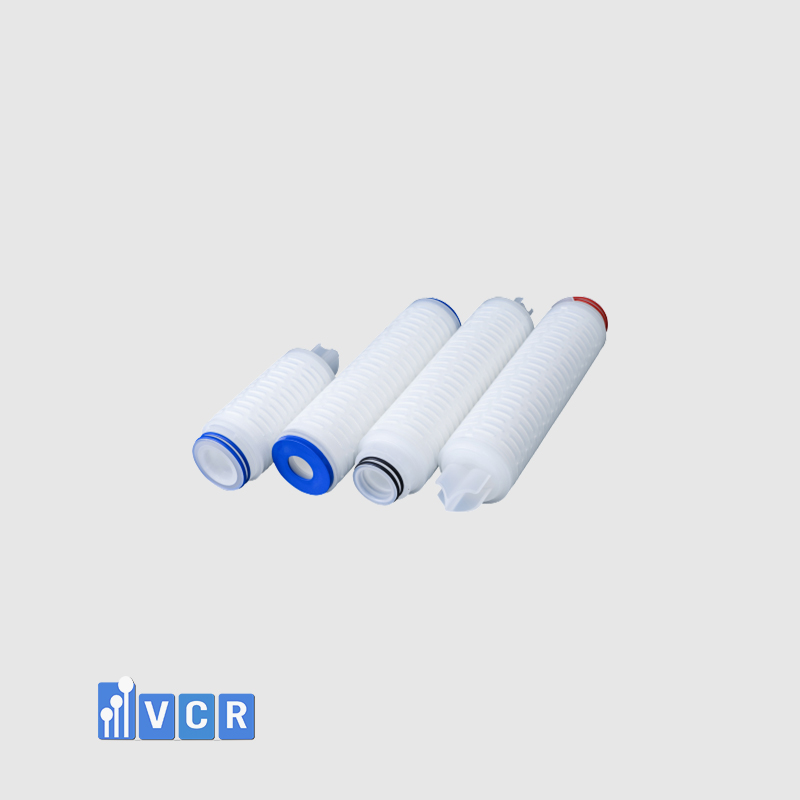
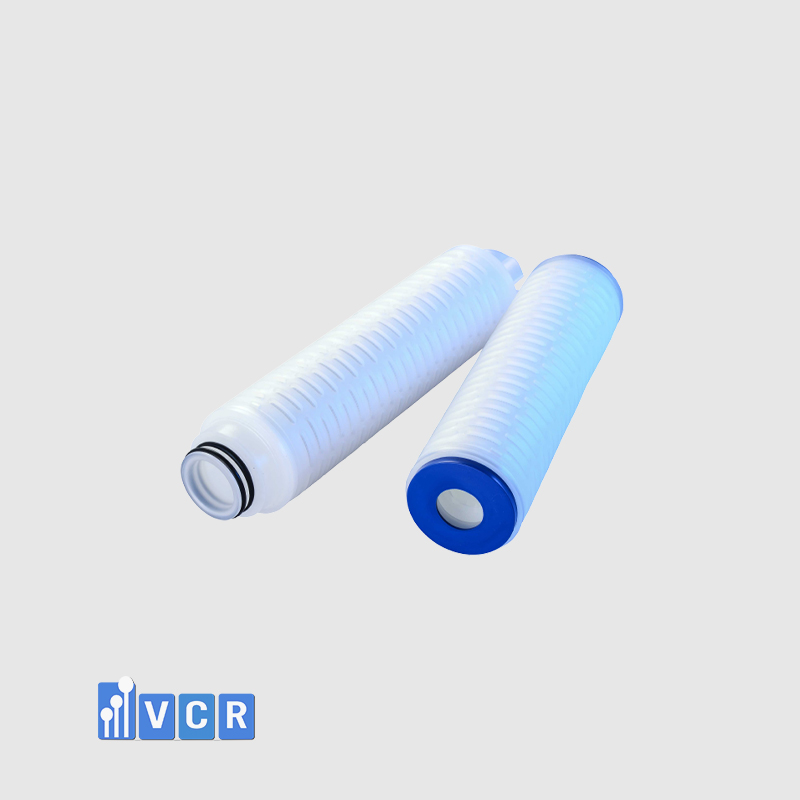
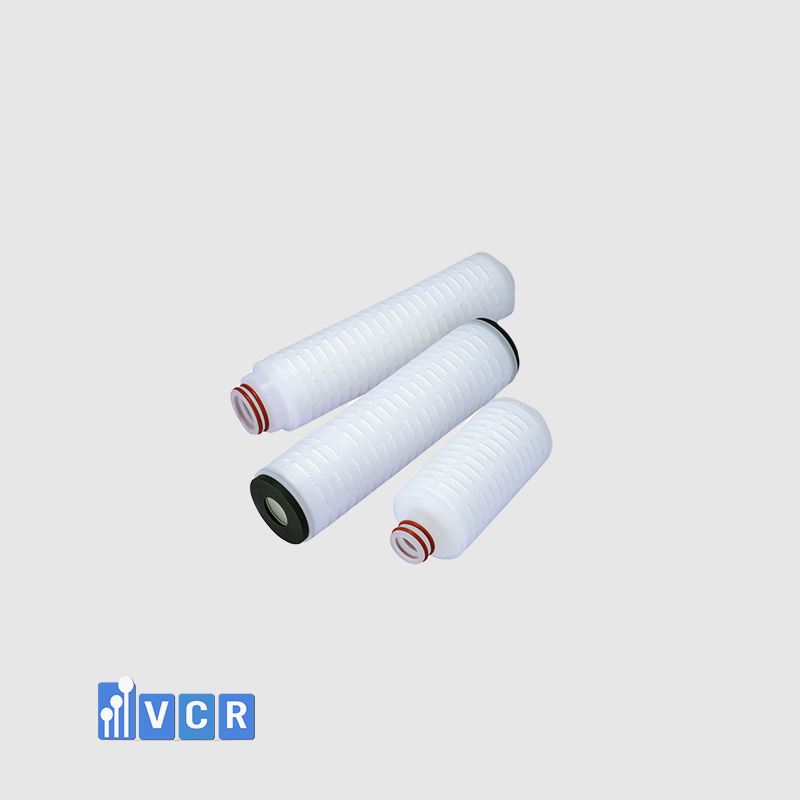
What Is a Stainless Steel Wire Mesh Pleated Filter Cartridge?
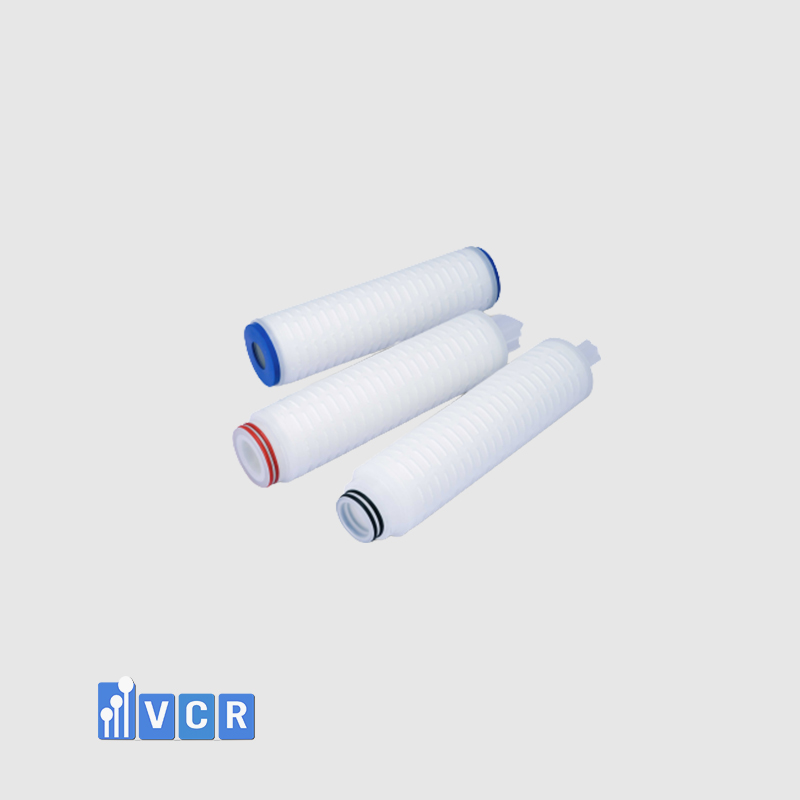
A stainless steel wire mesh pleated filter cartridge is a reusable filtration element made by folding woven stainless steel mesh into multiple pleats around a rigid support core.
The pleated structure increases the effective filtration area inside a compact cylindrical cartridge. Compared with a flat screen or simple cylindrical mesh element, a properly designed pleated cartridge can provide higher flow capacity, lower filtration velocity, greater contaminant-holding capacity, and a slower increase in differential pressure.
Stainless steel wire mesh cartridges are commonly used to remove solid particles from liquids, gases, oils, polymers, chemicals, fuels, steam, and high-temperature process fluids. They are selected for applications where conventional polypropylene, polyester, cellulose, or membrane cartridges may not withstand the operating temperature, pressure, chemical exposure, or cleaning requirements.
The cartridge may be manufactured from stainless steel 304, 304L, 316, 316L, or another metal alloy. Stainless steel 316L is widely selected for pharmaceutical, food, beverage, chemical, and high-purity applications because of its corrosion resistance and low-carbon composition.
Unlike most disposable polymeric cartridges, a stainless steel pleated filter can often be cleaned and returned to service. This makes it suitable for continuous industrial processes, high-value liquids, difficult operating conditions, and systems where reducing filter waste is important.
How Does a Stainless Steel Pleated Filter Cartridge Work?
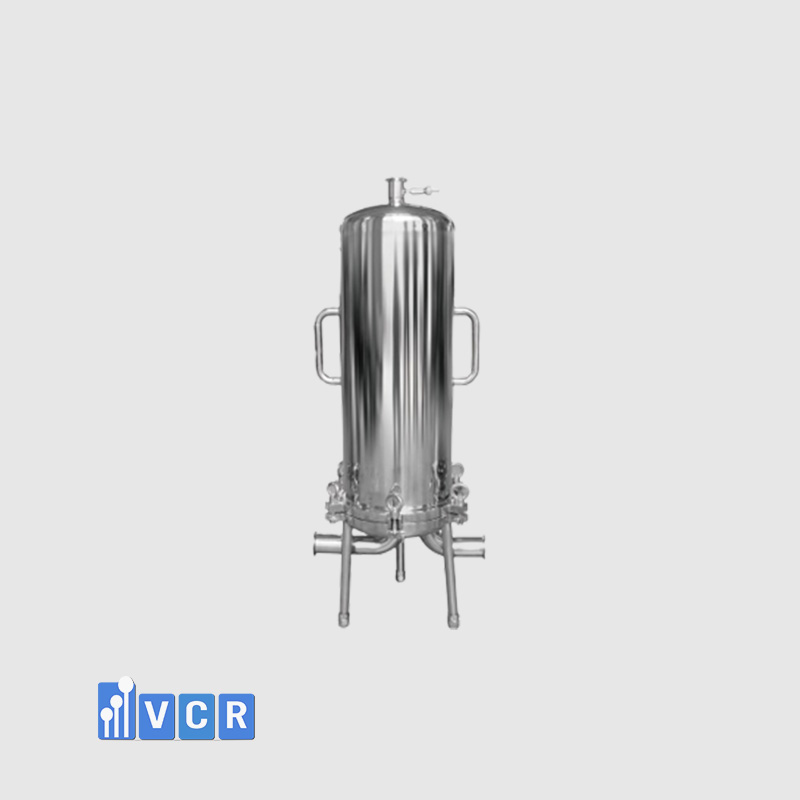
The process liquid or gas enters the filter housing and flows toward the pleated wire mesh.
In a common outside-to-inside configuration, contaminated fluid passes through the outer surface of the pleated mesh. Particles larger than the effective mesh openings are retained on the upstream surface, while the filtered fluid moves through the support layers and central core before leaving the housing.
Some specialized cartridges operate with inside-to-outside flow. The correct flow direction depends on the cartridge construction, support arrangement, and housing design.
Wire mesh primarily functions as a surface filtration medium. Most contaminants are retained on or close to the upstream face rather than deeply embedded throughout a thick fibrous structure.
This surface-loading behavior can make the element easier to clean than many depth filters. Backwashing, reverse flow, ultrasonic cleaning, chemical cleaning, or controlled mechanical cleaning may remove the retained solids and restore part of the original flow capacity.
As contaminants accumulate, differential pressure increases. The cartridge should be cleaned or replaced before the pressure difference exceeds its allowable operating limit.
Main Components of the Cartridge
A stainless steel wire mesh pleated filter cartridge normally contains several metal components assembled into one rigid filtration element.
The pleated wire mesh is the primary filtration layer. It determines the particle-retention rating, open area, flow resistance, and contaminant-release characteristics.
Coarser support mesh may be positioned on one or both sides of the filtration layer. These support layers prevent the fine mesh from deforming under pressure and help maintain the pleat geometry.
The central perforated core supports the element against collapse when the fluid flows from outside to inside. An external cage may be added when the cartridge requires protection against outward deformation or mechanical impact.
Metal end caps seal the pleated pack and connect it to the filter housing. The cartridge components may be joined by welding, brazing, mechanical assembly, or another manufacturing process compatible with the application.
In sanitary or high-purity cartridges, the construction is generally designed to minimize dead spaces, loose fibers, adhesives, and materials that could contaminate the process.
The sealing interface may use a flat gasket, O-ring, threaded connector, flange, double-open-end arrangement, 222 adapter, 226 adapter, or a custom-engineered connection.
Why Is the Wire Mesh Pleated?
Pleating allows a larger quantity of filtration media to fit inside a limited cartridge diameter.
A flat sheet of mesh has a relatively small filtration area. Folding the mesh into multiple pleats increases the surface available for fluid flow without requiring a proportionally larger housing.
The increased area can reduce the velocity through each unit of mesh. Lower media velocity may reduce clean pressure drop, increase flow capacity, and allow more solids to accumulate before the cartridge reaches its terminal differential pressure.
However, adding more pleats does not automatically improve performance.
If the pleats are positioned too closely together, contaminants may bridge across the narrow channels. The fluid may not reach the complete mesh surface, and parts of the theoretical filtration area may become ineffective.
Pleat depth, pitch, mesh stiffness, support layers, fluid viscosity, particle size, and solids concentration must therefore be balanced during cartridge design.
A well-designed element provides sufficient open space between the pleats while maximizing the usable filtration surface.
Common Stainless Steel Materials
Stainless Steel 304 and 304L
Stainless steel 304 is widely used for general industrial filtration, water, air, fuel, oils, and compatible process liquids.
It offers good mechanical strength and corrosion resistance in many non-aggressive environments. Stainless steel 304L contains less carbon than standard 304, which can improve resistance to sensitization in welded components.
SS304 cartridges are often economical for utility water, lubricating oil, hydraulic systems, general chemicals, and industrial cleaning processes.
However, SS304 may not be suitable for environments containing significant chlorides, strong acids, or highly corrosive chemicals.
Stainless Steel 316 and 316L
Stainless steel 316 contains molybdenum, which generally provides greater resistance to pitting and corrosion than SS304 in many chemical and chloride-containing environments.
SS316L has a lower carbon content and is widely used in welded sanitary equipment, pharmaceutical systems, food production, beverage processing, biotechnology, and high-purity applications.
A stainless steel 316L pleated filter cartridge may be selected when the process requires improved corrosion resistance, hygienic construction, repeated steam exposure, or compatibility with aggressive cleaning procedures.
Material suitability must still be verified for the actual chemical concentration, operating temperature, exposure time, and cleaning conditions.
The term “stainless steel” does not mean that the cartridge is resistant to every corrosive fluid.
Other Metal Alloys
For highly aggressive chemicals, extreme temperatures, or specialized industrial processes, cartridges may be manufactured from alloys such as Hastelloy, Monel, nickel, or titanium.
These materials are generally more expensive and are selected only when stainless steel cannot provide sufficient chemical or thermal resistance.
The cartridge material should always be evaluated together with the filter housing, seals, pipework, and process equipment.
Types of Stainless Steel Wire Mesh
Plain Square Weave Mesh
Plain square weave mesh has wires arranged in a regular over-and-under pattern. The openings are relatively uniform and easy to define.
This type of mesh is suitable for general particle separation and surface filtration. It can provide good permeability and is usually easier to clean than very fine, densely woven media.
Its filtration rating depends on the wire diameter and size of the square openings.
Twill Weave Mesh
Twill weave allows each wire to pass over and under multiple wires. This construction can support finer wire diameters and smaller openings than basic plain weave mesh.
Twill weave may provide greater strength and finer filtration while maintaining sufficient flexibility for pleating.
Dutch Weave Mesh
Dutch weave uses different wire diameters or wire counts in the warp and weft directions. The resulting structure has narrow, tortuous flow paths rather than simple square openings.
Dutch weave mesh can provide finer and more controlled particle retention than conventional square weave mesh.
It may be used for fine filtration of polymers, fuels, hydraulic oils, chemicals, and other demanding process liquids.
Because the openings are not simple squares, the filtration rating should be based on tested retention performance rather than only theoretical mesh geometry.
Multilayer Wire Mesh
Some cartridges contain several layers of wire mesh.
A fine filtration layer may be supported by coarser drainage and protection layers. The layers can be pleated together or sintered into a stable composite sheet before the element is formed.
Multilayer construction improves mechanical stability and allows the filtration layer to withstand higher differential pressure.
The number of layers, mesh type, bonding method, and orientation vary according to the cartridge design.
Wire Mesh vs Sintered Metal Media
Wire mesh and sintered metal media are related but technically different.
A conventional wire mesh cartridge uses woven metal wires with defined openings. It primarily provides surface filtration and can be relatively easy to clean.
Sintered metal media is produced by bonding metal fibers, powders, or multiple wire-mesh layers through controlled heat and pressure. This creates a rigid porous structure with greater dimensional stability.
Sintered metal cartridges may provide finer particle retention, improved mechanical strength, and greater resistance to deformation. Some sintered fiber media also offer a depth-loading effect.
Wire mesh cartridges may be more economical and easier to clean when the contaminants are coarse, hard, and retained mainly on the surface.
A sintered element may be preferable when the application requires finer filtration, higher differential-pressure resistance, or a more stable pore structure.
Understanding Micron Ratings
Stainless steel pleated filter cartridges are available in a wide range of micron ratings.
Coarse mesh elements may be used to remove large particles, scale, fibers, chips, and debris. Fine wire mesh or Dutch weave cartridges may be used for smaller particles in fuels, oils, polymers, and process chemicals.
The stated micron value must be interpreted carefully.
Some manufacturers provide a nominal rating, meaning that the cartridge removes a defined proportion of particles at the stated size. Others provide an absolute rating associated with a more clearly defined retention efficiency.
Two stainless steel cartridges both described as 10 micron may therefore provide different filtration performance.
For critical applications, users should request information about the test method, removal efficiency, beta ratio, largest passing particle, or particle-retention curve.
Mesh count alone is also insufficient. Mesh count describes the number of openings per linear inch, but actual retention depends on wire diameter, weave pattern, opening geometry, and manufacturing tolerances.
Typical Micron Ranges
Stainless steel wire mesh cartridges may be available from relatively coarse ratings above 100 microns to fine ratings below 10 microns, depending on the mesh construction.
Plain square weave is commonly used for coarser filtration. Dutch weave or multilayer structures are often selected for finer particle removal.
Very fine filtration may require sintered metal fiber, metal membrane, or specialized composite media rather than conventional woven mesh.
The finest available rating is not always the best choice. An unnecessarily fine cartridge can increase pressure drop, shorten service life, and require more frequent cleaning.
The correct micron rating is the one that protects the downstream process while maintaining acceptable flow and operating cost.
Flow Rate and Differential Pressure
The flow capacity of a stainless steel pleated filter depends on its diameter, length, filtration area, mesh opening, pleat geometry, fluid viscosity, and housing configuration.
Clean water generally passes through the cartridge with less resistance than oil, resin, syrup, polymer, or another viscous liquid.
Differential pressure increases as the flow rate or fluid viscosity rises. It also increases when contaminants accumulate on the mesh.
The filtration system should be equipped with pressure gauges upstream and downstream of the element or with a differential-pressure transmitter.
The clean differential pressure should be recorded after installation. This baseline helps operators determine how quickly the cartridge is loading.
A rapid increase in differential pressure may indicate high contaminant concentration, an excessively fine rating, insufficient filtration area, sticky solids, or low fluid temperature.
A sudden decrease in differential pressure may indicate a damaged mesh, broken weld, sealing failure, bypass path, or incorrect instrument reading.
Maximum operating and collapse differential pressures are product-specific and must be obtained from the manufacturer.
Temperature Resistance
One of the principal advantages of stainless steel filtration media is its ability to withstand temperatures that would damage many polymeric cartridges.
Stainless steel wire mesh cartridges can be used for hot oils, steam, molten polymers, process gases, and high-temperature chemicals when the complete construction is suitable.
However, maximum temperature does not depend on the metal alone.
Gaskets, O-rings, welds, housing materials, surface treatments, and process connections may have lower temperature limits than the stainless steel mesh.
A cartridge using silicone, EPDM, FKM, PTFE, or another seal material must be evaluated according to the complete operating temperature range.
Mechanical strength, corrosion rate, and thermal expansion also change at elevated temperature.
The allowable temperature must therefore be confirmed for the assembled cartridge and housing, not inferred only from the stainless steel grade.
Pressure Resistance
Stainless steel cartridges provide high mechanical strength compared with many polymeric elements.
Their central core, outer cage, support mesh, and welded end caps allow them to operate under demanding pressure conditions.
However, the relevant limit is often differential pressure rather than system pressure alone.
A cartridge may operate in a high-pressure line while experiencing only a moderate pressure difference across the mesh. If the outlet becomes blocked or the element becomes heavily loaded, differential pressure can rise rapidly and deform the pleats.
Outside-to-inside flow can create collapse forces on the cartridge. Inside-to-outside flow can create burst forces.
The support structure must be designed for the intended flow direction and worst-case pressure condition.
Main Advantages
A stainless steel wire mesh pleated filter cartridge offers several important benefits for industrial filtration.
Its metallic construction provides resistance to high temperature, mechanical stress, and many process chemicals. The pleated design increases filtration area without requiring a very large housing.
The cartridge can often be cleaned and reused, reducing the consumption of disposable filter elements.
Wire mesh does not release conventional textile fibers into the process and can be suitable for systems where fiber shedding must be minimized.
Welded construction can eliminate adhesives and reduce the number of non-metallic materials exposed to the process.
The element may withstand steam cleaning, chemical cleaning, ultrasonic treatment, or thermal regeneration when these procedures are approved for the product.
Stainless steel cartridges can also be manufactured in custom lengths, diameters, connections, and filtration ratings for existing industrial housings.
Limitations
Stainless steel wire mesh cartridges also have limitations.
Their initial purchase price is usually higher than that of disposable polypropylene or polyester cartridges.
Wire mesh primarily provides surface filtration and may have lower dirt-holding capacity than a thick depth filter when the incoming fluid contains a broad distribution of fine particles.
Sticky, gelatinous, or deformable contaminants can blind the mesh and may be difficult to remove.
Very fine mesh can be damaged by aggressive cleaning, sharp particles, excessive differential pressure, or incorrect handling.
Stainless steel is not resistant to every chemical. Chloride-induced pitting, strong-acid attack, crevice corrosion, and stress-corrosion cracking can occur under unsuitable conditions.
Repeated cleaning also does not guarantee unlimited service life. Welds, pleats, seals, and mesh openings should be inspected regularly.
Typical Applications
Water and Wastewater Treatment
Stainless steel pleated cartridges can remove sand, rust, pipe scale, suspended solids, and process debris from water.
They are useful in systems requiring repeated cleaning or resistance to high temperature and chemicals.
Applications include process water, cooling water, wash water, boiler systems, wastewater recovery, and protection of downstream membranes or equipment.
For drinking-water applications, the complete cartridge and housing must use materials suitable for potable-water contact.
Food and Beverage Processing
Suitable SS316L cartridges may be used for edible oils, syrups, beverages, liquid ingredients, process water, and cleaning solutions.
Their reusable construction and resistance to hot-water or steam cleaning can be valuable in hygienic processing.
Surface finish, weld quality, drainability, material documentation, and cleaning validation must be considered where the cartridge contacts food products.
A wire mesh cartridge should not automatically be treated as a sterile filter. Microbial retention requires a specifically validated filtration medium and process.
Pharmaceutical and Biotechnology Systems
Stainless steel wire mesh cartridges are generally used as strainers, coarse filters, equipment-protection elements, or reusable prefilters rather than as final sterilizing filters.
They may be installed upstream of fine membrane cartridges to remove large particles and extend the life of the final filtration stage.
Pharmaceutical applications may require SS316L construction, controlled surface finish, material traceability, documented welding, and validated cleaning procedures.
The cartridge design should minimize product retention and areas where contaminants could accumulate.
Chemical Processing
Chemical plants use stainless steel mesh cartridges to filter acids, alkalis, solvents, resins, coatings, adhesives, and process intermediates.
Chemical compatibility must be checked for the actual fluid composition and temperature.
Where SS316L is insufficient, a higher-performance alloy may be required.
Reusable metal cartridges are particularly useful when disposable polymeric filters swell, soften, dissolve, or release contaminants into the process.
Oil, Fuel, and Hydraulic Systems
Wire mesh cartridges can remove metal wear particles, scale, debris, and other solids from lubricating oil, hydraulic fluid, diesel, fuel, and industrial oils.
Surface-loading mesh can be cleaned and reused when the contamination is not permanently embedded.
Fine fuel or hydraulic filtration may require absolute-rated multilayer mesh or sintered metal media rather than a simple woven screen.
Polymer and High-Viscosity Filtration
High-temperature polymers, resins, paints, coatings, and viscous process liquids may require strong metal filtration elements.
Stainless steel cartridges can maintain structural stability under temperatures and pressures that are unsuitable for many plastic cartridges.
The filtration area must be large enough to limit pressure drop through the viscous fluid.
Dutch weave or sintered mesh may be used where controlled fine-particle retention is required.
Air, Gas, and Steam Filtration
Stainless steel mesh cartridges may be used for air, compressed gas, process gas, and steam applications.
They can remove scale, rust, droplets, and solid particles while tolerating elevated temperature.
However, conventional mesh should not be assumed to provide sterile gas filtration. Sterile air and gas applications require validated hydrophobic membrane filters or another qualified filtration technology.
How to Clean a Stainless Steel Wire Mesh Cartridge
The appropriate cleaning method depends on the contaminant, mesh rating, cartridge construction, and process requirements.
Before cleaning, isolate and depressurize the housing. Remove the cartridge carefully and inspect it for deformation, damaged pleats, cracked welds, or broken seals.
Loose surface particles may be removed by reverse-flow rinsing. Backwashing in the opposite direction from normal filtration can help release solids trapped on the upstream face.
A soft brush may be used for robust coarse mesh when approved by the manufacturer. Hard wire brushes or sharp tools should not be used on fine mesh because they can enlarge or damage the openings.
Ultrasonic cleaning can remove fine particles from pleat valleys and mesh openings. The cleaning time, frequency, temperature, and solution must be controlled to avoid damaging the cartridge.
Chemical cleaning may be used for oils, organic deposits, mineral scale, or process residue. The cleaning agent must be compatible with the stainless steel grade, welds, seals, and retained contaminants.
Thermal cleaning may be possible for certain organic deposits, but uncontrolled heating can distort the cartridge, oxidize the surface, or damage non-metallic seals.
After cleaning, the element should be rinsed thoroughly, dried or sanitized as required, and inspected before reinstallation.
Can the Cartridge Be Backwashed?
Many stainless steel mesh cartridges can be backwashed because most retained solids remain near the surface.
Backwashing directs clean fluid through the mesh in the reverse direction, helping dislodge the contaminant layer.
The backwash pressure must remain within the cartridge’s reverse differential-pressure limit. Excessive reverse pressure can open the pleats, damage the support layers, or break the welded joints.
Backwashing is most effective for hard, non-sticky particles. It may be less effective for oils, biological slime, gels, or particles embedded deeply within multilayer media.
Some systems use automated backwashing, while others require the cartridge to be removed and cleaned externally.
How Many Times Can It Be Reused?
There is no universal number of reuse cycles.
Service life depends on the mesh material, weave, filtration rating, operating pressure, temperature, corrosion conditions, contaminant type, and cleaning method.
A coarse SS316L cartridge handling cleanable mineral particles may remain in service for many cycles. A fine cartridge exposed to aggressive chemicals, sharp particles, or repeated high-pressure cleaning may deteriorate more rapidly.
Reuse should be based on inspection and performance testing rather than on appearance alone.
The cartridge should be replaced when cleaning no longer restores flow, the pressure drop remains excessive, mesh openings are damaged, pleats deform, welds crack, corrosion appears, or the element fails a required integrity or bubble-point test.
Stainless Steel Mesh vs Polypropylene Pleated Cartridge
A polypropylene pleated cartridge is generally lighter and less expensive. It is suitable for water, chemicals, food, beverages, cosmetics, and other compatible liquids at moderate temperature.
A stainless steel cartridge provides greater temperature resistance, mechanical strength, and potential for repeated cleaning.
Polypropylene may offer finer membrane or depth-filtration options and can be economical as a disposable element. Stainless steel is often preferred when the process involves hot fluid, high pressure, aggressive cleaning, or reusable filtration.
The correct choice depends on the required retention, process temperature, chemical compatibility, contamination load, and lifecycle cost.
Stainless Steel Mesh vs Filter Bag
A conventional filter bag provides a large dirt-holding volume and is often economical for fluids containing high concentrations of coarse solids.
A pleated stainless steel cartridge provides a rigid structure, controlled filtration geometry, high temperature resistance, and reusability.
Filter bags may be easier to replace when solids loading is very high. Stainless steel cartridges may be more economical when the contaminant can be removed through repeated cleaning.
The housing design, required micron rating, flow rate, and waste-disposal strategy should be evaluated before choosing between the two formats.
How to Select the Correct Cartridge
Selection should begin with the filtration objective.
The engineer should identify the contaminant, particle-size distribution, solids concentration, process flow, fluid viscosity, temperature, pressure, and required downstream cleanliness.
The filtration rating must be selected using documented retention performance. Mesh count should not be used as the only specification.
The stainless steel grade must be compatible with the process and cleaning chemicals. SS316L may be preferred for many hygienic and corrosive applications, but it is not universally suitable.
The cartridge must provide enough filtration area to maintain acceptable differential pressure throughout the operating cycle.
The connection, length, diameter, seal material, flow direction, and housing interface must be verified before purchase.
Where the cartridge will be cleaned, the supplier should provide an approved cleaning method and maximum forward and reverse differential-pressure limits.
For regulated applications, material certificates, weld documentation, surface-finish information, traceability, cleaning validation, and inspection criteria may be required.
Common Selection Mistakes
One common mistake is choosing a cartridge by mesh count without checking the actual micron opening or retention efficiency.
Another mistake is assuming that SS316L is resistant to every chemical. Corrosion compatibility must always be verified for the actual process conditions.
Some users select an unnecessarily fine mesh, resulting in rapid blockage and excessive pressure drop.
Others operate the cartridge without differential-pressure monitoring. This can lead to collapsed pleats, damaged mesh, or process-flow interruption.
Aggressive high-pressure cleaning is another common problem. A cartridge may appear visually clean while its fine mesh has been permanently damaged.
Finally, buyers may overlook the seal material. The stainless steel body may be compatible with the process while the O-ring swells, hardens, or loses sealing integrity.
Stainless Steel Pleated Filter Cartridges from VCR
Vietnam Cleanroom Equipment supplies pleated filter cartridges, liquid filter housings, filter bags, membrane filters, and industrial filtration products for factories and engineering contractors.
For stainless steel wire mesh pleated filter applications, cartridge selection should be based on filtration rating, stainless steel grade, process temperature, pressure, chemical compatibility, flow requirement, and cleaning method.
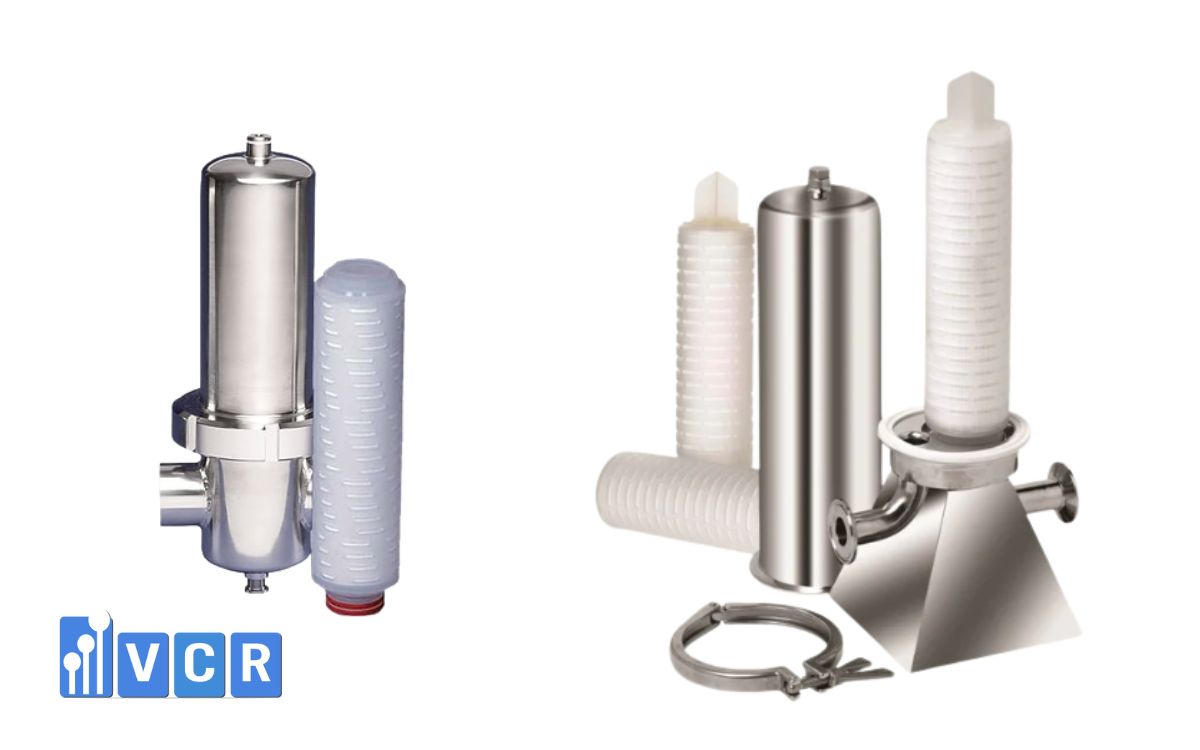
VCR can support customers in evaluating the cartridge and housing as a complete filtration system rather than selecting the element only by diameter and micron rating.
These products can support water treatment, food and beverage production, pharmaceutical utilities, chemicals, oils, industrial cleaning, and other demanding process applications.
Frequently Asked Questions
what is a stainless steel wire mesh pleated filter cartridge?
It is a reusable cylindrical filter made by folding woven stainless steel mesh into pleats around a support core. It removes particles from liquids or gases while providing a larger filtration area than a simple cylindrical screen.
which is better, stainless steel 304 or 316L?
SS304 is suitable for many general industrial fluids. SS316L generally provides better corrosion resistance and is commonly selected for pharmaceutical, food, beverage, chemical, and hygienic applications. The correct grade depends on the actual process fluid.
what micron ratings are available?
Available ratings range from coarse particle separation to fine filtration, depending on the mesh type and construction. Exact ratings must be confirmed from the manufacturer’s retention data.
is stainless steel wire mesh an absolute-rated filter?
Some cartridges may provide absolute-rated performance, while others are nominally rated. Woven mesh alone should not automatically be treated as absolute. The test method and removal efficiency must be reviewed.
can the cartridge be cleaned and reused?
Yes, many stainless steel mesh cartridges can be backwashed, ultrasonically cleaned, chemically cleaned, or rinsed. The cleaning procedure must be compatible with the element and retained contaminant.
can it withstand high temperatures?
Stainless steel media can withstand high temperatures, but the allowable operating temperature depends on the complete cartridge, including seals, welds, housing, and connections.
can it be used for steam filtration?
Suitable cartridges may be used for steam filtration or steam-line protection. The product must be rated for the steam temperature, pressure, flow, and required particle retention.
does it remove bacteria?
A standard wire mesh cartridge should not be relied on for bacterial removal. Microbial or sterile filtration requires a validated fine membrane or other qualified filtration technology.
what is the difference between wire mesh and sintered mesh?
Wire mesh is woven from metal wires and mainly provides surface filtration. Sintered mesh consists of bonded metal layers or fibers and generally provides greater structural stability and potentially finer, more controlled filtration.
why does differential pressure increase?
Differential pressure rises as particles cover or block the mesh. High viscosity, low temperature, excessive flow, or an overly fine filtration rating can also increase pressure loss.
can a stainless steel cartridge replace a polypropylene cartridge?
It can replace a polypropylene cartridge only when the housing, dimensions, sealing interface, flow, filtration efficiency, and process requirements are compatible. The two materials have different retention and operating characteristics.
when should the cartridge be replaced?
Replace it when cleaning no longer restores acceptable flow, the mesh is damaged, pleats are deformed, welds are cracked, corrosion is visible, or the cartridge fails the required performance inspection.
Conclusion
A stainless steel wire mesh pleated filter cartridge is a durable and reusable filtration element designed for demanding liquid and gas applications.
Its pleated structure provides a large effective filtration area, while stainless steel construction supports high temperature, mechanical strength, chemical resistance, and repeated cleaning.
The cartridge can be manufactured from SS304, SS316L, multilayer woven mesh, Dutch weave, or sintered metal structures depending on the required retention and operating conditions.
However, successful filtration depends on more than selecting a stainless steel grade or micron number. The engineer must also evaluate filtration efficiency, fluid viscosity, contaminant characteristics, differential pressure, flow direction, housing compatibility, cleaning method, and lifecycle requirements.
The correct stainless steel pleated cartridge is the element that provides the required particle retention while maintaining stable flow, acceptable pressure drop, reliable cleaning, and long-term compatibility with the complete filtration process.