- How are pleated filter cartridges related to ISO 14644?
- What does EU GMP Annex 1 require for filtration systems?
- Does WHO GMP require pleated filter cartridges?
- Do pleated filter cartridges require validation?
- Do pleated filters require IQ/OQ/PQ qualification?
- Is integrity testing mandatory?
- Is traceability required for filter cartridges?
- Do filter materials require certification?
- Is an SOP required for filter usage?
- Is filter replacement frequency defined by GMP?
- Are periodic inspections required?
- How do auditors evaluate filter systems?
- Are filters part of risk management under ICH Q9?
- Is change control required for filters?
- Is operator training required?
- Are storage conditions important?
- Is pre-use inspection required?
- Must operational data be recorded?
- Must filters be integrated into the quality management system?
- Why are standards and regulations critical for pleated filters?
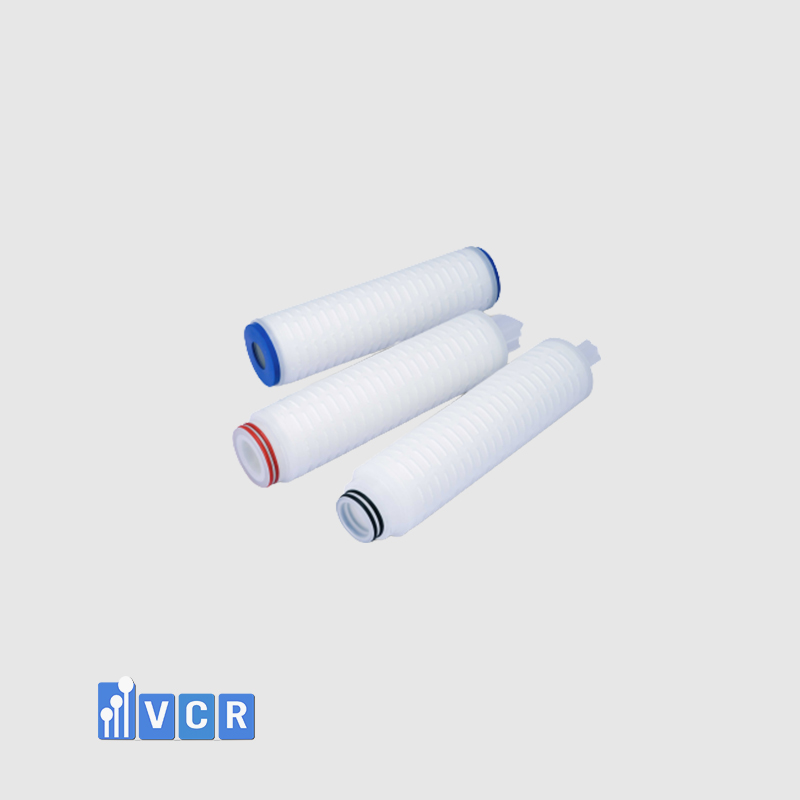
Through real project implementation and audit support, “VCR cleanroom equipment” has observed that pleated filter cartridges are often treated as consumables, but in reality they are a “critical control point” in sterility assurance and compliance data. Understanding standards is the foundation of sustainable operations.
How are pleated filter cartridges related to ISO 14644?
ISO 14644 focuses on cleanroom classification based on airborne particle concentration. While pleated filter cartridges are not direct air filtration devices like HEPA filters, they indirectly impact cleanroom conditions.
If incoming gases or liquids are not properly filtered, they can introduce particles or microorganisms into the environment. Therefore, pleated filters play a supporting role in maintaining ISO classification stability.
What does EU GMP Annex 1 require for filtration systems?
EU GMP Annex 1 emphasizes sterility assurance and requires effective final filtration. Pleated membrane filters, especially 0.2 µm, are commonly used in these stages.
Requirements include filter integrity testing before and after use, validated filtration performance, and documented procedures for replacement. All data must be recorded and traceable.
Does WHO GMP require pleated filter cartridges?
WHO GMP does not specify exact filter types but requires control of product and environmental quality. This indirectly necessitates effective filtration systems.
Pleated filter cartridges are widely used to meet these requirements, particularly in water and process fluid systems. Their effectiveness must be demonstrated through data and routine checks.
Do pleated filter cartridges require validation?
Yes, in critical applications, filters must be validated to demonstrate they meet design and operational requirements. This includes confirming filtration efficiency and material compatibility.
Validation is not a one-time activity but must be maintained through periodic review and revalidation when changes occur.
Do pleated filters require IQ/OQ/PQ qualification?
Pleated filters are not qualified as standalone equipment but are part of systems that undergo IQ/OQ/PQ. During IQ, correct installation must be verified. During OQ and PQ, actual filtration performance must be confirmed.
This ensures the system operates according to design specifications.
Is integrity testing mandatory?
In sterile applications, integrity testing is typically mandatory. It verifies that the filter membrane has no leaks or defects.
Common methods include bubble point, diffusion test, and pressure hold test. Results are critical audit evidence.
Is traceability required for filter cartridges?
Yes, each filter must have traceable information such as manufacturer, batch number, production date, and specifications.
Traceability enables root cause investigation and risk control in case of issues.
Do filter materials require certification?
Yes, especially in regulated industries. Materials must have certifications related to chemical compatibility, extractables/leachables, and biological safety.
These ensure that the filter does not negatively impact product quality.
Is an SOP required for filter usage?
Yes, SOPs must clearly define installation, operation, replacement, and troubleshooting procedures. They ensure consistent practices.
Auditors frequently review SOPs to assess system control.
Is filter replacement frequency defined by GMP?
No fixed interval is defined, but replacement must be based on scientific rationale and operational data such as pressure drop or usage time.
All replacements must be documented.
Are periodic inspections required?
Yes, periodic checks ensure that filtration performance remains within acceptable limits. This includes monitoring pressure drop, flow rate, and integrity.
This is part of preventive maintenance and quality assurance programs.
How do auditors evaluate filter systems?
Auditors review documentation, SOPs, operational data, integrity test results, and traceability. They may also interview operators.
Consistency between documentation and actual practice is key.
Are filters part of risk management under ICH Q9?
Yes, filters are critical control points in risk assessment. Their failure can directly impact product quality.
Proper risk evaluation determines the level of control required.
Is change control required for filters?
Yes, any change in material, supplier, or specification must go through formal change control procedures.
This ensures system integrity is maintained.
Is operator training required?
Yes, operators must understand installation, operation, and troubleshooting of filters.
Auditors often assess this through interviews.
Are storage conditions important?
Yes, filters must be stored in clean, dry environments away from direct sunlight to maintain integrity.
Improper storage can degrade performance.
Is pre-use inspection required?
Yes, visual inspection and sometimes integrity testing are required before installation.
This helps detect defects early.
Must operational data be recorded?
Yes, data such as pressure drop, usage duration, and test results must be documented.
These records demonstrate continuous control.
Must filters be integrated into the quality management system?
Yes, filters are part of the overall quality system and must be managed alongside maintenance, training, and change control processes.
This ensures system-wide consistency.
Why are standards and regulations critical for pleated filters?
Filters are often the final control point before critical process steps. Any failure can have serious consequences.
Understanding and complying with standards reduces risk, improves quality, and ensures audit readiness.
Duong VCR